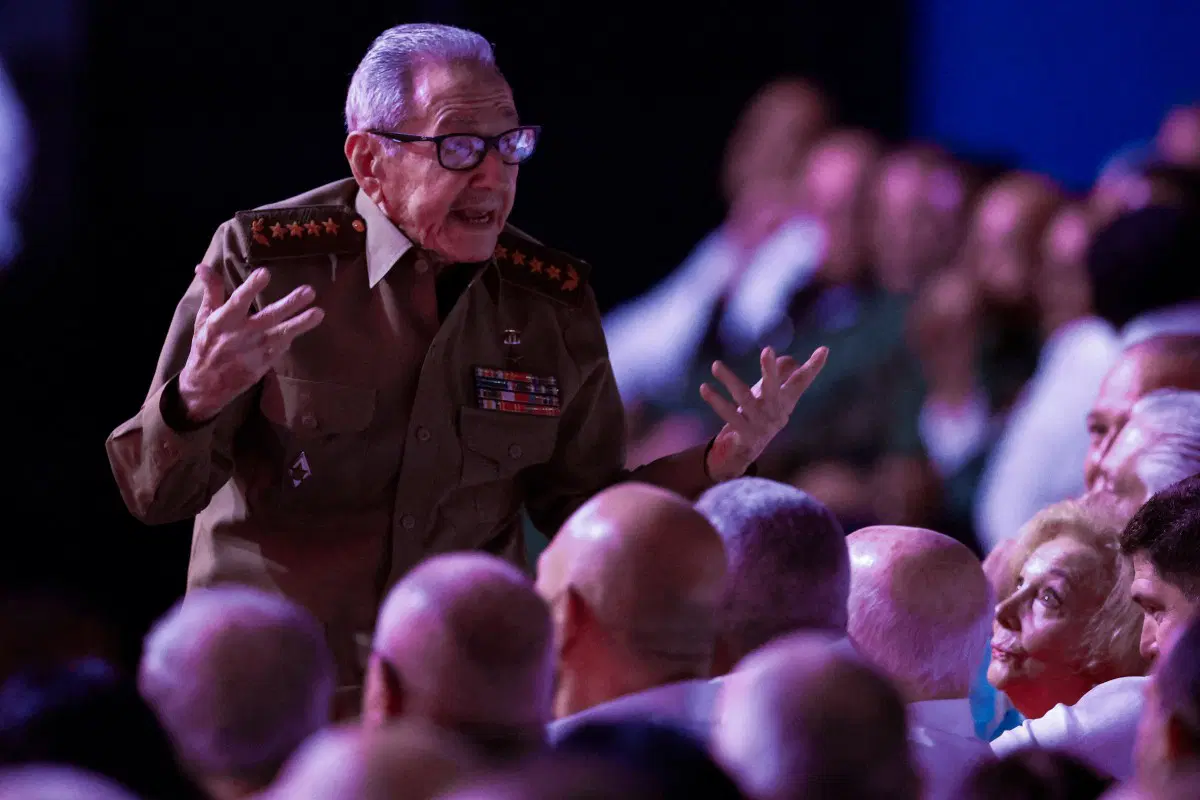
Attorney General James Uthmeier announced on Monday, October 19, 2026, that state prosecutors have secured an arrest warrant for former Cuban President Raúl Castro on state murder charges. The charges stem from the 1996 shootdown of two unarmed civilian aircraft operated by the Miami-based humanitarian group Brothers to the Rescue.
The state warrant, issued in Miami-Dade County, charges 95-year-old Castro with conspiracy to commit first-degree murder on a no-bond hold. The move mirrors a landmark federal indictment unsealed earlier this year in May 2026 by the U.S. Department of Justice, which charged Castro with murder, conspiracy to kill U.S. nationals, and destruction of aircraft.
The charges center on the February 24, 1996 incident in which MiG fighter jets under the command of the Cuban military intercepted and shot down two Cessna 337 aircraft over international waters, killing four anti-communist activists; Carlos Costa, Armando Alejandre Jr., Mario de la Peña and Pablo Morales.
Speaking at a morning press conference at the Miami-Dade County Courthouse, Florida Attorney General James Uthmeier underscored the state’s resolve to hold the former dictator accountable. ”Justice may be delayed, but in the State of Florida, it will not be denied,” said Attorney General James Uthmeier. “Raúl Castro ordered the cold-blooded murder of innocent humanitarians in international airspace.
Florida will use every legal avenue available to ensure he faces accountability, regardless of his age or location.” Miami-Dade State Attorney Katherine Fernandez Rundle echoed the sentiment, emphasizing that state-level murder charges carry no statute of limitations: ”Four families have waited three decades for legal redress. This state arrest warrant ensures that if Raúl Castro ever steps foot on foreign soil outside Cuba’s legal protections, Florida law enforcement will immediately seek his extradition.”
At the time of the 1996 shootdown, Raúl Castro served as Cuba’s Minister of the Armed Forces before later succeeding his brother Fidel Castro as president. Cuban authorities have long maintained that the planes violated Cuban airspace, a defense rejected by the International Civil Aviation Organisation (ICAO) and U.S. courts, which confirmed the planes were in international airspace.
While Cuba does not extradite its former leaders, officials noted the warrant serves as an Interpol red-notice trigger, severely restricting Castro’s international travel and symbolic standing in his final years.