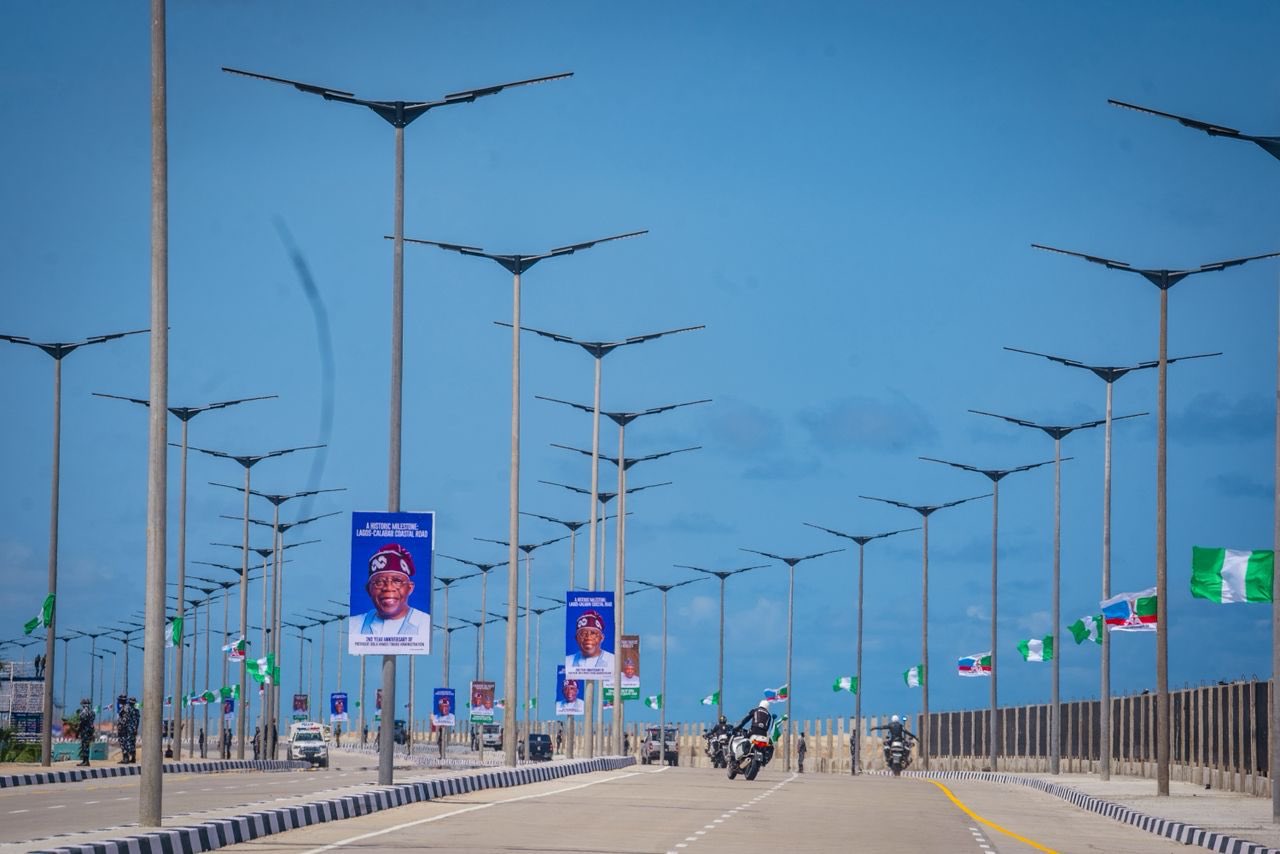
The Federal Government has officially renamed the Lagos-Calabar Coastal Highway as the President Bola Ahmed Tinubu Coastal Highway, describing the move as a recognition of President Bola Tinubu’s vision and commitment to the landmark infrastructure project.
The announcement was made on Thursday by the Minister of Works, David Umahi, during a media briefing in Abuja, where he also unveiled fresh approvals by the President aimed at expanding Nigeria’s road infrastructure network.
Among the major decisions announced was President Tinubu’s approval for a 400-kilometre extension of the Fourth Legacy Highway, alongside the reconstruction of critical sections of the Lagos-Ibadan Expressway.
Speaking at the briefing, Umahi said the decision to rename the coastal highway was reached by the leadership of the Federal Ministry of Works following consultations within the ministry.
According to him, the project has remained one of President Tinubu’s signature infrastructure initiatives and reflects a vision that predates his assumption of office as President.
“That (coastal) highway is named President Bola Ahmed Tinubu Coastal Highway. By the powers conferred on me as Minister of Works, in consultation with my Permanent Secretary, the Minister of State, directors and staff of the ministry, we decided to name it after him because of his dream for it,” Umahi said.
The minister explained that the highway represents one of the most ambitious road infrastructure projects in Nigeria’s history, noting that it is expected to transform transportation, stimulate economic growth, promote tourism and improve connectivity along the country’s southern coastline.
Stretching across several coastal states, the highway is designed to link Lagos with Calabar, passing through major commercial and economic hubs while opening up new opportunities for trade, investment and industrial development.
Umahi said the project would significantly reduce travel time, facilitate the movement of goods and services and enhance regional integration, making it a critical component of the Federal Government’s long-term economic development strategy.
He added that the ministry considered it appropriate to immortalise the President through the project because of his determination to ensure its implementation despite the enormous financial and technical challenges associated with such a massive undertaking.
The minister also revealed that President Tinubu has approved a 400-kilometre extension of the Fourth Legacy Highway, another strategic road project intended to improve national connectivity and strengthen Nigeria’s transportation infrastructure.
Although details of the new extension were not fully outlined during the briefing, Umahi noted that the approval would further expand the country’s highway network and improve access to previously underserved areas.
He also announced the approval for the reconstruction of sections of the Lagos-Ibadan Expressway, one of Nigeria’s busiest highways and a critical transport corridor linking Lagos, the nation’s commercial capital, with several states in the South-West and other parts of the country.
The reconstruction, he said, is expected to address deteriorating sections of the expressway, improve safety for motorists and ease the movement of passengers and freight. Umahi reaffirmed the Federal Government’s commitment to completing ongoing road projects across the country, stressing that the Tinubu administration remains focused on delivering infrastructure capable of driving sustainable economic growth.
He said the Ministry of Works would continue to prioritise quality, transparency and timely execution of projects to ensure that Nigerians derive maximum value from public investments.
The Lagos-Calabar Coastal Highway has remained one of the most talked-about infrastructure projects in the country since construction commenced, attracting both praise for its economic potential and criticism from some stakeholders over issues relating to funding, environmental concerns and compensation for affected property owners.
Supporters of the project argue that, when completed, it will unlock enormous economic opportunities by improving access to coastal communities, boosting tourism, facilitating interstate commerce and creating thousands of direct and indirect jobs.
Government officials have consistently maintained that the highway will serve as a catalyst for economic transformation, providing a modern transport corridor capable of supporting industrialisation and regional development.
The decision to rename the highway after President Tinubu is expected to generate public debate, with supporters viewing it as deserved recognition for a transformative infrastructure vision, while critics may question the timing of naming a project after a sitting president before its completion.
Nevertheless, the Federal Government insists that the project remains a legacy initiative designed to reshape Nigeria’s transport landscape and strengthen economic integration along the country’s coastline.
With the additional approvals for the Fourth Legacy Highway extension and the rehabilitation of the Lagos-Ibadan Expressway, the administration says it is intensifying efforts to modernise Nigeria’s road infrastructure and lay the foundation for long-term national development.