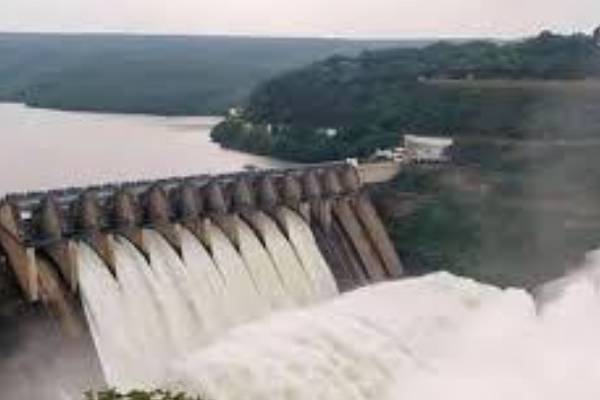
The Federal Government of Nigeria, through the Nigeria Hydrological Services Agency (NiHSA), has officially debunked rumors claiming that authorities in Cameroon have opened the spillways of the Lagdo Dam.
Officials confirmed that current flooding along the River Benue basin is driven by heavy seasonal rains, not transboundary water management.
In an executive press advisory issued on Sunday, August 30, 2026, at the agency’s headquarters in Abuja, the Director-General and Chief Executive Officer of NiHSA, Arc. Umar Ibrahim Mohammed, addressed the public anxiety stemming from unverified reports on social and electronic media.
Rumors had directly linked the rising water levels in Taraba and Benue states to an alleged discharge from the Cameroonian facility.
”The general public is hereby assured that the Lagdo Dam Authority is presently not releasing water from their reservoir but impounding waters into it,” Mohammed stated, noting that satellite monitoring and direct operational intelligence confirm the dam is actively storing incoming flows rather than opening its floodgates.
Hydrological Reservoir Readings (As of August 30, 2026) at the Lagdo Dam (Benue River Basin, Cameroon) Operating at 209.82 metres, well below its critical threshold of 216.00 metres. The reservoir retains a safety margin of 6.18 metres to absorb further upstream rainfall before any controlled release would become necessary.
The Kainji Dam (Niger River Basin, Nigeria): Current elevation stands at 130.38 metres, maintaining significant capacity below its maximum operational ceiling of 141.83 metres and the Jebba Dam (Niger River Basin, Nigeria); Holding steady at 100.03 metres, operating safely within normal seasonal parameters.
The NiHSA boss explained that the recent inundations reported across several riverine communities stem from intense, localized flash floods triggered by relentless downpours.
He highlighted that these natural rainfall events are being amplified by severe human vulnerabilities, particularly blocked drainage channels, unauthorized construction on floodplains, and improper municipal waste disposal clogging natural waterways.
NiHSA urged citizens, media organizations, and state disaster management authorities to rely exclusively on official early-warning communications.
The agency confirmed that bilateral protocols remain active and any future decisions regarding regulated water releases from Cameroon will be communicated well in advance to ensure downstream communities are fully protected.