The Federal Government has pledged to settle a total of N8 billion in outstanding obligations owed to Nigerian students under the now-discontinued Bilateral Education Agreement scholarship scheme, even as authorities revealed that the programme had been plagued by widespread abuse and fraudulent practices.
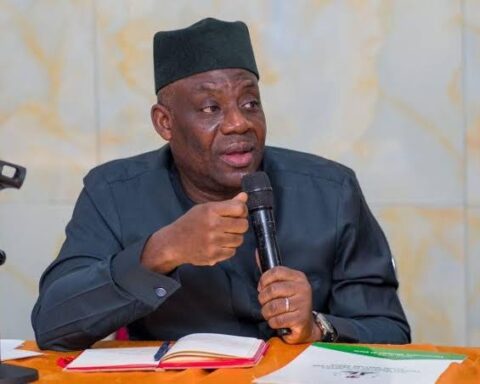
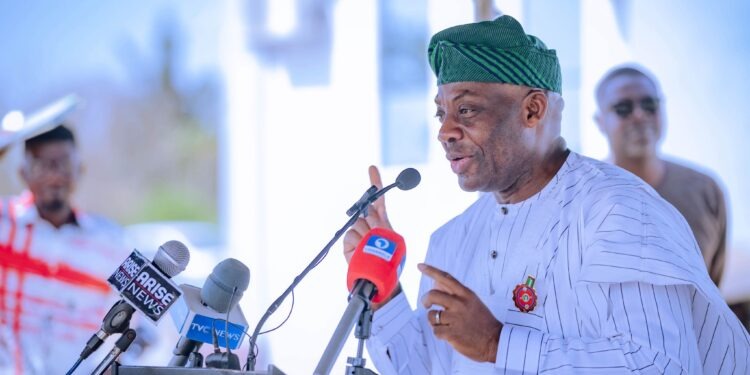
The Minister of Education, Tunji Alausa, disclosed this during an interview on Channels Television on Tuesday, where he explained the government’s decision to discontinue the scholarship arrangement while also committing to fulfill pending financial responsibilities to affected students.
According to the minister, the government has already released N4 billion to cover part of the outstanding liabilities, while approval for the remaining N4 billion is expected within the next two weeks.
Alausa said the administration decided to phase out the Bilateral Education Agreement scholarship after discovering that the initiative had drifted far from its original objective and had become vulnerable to exploitation.
He described the scheme as one riddled with irregularities, adding that investigations and reviews conducted by the ministry revealed serious cases of abuse that undermined the programme’s credibility and sustainability.
The Bilateral Education Agreement scholarship scheme was originally established to enable Nigerian students study in partner countries through educational exchange arrangements signed between Nigeria and foreign governments.
Over the years, beneficiaries were sent to countries across Europe, Asia, and other regions to pursue undergraduate and postgraduate studies in fields considered important for national development.
However, concerns had grown in recent years over delays in payment of stipends, tuition obligations, and welfare support for students studying abroad under the programme.
Several affected students had repeatedly complained about financial hardship, unpaid allowances, accommodation difficulties, and challenges relating to their academic upkeep in foreign institutions.
The issue sparked public debate and pressure on the Federal Government to address the welfare of beneficiaries, many of whom reportedly struggled to survive due to delayed disbursements.
Speaking during the interview, Alausa assured that despite the government’s decision to discontinue the scheme, authorities would not abandon students who were already enrolled under the arrangement.
He emphasized that the administration remains committed to settling all legitimate obligations owed to beneficiaries to prevent disruptions to their education and welfare.
The minister noted that the government’s decision was based on the need to promote transparency, accountability, and efficient use of public resources in the education sector.
According to him, the scholarship programme gradually evolved into a system that no longer aligned with national priorities and was susceptible to manipulation.
Although he did not provide full details of the alleged fraudulent activities, Alausa indicated that the government uncovered patterns suggesting that the scheme had been exploited beyond its intended educational purpose.
Education stakeholders have continued to express mixed reactions to the government’s position.
While some analysts support the decision to discontinue a programme perceived as financially unsustainable and poorly regulated, others argue that international scholarship opportunities remain valuable for students seeking specialized training unavailable in Nigeria.
Some experts have also called on the government to strengthen local universities and research institutions to reduce dependence on expensive foreign scholarship arrangements.
Others insist that rather than scrapping such initiatives entirely, authorities should focus on reforming oversight mechanisms, improving transparency, and ensuring that only qualified candidates benefit from the programme.
Parents and students affected by the delayed payments have meanwhile welcomed the government’s commitment to clear the outstanding debts, expressing hope that the remaining funds would be released within the promised timeframe.
For many beneficiaries, the announcement offers relief after months of uncertainty and financial difficulties abroad.
The Bilateral Education Agreement scholarship had for decades served as one of Nigeria’s major educational exchange platforms, producing graduates in medicine, engineering, science, and other disciplines through partnerships with foreign institutions.
Its discontinuation therefore marks a significant shift in the Federal Government’s approach to international scholarship funding and educational cooperation.
Observers say the decision may signal a broader policy direction aimed at prioritizing domestic educational reforms, reducing public expenditure leakages, and channeling more investment into local institutions.
As the government moves to conclude outstanding payments, attention is now expected to shift toward alternative strategies for supporting Nigerian students and improving the quality and competitiveness of higher education within the country.