The Federal Government has acknowledged that Nigeria’s electricity sector remains heavily constrained across every link of its value chain, severely impacting stable power supply and placing an escalating financial and operational burden on citizens.
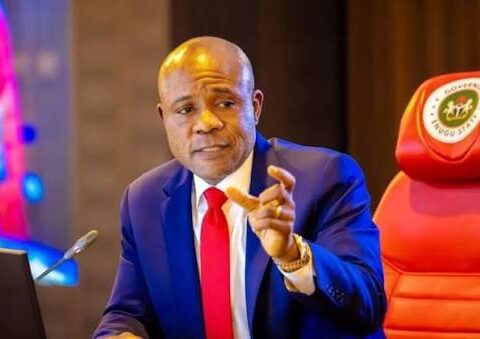
The admission was made by the Minister of Power, Joseph Tegbe, during a media parley held on Monday, September 21, 2026, at the Ministry of Power Headquarters in Abuja. Speaking to journalists during an address marking his first 100 days in office, Tegbe outlined the deep-seated structural bottlenecks plaguing the sector while firmly ruling out any immediate increase in electricity tariffs.
According to the Minister, a comprehensive diagnostic assessment undertaken by the ministry revealed severe, interconnected vulnerabilities spanning gas supply, generation, transmission, and distribution:
Thermal power generation remains constrained by damaged gas pipelines, poor commercial terms that deter private investment, and an aging generation fleet burdened by deferred maintenance and stalled projects. Furthermore, non-payment of bills has severely undermined the capacity of Generation Companies (GenCos) to service gas suppliers or maintain plant infrastructure.
The transmission network continues to suffer from frequent tripping, overstretched equipment, and widespread vandalism targeting power lines and transmission towers.
Distribution Companies (DisCos) record aggregate technical, commercial, and collection (ATC&C) losses ranging between 30% and 40%. The sector suffers from systemic non-payment, with GenCos receiving as little as 27% of their total billed revenue.
Macroeconomic pressures, including foreign exchange volatility and inflation, have inflated operating costs across the board. Additionally, debts owed to power firms by Ministries, Departments, and Agencies (MDAs) have surpassed ₦100 billion.
”These problems reinforce one another: unpaid bills weaken gas supply and maintenance; unreliable supply depresses collection; poor collection deepens debt,” Tegbe stated. “A new power station cannot, by itself, resolve that cycle. Sustainable improvement requires us to repair the physical system and the commercial relationships that keep it functioning.”
To tackle the sector’s ₦3.3 trillion debt backlog, Tegbe announced that the Federal Government has raised approximately ₦1.23 trillion aimed at clearing legacy liabilities owed to GenCos and gas suppliers to boost market liquidity.
Addressing revenue leakages, the Minister disclosed that targeted interventions along key industrial corridors, such as the Ikorodu–Sagamu axis, have blocked an estimated ₦120 billion in annual energy theft.
On customer metering, Tegbe noted that approximately 350,000 prepaid meters were installed during his first 100 days in office, bringing cumulative nationwide installations to over 1 million as of August 2026.
The recent out-of-court resolution regarding the AMMON metering project is expected to unlock the procurement of an additional 1.4 million smart meters in the near term.
Despite the underlying constraints, national power generation and transmission have recently sustained levels above 5,000 megawatts (MW), reaching a peak of 5,330 MW between August and September 2026—up from previous ranges of 3,700 MW to 4,700 MW.
Recent capacity additions include the restoration of the 375 MW Alaoji open-cycle power plant after three years offline, along with new substations and transformer installations across Lagos and Abuja unlocking over 900 MW in transmission capacity.
Tegbe assured the public that the government’s immediate focus remains on stabilizing grid performance, building a high-voltage Transmission Super Grid, and expanding solar mini-grids in unserved rural regions, rather than shifting.