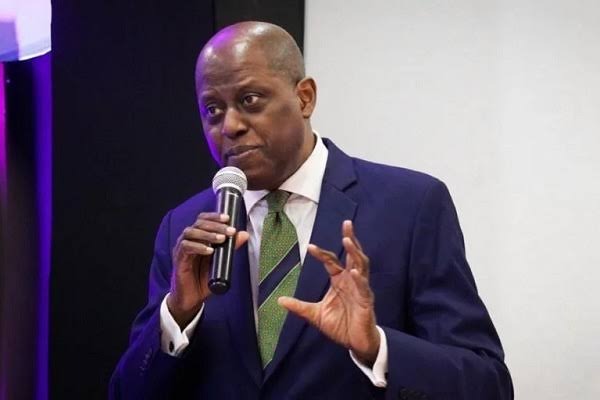
The Governor of the Central Bank of Nigeria (CBN), Mr. Olayemi Cardoso, has revealed that the apex bank’s recent unexpected decision to slash the benchmark Monetary Policy Rate (MPR) was driven by the imperative to repair a faulty monetary policy transmission mechanism and capitalize on improving macroeconomic indicators.
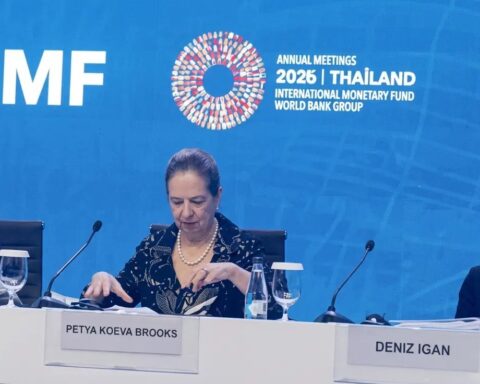
Speaking during a high-profile panel session titled “How Central Banks Navigate Policy Shifts” at the ongoing international financial symposium in Washington, D.C., on Thursday, October 15, 2026, Cardoso addressed market participants and global financial leaders regarding the surprise monetary easing.
Addressing the initial shock across financial markets when the Monetary Policy Committee (MPC) unexpectedly cut the MPR by 350 basis points from 26.5 percent to 23 percent, Cardoso acknowledged that financial markets generally disfavor unannounced policy pivots. However, he emphasized that proactive context-setting helped mitigate potential market volatility.
”You are absolutely right. It took the market by surprise, and markets, as we know, generally don’t like surprises,” Cardoso stated during the panel discussion. “Rather than simply announcing a decision and leaving people to guess, we chose to clearly explain the underlying macroeconomic context, giving participants full visibility into our institutional rationale.”
Cardoso noted that market operators were well aware that the traditional monetary transmission mechanism, the channel through which policy rate adjustments influence commercial lending rates, household credit, investment, and headline inflation, had suffered structural distortions.
The CBN Governor highlighted several macro buffers and strategic reforms that created the window for the rate cut. Nigeria’s external reserves reached their highest levels in over 18 years, providing significant economic buffers to manage potential market shocks.
The Disinflationary trends across core components provided the monetary authority leeway to shift focus toward supporting productive credit expansion. The formalization of a Memorandum of Understanding (MoU) between the Ministry of Finance and the CBN ensured tight policy coordination, improving market confidence.
The introduction of the overnight financing facility offered clearer pricing guidance on prevailing liquidity conditions than the previous framework.
Commenting from the sidelines of the event, CBN Director of Corporate Communications, Mrs. Hakama Sidi Ali, noted that clear communication has been instrumental in keeping financial markets stable following the policy rate reset.
Similarly, market analysts commended the bank’s proactive stance. Chief Economist at Metro Finance Advisory, Dr. Gabriel Okonjo, noted that addressing high bank lending rates, which had previously surged past 30 percent, was vital for real-sector growth and corporate bond issuance.
With Nigeria’s foreign exchange reserves stabilized and bank recapitalisation efforts underway, the central bank aims to ensure its monetary framework directly supports long-term investment, credit accessibility, and sustainable economic growth.