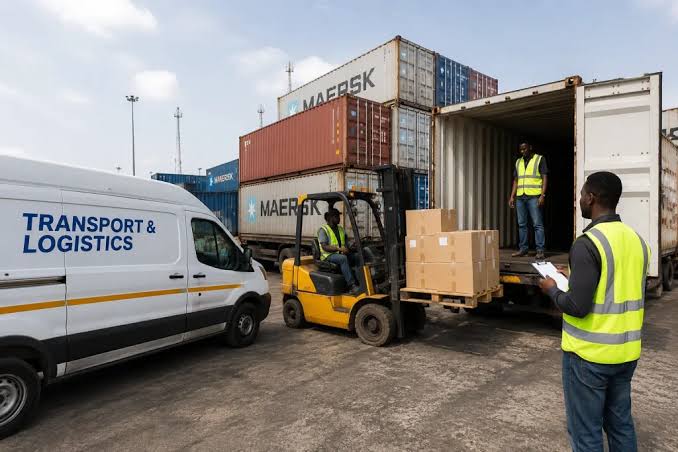
Transport and logistics experts have identified a lack of political will and inconsistent policy execution as the principal barriers preventing Nigeria from developing an efficient integrated transport system, despite the country’s vast pool of local talent and numerous state-backed initiatives. Industry stakeholders voiced these concerns during a panel discussion held on Sunday morning, October 25, 2026, at the Lagos Continental Hotel in Victoria Island, Lagos.
Opening the session, Dr. Azeez Mustapha, Managing Principal at AZ Logistics, emphasized that Nigeria possesses both the technical expertise and human capital required to construct a seamless multi-modal transportation network spanning road, rail, maritime, and aviation sectors. However, he observed that critical government programs routinely stall during execution due to shifting political mandates and institutional delays. ”Nigeria does not lack human capital or comprehensive policy documents,” Mustapha said during his presentation.
“What Nigeria lacks is implementation and the sustained political will to follow through on long-term infrastructure plans.” Echoing these observations, Kingsley Anaroke, Publisher of MMS Plus Newspaper, noted that government agencies frequently attempt to import foreign transport models without tailoring them to local operational realities or ensuring policy continuity. He highlighted the National Cabotage Law as a key example of an initiative whose potential economic benefits remain unrealized due to persistent regulatory bottlenecks and weak enforcement mechanisms.
Offering a regional perspective, Oluwadamilola Emmanuel, Special Adviser to the Lagos State Governor on the Blue Economy, argued that progress is achievable when public policy prioritizes localized integration. He cited the Lagos State Cowry Card system as a functional model of unified ticketing infrastructure, successfully linking urban waterways, Bus Rapid Transit (BRT) routes, and rail lines across the metropolis.
Summing up the discussion, panelists reached a consensus on the urgent reforms needed to reshape the national transport landscape. The experts urged government agencies to safeguard transport initiatives against political transitions, ensuring long-term continuity across successive administrations. They further called on the Federal Ministry of Transportation and state authorities to engage domestic planners and engineers directly, rather than relying on external management.
Finally, the forum recommended prioritising intermodal connections, specifically linking major seaports directly to railway lines and interstate highway networks, to lower freight costs, streamline supply chains, and relieve heavy road congestion across the country.