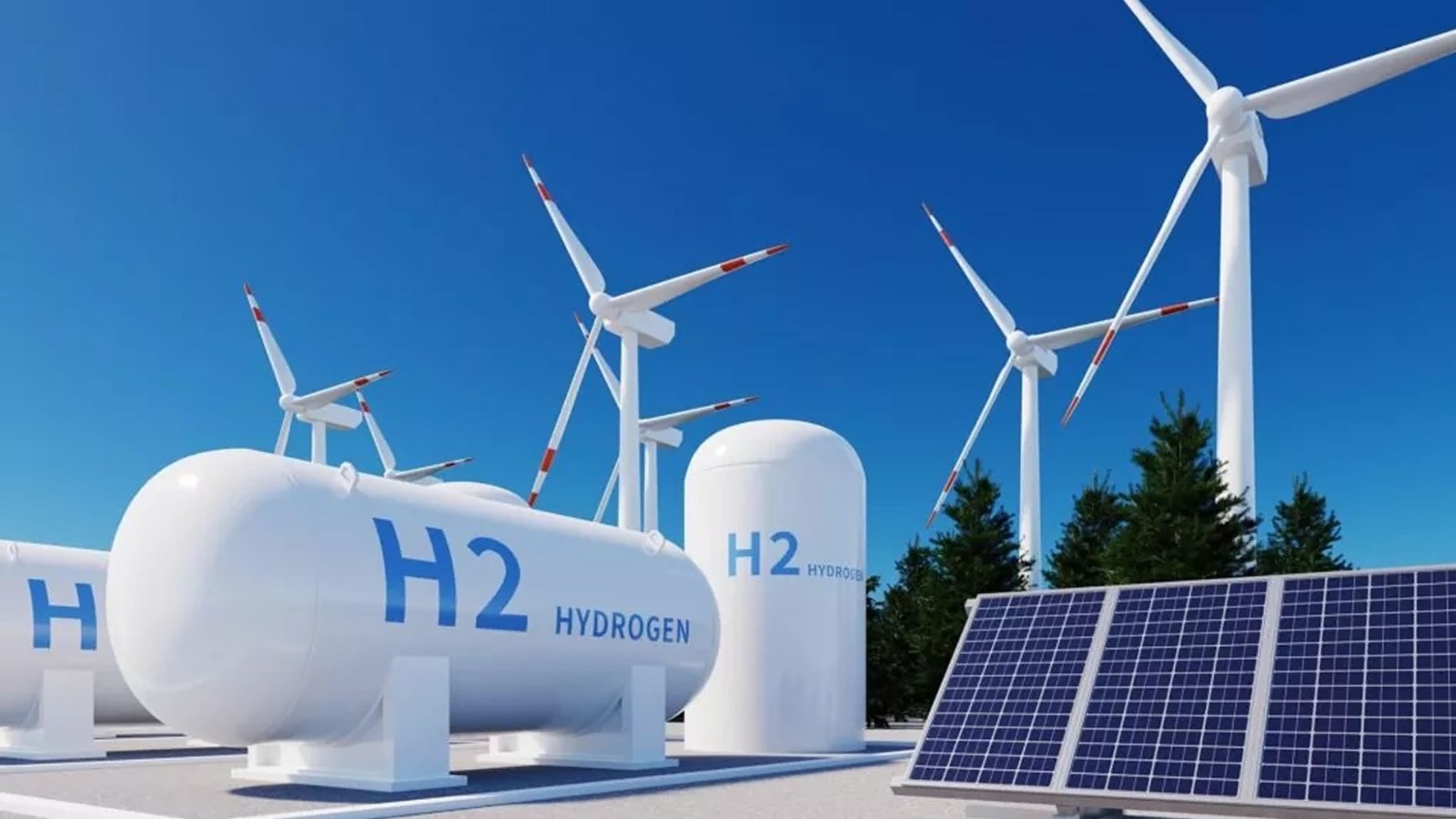
This Australian breakthrough is being hailed as the “Holy Grail” moment for the hydrogen economy. For years, the main argument against green hydrogen wasn’t that it didn’t work. it was that it was too expensive to make compared to fossil fuels.
By slashing the cost by 50%, this consortium has effectively brought the price of green hydrogen close to $2 per kilogram, which is the tipping point where it becomes competitive with diesel and jet fuel.
Traditional electrolysis involves submerged electrodes in water, which creates bubbles. These bubbles act as insulators, making the machine work harder and waste energy. The new Australian method pioneered by researchers at Hysata and backed by a massive industrial consortium uses a capillary-fed electrolyzer.
This method eliminates bubbles entirely. It achieves a 95% system efficiency (compared to the industry standard of ~75%). Because the system runs “cooler” and more efficiently, it requires less expensive cooling infrastructure, which is where a huge chunk of the cost savings comes from.
This isn’t just about powering cars; it’s about the heavy hitters that batteries can’t handle. Cargo ships are too heavy for current battery technology. Cheap green hydrogen allows for the use of Ammonia or Liquid Hydrogen as fuel, potentially decarbonizing the entire global maritime fleet.
For long-haul flights, liquid hydrogen provides the energy density needed to get a plane across the ocean without the weight of thousands of heavy batteries.
This breakthrough allows “Green Steel” production to become a financial reality rather than an expensive experimental project.
Australia is positioning itself as the “Green Energy Superpower” of the 21st century. They have some of the highest solar and wind yields in the world.
They are repurposing old LNG (Liquified Natural Gas) export terminals to ship liquid hydrogen to Japan, South Korea, and Europe.
While the production cost is halved, the distribution (moving the gas around) is still the next big hurdle. Hydrogen is “leaky” and hard to compress. However, with production costs this low, the global incentive to build the pipelines and tankers has just skyrocketed.
This is a massive win for the 2050 Net Zero goals. It moves hydrogen from a “maybe one day” technology to a “happening right now” solution.