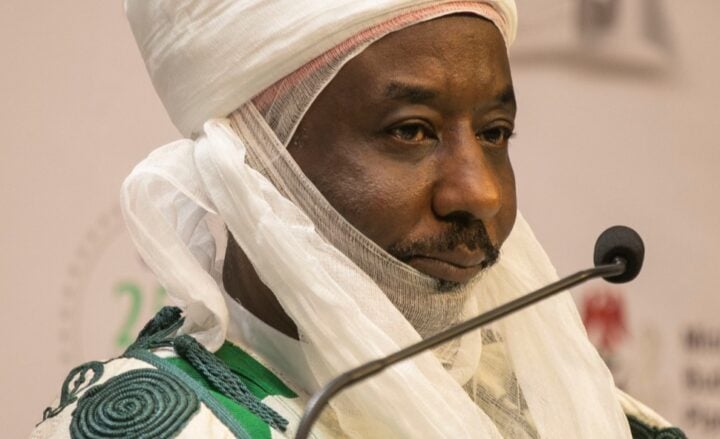
The 16th Emir of Kano, Muhammadu Sanusi II, has issued a stark warning that Nigeria urgently needs a clear national strategy and policy framework to harness emerging technologies, particularly artificial intelligence, for sustainable development. Speaking at the 8th Biennial Conference of the Committee of Pro-Chancellors of State-Owned Universities in Kano on Tuesday, the former Central Bank governor declared that this country needs a strategy, a policy framework and needs to be ready for the century that it is in. The programme was themed Unlocking the Potentials of Artificial Intelligence: University Governance, Internationalisation and Rankings .
Sanusi urged Nigerian universities to take the lead in developing a national AI roadmap, stressing that institutions must go beyond teaching and research to actively shape policies that drive national growth. He warned that Nigeria risks falling behind as other countries, including Ghana, have already developed and begun implementing comprehensive AI strategies aimed at youth training, data development and economic transformation. The monarch also emphasised the role of universities as pillars of civil society, noting that without intellectuals and academic freedom, the checks and balances required for a vibrant civil society would disappear .
Kano State Governor Abba Kabir Yusuf, represented by his Chief of Staff Suleiman Wali Sani, told the conference that the state government had prioritised education as a key driver of development and highlighted ongoing investments in infrastructure, digital learning, research and staff development across state-owned institutions.
The Chairman of COPSUN, Ayodeji Omole, noted that with over 60 state-owned universities across the country, regular engagement was critical to ensuring policy coherence, institutional coordination and improved governance. He added that universities must adapt to evolving global realities, including technological advancements and shifting economic demands, through innovation and strategic planning .
Sanusi’s intervention comes at a time when discussions about AI governance are accelerating globally, with major economies racing to establish regulatory frameworks and investment strategies. Nigeria, Africa’s largest economy, has yet to articulate a comprehensive national AI policy despite possessing a growing tech ecosystem and a young, increasingly digitally literate population.
The Emir’s call places the onus squarely on the country’s academic institutions to fill what he characterised as a dangerous policy vacuum, arguing that without a coherent strategy, Nigeria will remain a consumer rather than a producer of the technologies shaping the twenty-first century.