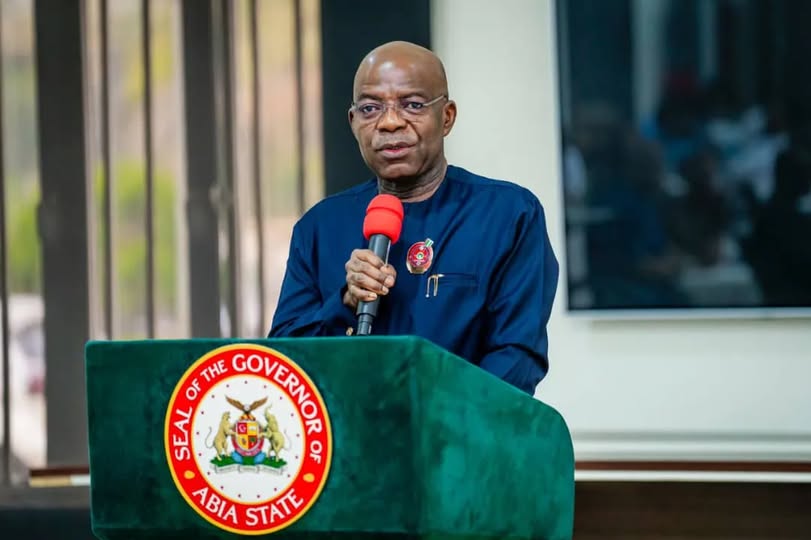
By Dr Alex Otti
Being the Text of the 37th Convocation Lecture of the Federal University of Technology Owerri
- I would like to begin by expressing my profound gratitude to Management of the Federal University of Technology Owerri (FUTO) for the privilege of standing on this podium to present the 37th convocation lecture of this great citadel of learning — an institution that has not only distinguished itself by the quality of its alumni but has remained faithful to its founding mission of serving humanity through technological innovation, excellence in research and duty to community. Thank you for the honour of inviting me and for the opportunity to address important matters of national development as they connect to the theme of this year’s convocation:
Economic Development and Sustainability: Beyond Oil, Exploring Alternative Revenue Potential for Economic Growth and Sustainable Development in Nigeria. Before I dive straight into it, may I take a moment to thank this University for being an integral part of the New Abia story. The events of March 18 to 22, 2023 in Umuahia and then Abuja and back to Umuahia, point us to how the decisions we make, especially when under intense pressure, can affect the destiny of millions of people. All of us will at different points in our lifetimes be presented with situations that will challenge our assumptions, test our resolve and compel us to either `take a definite stand for the truth or bend slightly in response to fear of the unknown, self-preservation or personal benefit. Whatever our encounter becomes, may we learn from the courage of Prof Nnenna Oti, the Vice Chancellor of this University and through our judgment, inspire generations unborn to think beyond self when making decisions that are tied to the destiny of our communities.
Part of my mission here today is to bring to the FUTO community, the sincere gratitude of Ndi Abia and to encourage you to keep alive and active, the production pipeline that gave us moral giants like your Vice-Chancellor and so many others like her. I have heard a few people demur that the praises heaped on the good professor are undeserving since she merely did her job but I am always quick to retort: how often do we do our own job with the same patriotic vigour as she did hers in Umuahia in March 2023? Again, the gratitude of our people to this institution is infinite, if for no other reason, for producing men and women who do their job well. Thank you.
2. Nigeria, on the strength of its population, the enormous deposit of mineral resources it holds and the creative energy and intellect of its people, is a potentially great country. However, we may also have to appreciate that potential and reality are not the same. It is an established lesson of history that large population size, enormous deposit of mineral resources and isolated human intellect on their own have not been known to independently influence the economic realities of any nation. China and India had a combined population of about 1.1 billion people in the 1960s and yet, the vast majority of their population lived in extreme poverty, some estimates put the poverty rates in the 2 countries at the time in the region of 40% to 55%. Population alone never brought them prosperity. Nigeria’s other natural advantage — speaking specifically of huge deposits of crude oil and natural gas — has also not translated to improved living conditions for the general population.
So also in a country like Venezuela. The South American country actually holds the world’s largest crude oil reserve estimated at over 300 billion barrels. In the same vein, large deposits of solid mineral resources, including cobalt, copper and diamond, with a projected market value of around $24 trillion have also not radically improved the social and economic experiences of the population in the Democratic Republic of Congo. The paradox of endemic poverty in the midst of abundant mineral resources is also unsettling economic assumptions in countries like Angola, Afghanistan and South Sudan. The third puzzle in the Nigeria development dilemma is the persistent struggle to lift ourselves from the nadir of economic uncertainties even with a large population of brilliant, hardworking and resilient individuals.
It beggars belief that this mass of extraordinary people who have made their marks in complex scientific and engineering fields are seemingly unable to find answers to decades-old development questions with respect to the supply of basic infrastructure, social order and a path to self-fulfilment within the country. On this stretch, I would also argue that while the brilliance of our people has never been in question, it is also true that achieving long term social prosperity requires more than the brilliance of individuals acting in pursuit of narrow interests. My position in this regard can be buttressed by a careful study of some of the empires that once ruled the world before suffering collapse.
3. On the evidence of our lived reality in more than 65 years of independence, the current development struggles we face in the country are not peculiar. We are only one of the many nations with huge potentials for growth but are still removed from the actualisation of what could have been and the reasons are not far-fetched. Development is the outcome of sequence of processes and events that transform potential, whatever it is, to social benefits for the entire population. To many, development is understood as an abstract idea — a fancy word that politicians and scholars bandy about to impress their audience. For others, development is restricted to the provision of basic infrastructure. For others still, development is about the individual acquisitions — high-speed cars, mansions and the things that separate one household or a community from others — the achievements that give us bragging rights over our peers and the communities around us.
4. While it is true that development means different things to different folks, economics scholars and experts have taken a deep dive into the subject over the last 50 years and had reached some consensus on what should constitute the key metrics for measuring a society’s progress on the ladder of development. For Seer (1969) , development is about the human population and the occurrences around it. Seer’s idea of development revolves around a society’s response to social anxieties arising from events like poverty, unemployment and inequality. In his estimation, while growth in gross domestic product (GDP) tells an important story about the health of an economy in the short to medium term, economic development is a lot more than just an increase in the volume of output from a country or perhaps its per capita income. A 1991 publication by World Bank dug deeper into the subject to establish an equally robust perspective on the structure and scope of development.
For the Bank, perhaps borrowing from Seer’s pioneering work, development is about measurable improvements in the quality of life of the population. It pointed out that development is indicated by rising average income levels, wider access to education and health services, even distribution of opportunities, healthy environment, personal freedom and exposure to uplifting cultural experiences. Sen (1999) leaned into the new awareness and emerging orientation of the structure and content of development when making his intervention on the subject. He argued that development is best understood as “freedom” and the “capability to function.” For him, development is the series of focused initiatives and designs aimed at expanding the range of choices available to the average individual within a community.
The Nobel laureate held that the rate and frequency of overcoming deprivations arising from poverty and its manifestations with particular emphasis on hunger, illiteracy, poor health and insecurity, are the more critical measures to consider when accessing the development position of a society. For Todaro and Smith (2003) , the three most important demands of development revolve around the capacity to provide for the basic needs of the population, regard for the self-esteem of the individual and the power to choose from a rich variety of goods and services. The central idea of their postulation is that development goes beyond the economics of production but functions on a multidimensional plane where economic policies interconnect with social structures and cultural contexts to define the daily experiences of the individual.
5. It is beyond argument that different scholars interpret the subject of development differently but then, the variations in philosophy and context do not diminish the significance of the common themes especially as it relates to the living condition of the masses, access to opportunities and the importance of self-fulfilment for the average person. It ultimately follows that every effort at development would necessarily involve a resolute commitment at wealth creation within the community, production of goods and services that meet the daily needs of the people and the effective adoption of policy measures that set the community free from the limitations of ignorance, early mortality, starvation and diseases. Development is therefore not an abstract term but the lived experiences of the people. It is ultimately about the human community and the measure of freedom individuals are allowed. These insights are very well represented in Goulet (1971) where development is captured from the lenses of sustenance, self-esteem and freedom from servitude.
6. Development is a dynamic idea and has continued to expand in scope and meaning over the past 50 years. Following the adoption of the sustainable development framework at the Rio Conference in 1992, the attention of development experts is now focused on a whole-of-society approach to tackling the challenges of poverty, hunger, inequality and the conditions that assault the dignity of man . On account of new ideas and superior understanding of the structure and nuances of development with respect to building the capacity of the human person and their self-esteem, experts now rank education and healthcare needs, the right and freedom to participate in shaping public sector decisions and fair distribution of opportunities for social ascent to everyone — irrespective of gender, religious and political biases — as critical pillars in measuring a society’s position on the development ladder.
The United Nations Sustainable Development Goals (SDGs) initiative which became operational in January 2016 further widened the development frontlines to capture elements that may not have received sufficient attention in previous frameworks. The SDGs paradigm encapsulates important human and environmental needs as they impact the welfare of the present generation and the capacity of the earth to support the generations coming after. In the new model, important metrics like clean water and sanitation, clean and affordable energy provisions, the resilience of the communities and responsible approaches to production and consumption, amongst other important indicators, have been added to the bucket of development demands that key stakeholders are required to pay attention to.
The new emphasis on environmental consciousness and considerations for the future point us to the dynamic nature of development and the rationale for placing the human community at the centre of it. What has, however, changed in the SDGs context is that the future has been added as an element of the grand equation. Even then, the enduring objectives, and criteria for measuring progress still revolve around the welfare of the human person, the freedom to live in dignity and enjoy the experience of being human, the opportunity to contribute to meaningful social, economic and political outcomes and a general understanding of how the events of today shape the expectations of the future.
7. The evolution of development theory over the past 5 decades and the consistency of elements of human progress in all the paradigms reflect the necessity of making generous investments in social infrastructure and services as the population expands. The post-1960s development frameworks also provide clarity on the importance of structured planning, commitment to institution building, integration of technology into production streams and the widespread adoption of policies that encourage investments from local and foreign investors to the attainment of development targets . An effective reading of the patterns that attended the rise of China, India and others within the Southeast Asia economic block in the last 50 years would indicate that development does not happen overnight.
Moving from one rung to the next on the ladder requires visionary leadership, policy consistency and the capacity to leverage advantages to expand the streams of opportunities for job creation and entrepreneurship, poverty reduction, the strengthening of social service delivery architecture and as earlier mentioned, the capacity to consistently attract the inflow of foreign capital . Development, as Todaro and Smith (2003) noted, is a multifaceted process that combines elements of politics, planning and strategic partnerships to transform the economic outlook of the community over the medium to long term. Quality infrastructure, higher output levels and rising wage rates may signal development but the bar is raised higher with each passing day, effectively reminding us that the world is never static. At any rate, the general architecture of development, although dynamic, also has clear benchmarks that enables the tracking of progress. It is also important to take note of the peculiar realities of each community when scoring its progress. In present day Nigeria, one has to attentively evaluate the data that speak to security of lives and property in different communities when discussing matters of development in the country.
This is in addition to measuring the spread of physical infrastructure, the availability of jobs and how earnings from regular jobs support the livelihood of individuals and families. One may also include access to health services, quality schools, the reliability of service institutions like emergency responses and the body of guardrails that preserve the social order. Scoring development markers in Nigeria would also involve assessing intangibles like confidence in the justice system, speed of redress for individual and institutional injuries and effectiveness of the apparatus of state power like the law enforcement and postal services.
8. To economists and others in the policymaking fields, development is a science — the outcome of conscious planning, investments in factor-inputs and the commitment to building robust economic and social institutions . To the average member of the community, however, development is about their daily experiences. It is about being able to find a decent job, the basket of goods and services their pay checks can afford and the support they get in moments of turbulence. Development is about what happens in good times as it is also about what happens when the storms arrive. The new element here demands that development must also take cognisance of measures set up to protect the population from living below a certain minimum level of comfort — the point where human dignity is eroded .
9. On account of the complexities associated with measuring development and the differences in cultural outlook across societies, the push to find a universally acceptable body of metrics in that regard continues to evolve as human appetites and the path to the top change. Consequently, the Human Development Index (HDI) was adopted in 1990 by the United Nations as a “quintessential measure for assessing the overall well-being and progress of nations .” It offers a balanced summary of a country’s development status based on certain universally-applicable scopes such as health, education, and general standard of living. The HDI metrics, anchored on 3 dimensions — life expectancy at birth for health, mean years of schooling and expected years of schooling for knowledge, and gross national income (GNI) per capita for the standard of living — offer a much broader framework for appreciating the undercurrents of development across societies. The HDI methodology is hinged on the idea that people and their capabilities should be the ultimate criteria for assessing the development of a country rather than relying on metrics that are exclusively of economic origin.
What the HDI metrics highlight, like the ideas captured by Seer , Sen , Todaro and Smith , are the need to prioritise health service delivery and all the components related thereto, education and the initiatives aimed at building and upskilling human capital for higher output values . It also speaks to the prudence of committedly investing in the infrastructure backbone that would drive the most critical sectors of the economy to enable job creation and the production of wider spectrum of goods and services. The HDI, although runs on the same thread as the train of development thoughts that emerged from mid-1960s, differs slightly by creating a widely-acceptable template for measuring a country’s development trajectory. It also provides critical guidelines for policymaking and public investment decisions . Furthermore, its human-centric outlook and particular focus on welfare-related concerns make it unique and widely applicable. More fundamentally, the HDI gives the clearest indication that although cultural and social realities may differ, humans, in whatever clime they live, have common basic needs. The framework teaches that a community’s progress can only be objectively assessed by looking at where it ranks in meeting these universal human needs of its people.
10. In view of its abundant human and material resources, Nigeria has not lived up to the promise of its early days as an independent nation. With tens of millions of our compatriots living in multidimensional poverty , struggling with acute infrastructure deficiencies , security challenges , limited access to health services , multi-pronged challenges in the education sector and growing levels of social and economic uncertainties , it is difficult to be impressed with our place in the development firmament. Yes, we have more kilometres of motorable roads today than we did in 1960, more health facilities have been built and more households are now connected to the electricity grid so it would also be dishonest to suggest that we have not made some progress. My position, and the views of many, is that we have the capacity for a lot more so why get comfortable with less? It is an indictment on all of us that millions of our compatriots live in abject poverty. Part of the reason for Nigeria’s lingering development crisis , , is the propensity to trade blames; not many of us are willing to accept responsibility for the challenges we face so everyone assumes that someone else is responsible for the failure of our institutions, the collapse of moral values in our communities and other unsavoury events that point to the poor state of affairs in the polity. My position, as flawed as it may be, is that our failure is a collective one. In the same vein, I am also of the conviction that our development would require the collective commitment of all of us.
11. May I begin the discourse on sustainability and sustainable development by providing some contextual clarity to guide our outlook. Sustainability acquired a new meaning in the post-2015 world following the adoption of Agenda 2030 by the United Nations General Assembly in September 2015 with the theme, “Transforming our World: the 2030 Agenda for Sustainable Development.” The emphasis on green and clean energy initiatives, responsible production and consumption, and considerations for the needs of future generations have changed the way the subject of sustainability is interpreted and understood. In this discourse, however, the focus shall be more about strengthening the channels of revenue generation in the Nigerian federation, especially from hitherto dormant and underutilised sources for the purpose of meeting the wide spectrum of development demands in the country. My presentation shall lean strongly on our understanding of the subject of development and the huge capital outlay required to build enduring systems of growth in a community.
Of particular importance are the challenges of infrastructural development, education and healthcare delivery services, law enforcement and institutional reforms . Unlocking the resource mobilisation and application matrix will offer us the key to consistent progress in improving the living realities of the Nigerian public. Resources are also critical to achieving effective justice delivery system and similar objectives connected to expanding the capabilities of the average individual to function . It must, however, be made clear from the get-go that developing a large revenue base without accountability and prudence on the part of the resource managers would only worsen our development nightmare. Progress in this regard would require the deployment of robust technology systems, human and institutional capacity development and the building of a new culture of stewardship in public institutions . At any rate, it is important to emphasise one more time that development does not come cheap. Therefore, any discussion on the subject without detailed consideration of the financing proposal could amount to an exercise in delusion.
12. In the light of the above, this lecture shall commit the next few paragraphs to discussing how our development dreams can be financed, especially now we have reached a consensus that the country has not made the most of its natural and human resource advantages. This, I must admit, is a very delicate conversation because of the tendency to ruffle feathers here and there. I am, however, glad that the people I am talking to understand the true cost of development and cannot be misled by the populist posturing that only excite the imagination but offer nothing else in the real world. We shall talk about taxation and the potential it holds to bring all of us to the table as development stakeholders thereby quickening the pace of our progress. The subject of taxation is not a very exciting one for many especially when there are widespread public angst and dissatisfaction with our pattern of public expenditure. Another point of concern is the trust gap that exists between the political class and the masses.
However, the topic is also one we cannot perpetually run away from as economic agents so my idea would be that we face it squarely to establish clarity and sense of responsibility on the part of relevant stakeholder groups. Every community since the First Dynasty around 3100 BC relies on taxes to meet its general and peculiar obligations. Interestingly, matters of taxation is often associated with endless controversies because it makes difficult demands from economic agents within the community especially farmers, traders and landowners. Disagreements and pushbacks arising from tax matters stem from lack of clarity on the rationale for such collections. My postulation is that demand for taxes should be matched by a certain understanding that the resources pooled therefrom are to be applied to causes that support the legitimate economic activities of the taxpayers. This philosophy informed my long-held position that “taxes are government’s share of the prosperity that it helped to create .” Perhaps many of us may be aware that I had done an extensive work on the subject of fiscal policy as a public commentator before now. Today, even as the Governor of our State, Abia, my thought on the matter has not shifted — taxes must be conceived and administered as instruments of development, not extortion.
The first thing we need to change regarding taxation in the country is the way we understand the subject and ultimately, our response to it. In my column on the back page of Thisday newspaper on November 14, 2016 , I argued that if we understood taxation in its proper sense, the government and the economic entities within the communities would be very keen on it. I had stated at the time that a government that takes tax revenue seriously would be quite committed to the prosperity and welfare of the population because you cannot expect to raise enough tax revenue from a large population of economically-vulnerable people. My logic, which again still holds till today, is that you cannot separate taxation from efforts at creating prosperity. You can find the basis of my conviction by looking at how governments in the developed world respond to citizens’ concerns. I also argued in my 2016 essay that the suggestion in some quarters that an efficient tax administration system is detrimental to the wellbeing of the poor may also not be quite accurate.
The standard convention is that the extremely poor are tax-exempt. The logic is that the higher the population of those living below certain income threshold, the lower the amount of tax revenue the government can earn. It also follows that any reasonable government would do everything within its powers to keep the population of legally tax-exempt individuals low. Keeping the population of the extremely-poor minimal, would in the long run, become the only guarantee of steady revenue. The pursuit of higher public revenue margins would also necessitate government’s continuing investments in public infrastructure like roads, rail lines, electricity, digital technology backbones, and social services because they are critical to attracting investments and businesses that will pay taxes and increase the revenue profile of the government as I discussed in an essay published on October 31, 2016 on the back page of Thisday newspaper.
13. The power of taxation in changing the economic trajectory of a country is never in doubt but the question is: why have many public officials paid little attention to it or rather, interpreted it as a minor irritation? A 2016 study by PwC actually established that the tax system in the country is challenged by incoherent policy regime, cumbersome and inefficient administration, high level of evasion, ambiguities in the enabling laws and lack of transparency regarding the utilisation of tax revenue . It is gratifying to observe that certain steps have been taken in recent times to address these concerns, especially within the framework of the new tax law. However, the challenge has never been about what is written in the books, it is about our attitude to tax matters . Taxes, as I have consistently maintained, are not given the priority attention they deserve for the simple reason that we earn the bulk of our public sector revenue from the sale of crude oil. Multiple data show that the oil and gas sector contribute 65% of government revenue and 85% of our total export each fiscal year since the 1970s .
The World Bank estimates that Nigeria’s dependence on the petroleum sector is significantly higher than that of many other oil producing countries . Excessive reliance on oil revenue has practically weakened any commitment to fixing the tax system. Expectedly, this has led to instances of multiple abuses by political actors and their agents masquerading as tax consultants. The adoption of all manner of crude tactics to intimidate and compel individuals and businesses into paying arbitrary fees in the name of revenue drive has also not made any effective case for regular tax compliance. The allegation that much of what is raised for the government by non-state actors are held back as “cost of collection” has also led to deeper resentment and wilful violation of the provisions of the tax laws. At the end, very little is collected and remitted to the public coffers and nobody cares. We hardly pay attention to these anomalies because those who should care have found a safe haven in Abuja where we all run to at the end of every month to share money raised mostly from the sale of crude oil. In the articles I earlier referenced, I made it clear that the present system of regularly “sharing money” amongst the federating units can never be guaranteed to yield optimal development outcomes. May I also add that if little has changed in our development profile in the decades since the current template became operational, it would be entirely delusional to imagine that we shall get to the desired destination by continuing on the wrong path.
14. The way forward for us, as the the topic of this convocation lecture, “Economic Development and Sustainability: Beyond Oil, Exploring Alternative Revenue Potential for Economic Growth and Sustainable Development in Nigeria,” aptly captured it, is to look beyond oil money and begin to explore alternative revenue streams in order to meet our development targets. Let me be the first to admit that weaning us off the attractions of cheap oil money would come with strong resistance from multiple stakeholders. The objective assessment, a position Usman et al also share, is that without oil revenue, government operations in several states and local governments would come to a grinding halt. If that happens, what follows is guaranteed anarchy as basic public services begin to fail, salary and pension obligations are abandoned and then a litany of other unsavoury occurrences that are better not imagined. Even then, we have to start looking beyond oil revenue if we hope to realise our true potential. The first step in my estimation would be to outline a clear strategy for transitioning to a more sustainable revenue regime.
To be clear, our challenge has never been one of strategy but rather the political will to successfully execute intelligent policies. A few instances would suffice: the Vision 20:2020 which came into effect in 2009 was a brilliant development document put together by top professionals in the President Shehu Musa Yarádua administration. The framework proposed to make Nigeria a top-20 global economy in 2020 by pushing the GDP from less than $300 billion dollars at the time to $900 billion. It also sought to raise our GDP per capita to $4, 000 over a period of 11 years. The targets were ambitious but they were underpinned by several fundamentals including economic diversification, strengthening the financial service system to become a robust growth engine, reform of the public service — linking policy-making to targeted, data-driven outcomes — and the adoption of multi-level governance instruments for addressing structural and institutional constraints to our economic growth . What happened in the years that followed was an economic tragedy of epic proportion orchestrated by policy inconsistency, executive indecision and lack of political will to make tough decisions on nagging issues like petroleum products subsidy, liberalisation of the oil and gas sector and widespread insecurity .
Not only did the country falter in the attainment of the goals that were set in 2009, our GDP per capita fell from $1,820 to $807 in 2025 according to data from the International Monetary Fund . In the intervening period, we have also witnessed the introduction of other initiatives aimed at promoting growth, diversifying the economy and accelerating the pace of the country’s development. The success rate, in the estimation of economic watchers, has not been satisfactory. Recall also that the administration of President Goodluck Jonathan launched the National Industrial Revolution Plan and the Nigeria Integrated Infrastructure Master Plan in 2014 to diversify the economy through rapid industrialisation and simultaneously create a holistic infrastructure landscape to drive long term productivity. Also in 2017, the Economic Recovery and Growth Plan (ERGP) was launched as a medium-term framework to restore macroeconomic stability and stimulate job creation after the country fell into an unfortunate recession.
It may not be entirely accurate to say that these plans yielded nothing but there is a consensus amongst commentators that they were not faithfully implemented and expectedly, did not achieve the outcomes proposed. The point I would like us to take note of is that we have fallen short in the development race, not for lack of planning or frameworks, but for reasons related to policy inconsistencies, poor execution and limited administrative competences. My recommendation, as we make efforts to explore alternative revenue channels for the purpose of achieving sustainable development, is that we broadly reflect on why similar proposals failed in the past.
15. As I had earlier pointed out, and in agreement with the dominant views of economic watchers, the tax system in the country is largely inefficient and dysfunctional. The country’s tax-to-GDP ratio of 13.5% , a jump from less than 10% in previous years, still falls below the 2024 average in 36 African countries at 16% . Like had been stated earlier, the reason for Nigeria’s abysmal performance on tax administration stems from the absence of sufficient knowledge of the power of tax to transform an economy. We also have to acknowledge the damage done to the system by the trust gap between the economic agents and the tax authorities and then, patterns of wrong and misleading assumptions about the nature and logic of tax. One may also argue that our tax incomes are low because the culture of shared responsibility in the development circuit is still alien to many of us. My theory over the years has been that lack of interest in tax matters keeps the leadership unaccountable to the people just as the refusal to pay taxes makes it difficult for the ordinary person to place certain demands on the leadership . What we have in essence is a system that permits arbitrariness — where those in government act mostly in pursuit of private interests while the private citizens take on the responsibilities that are traditionally reserved for the public sector.
16. Two things must happen before any real improvements in the tax earnings can be made; the first is to change our orientation to development — the quest to own everything and create independent islands of riches amidst the poverty in our immediate neighbourhoods has actually restricted our interactions and response to the needs of the larger community. With every household drilling its own borehole, what then is the need for public water supply? Who even makes the demand? However, what we often miss is the fact that not everyone can afford to have a borehole sunk in their compounds. Sadly, many of us do not care because the community orientation that made us the fastest growing region in the world around the 1950s is now lost. The same scenario is playing out with the proliferation of private schools and the rush to enrol our children and wards in them; leaving the public schools desolate. Again, while the rich and influential can afford to educate their kids in the best local private schools or send them overseas for secondary and tertiary education, what happens to the children of the poor? Are they to be excluded entirely from the promises that education offers?
How then can development happen when the ladder of progress is taken away from a significant number of the population? My view is that our quest for development has suffered greatly for reasons not unconnected to the new culture of aggressive self-seeking. The selfish orientation of the present generation has stolen the voices that could have pushed for a better deal for every member of the community, irrespective of the economic profile of the individual. To achieve better development outcomes, our disposition to community concerns must change as a necessary condition; it has to be appreciated that a functional primary healthcare facility within the neighbourhood may be the difference between life and death for any of us, irrespective of how many overseas-based doctors we have their contacts.
For our own sake and for the sake of the many happenstances that life throws at us from time to time, it may be about time we rededicated ourselves to the demands of development in the larger community space. Community-consciousness requires obligatory commitment on the part of everyone. Returning to the old culture of community-before-self will prioritise the development of our common spaces — not as a philanthropic gesture — but as a duty we owe the community and I use the term, community, very advisedly. Community in the context of this presentation could mean your village, the local government where you live, state or in the wider national space. My message is that we may have to change the lens from which we view progress. This may be a good time to cast aside the illusion that the material possession we acquire would insulate us from the harsh realities of underdevelopment when emergencies happen. Many have come to realise, albeit late, that the biggest mansion in the village cannot be a good substitute for a functional cottage hospital.
17. The second requirement for a holistic turnaround in our tax revenue profile is to rephrase taxation as a major instrument of development and not a tool of punitive control. Our poor understanding of taxation dates back to our forefathers’ earliest interaction with the colonial authorities and the approach to tax collection. Many in this auditorium may remember the stories our parents told us about their encounters with tax officers in Onitsha and in other communities where citizens were chased and hounded like common criminals in an uncoordinated hunt for tax revenue by the local agents of the colonial authorities. The pre-independence tax structure was inherently corrupt and for many economic agents at the time, it was just another channel of oppression by the colonial masters leading to mass resistance and revolt like the Aba Women Riot of 1929 .
I consider it unfortunate that the same colonial approach to tax collection has continued till date in many parts of the country through the use of thugs as tax agents, the funnelling of a chunk of what is collected into private hands and limited accountability in the entire process . While others may hold different opinions, I would stand firmly by my position that we cannot grow our tax revenue by relying on street thugs to drive collection and the reason is simple: it is hard to point to one country that got help from thugs to achieve optimal results on tax matters. What you find instead is resentment as Enyioko (2021) observed or at best criminal connivance to underpay and in many instances, a clever way of evading payment entirely . It gets worse when the few who pay voluntarily and regularly convince themselves that funds pooled from taxes are not used in ways that support their day-to-day endeavours. Except economic actors who have no say in the matter, like those in paid employment whose tax commitments are deducted at source, many independent entities will rather not pay. The fallout, as we see often, is that the few who are willing to pay voluntarily are literally punished with more punitive rates even as millions of eligible tax payers remain outside of the public tax net.
18. To overcome these challenges, it may be necessary to recast taxation in the country as a critical tool for sustainable development. As the 2016 PwC study which we referenced earlier noted , tens of millions of eligible taxpayers in Nigeria are not paying anything at all, many pay far less than is due them and oftentimes, payment is irregular making it difficult to plan and make projections . It has long been established that human beings are mostly rational in their judgement so if they stubbornly refuse to pay taxes even after repeated appeals and threats, it ultimately shows that something is not being done right — maybe the communication around taxes. A new message of tax as an important instrument of development has to be crafted and pushed into the public domain. Next, the process of building prosperity through investments in the systems that support productivity have to kickstart immediately, not after taxes have been collected.
As I said in my Thisday column 9 years ago, it would be unreasonable to start tolling a road you had not constructed merely on the premise that you are going to bring in the men and equipment for the construction once you collect enough taxes. The proper thing to do would be to fix the road first before setting up a decent system of fund recovery. The same thing applies to other infrastructure, security and social services; it is more effective to make necessary commitments and build public confidence before making demands on the public. Now to be clear, it has to be noted that tax payment is compulsory for all eligible economic entities so it is not tied to the value of assumed utility that one gets. My outside-the-box approach should not be misrepresented as an attack on the tax system for I know better. However, it is my view that it helps to have something going on as a way of encouraging compliance for when there are no questions about where the tax revenue is going to, the adult citizens and businesses would become advocates of regular payment and I will share an important story to buttress this position.
19. When I published my series of essays on tax and other fiscal matters in 2016, many had imagined that I was placing service delivery above the enforcement of tax laws because I was outside the corridors of power and could not tell how things worked on the inside. The time to test-run my theory came about 7 years later in 2023 after we were sworn in. Amongst the earliest decisions we took was to suspend revenue collection from informal sector businesses for about 6 months. We also refused to be very strict with enforcement on the few tax items we were collecting from those in the formal sector. While everyone was enjoying their tax holiday, we were busy at work — fixing roads, clearing decades-old filth from the streets, investing in security and offsetting salaries and pensions arrears. We also used the time to streamline the tax system, cut out multiple tax items by harmonising collection protocols with the local governments and the transport unions to reduce instances of double payment. Going a step further, we set up a robust IT system to enhance efficiency and activate the remote payment solution so that individuals and businesses can pay from anywhere and at any time of the day or night.
By the time we opened things up, compliance level rose significantly from what we had in previous years and expectedly, collections also jumped to new levels. Till date, there is no room for thugs in our tax collection ecosystem. In what appears to be a confirmation of the superiority of our approach, Abia was recently ranked amongst the states with the best record of fiscal performance in the country for the first time ever . Using technology, a team of competent professionals and a transparent accounting and reporting system, we have pulled Abia out of the zone of perpetual underperformance on tax matters to a good place even though there is still room for significant improvement. It is also important to add that we were able to boost tax receipt in Abia without any drastic changes in the rates collected. It did not come easy but I am glad to say that we have achieved so far — pushing our internally generated revenue profile from the region of N20 billion per annum pre-2023 to nearly N100 billion this fiscal year — attest to the validity of my theory that taxes represent government’s share of the prosperity that it helped to create.
I have told the story elsewhere but it bears repeating here that on several occasions, we have experienced big entrepreneurs particularly in Aba, voluntarily offer and pay money to our IGR account to appreciate the work that is being done. In Aba, many of those who sold their property and left at the peak of the insecurity and infrastructural decay earlier are coming back in their numbers even as new investors are pouring in. At the moment, we are struggling to find enough spaces to accommodate the deluge that would happen in the next few years but as I often say, that is a good problem to have. Our target is to build the State’s IGR profile to the level where all recurrent expenditure concerns would be taken care of from what we raise internally while external receipts would be used solely for physical infrastructure development as we envisioned in our manifesto . To conclude this segment, I would invite those of us in positions of privilege across the country to recommit our energy to developing our jurisdictions with whatever is available to us. The next step would be to build public confidence through regular stakeholder engagements to get their support towards effective tax administration. A dysfunctional tax system sabotages our development aspirations, denies us the right to make demands on the leadership and presents those in authority with a pretext to treat development as a secondary concern. An effective tax system in contrast would make us citizens and our leaders, public servants.
20. Beyond taxes, more efforts should also be committed to developing other sectors of the economy. It is unfortunate that several other channels of economic growth and employment have been stifled by neglect owing to the huge receipts from the sale of crude oil. Nigeria is blessed with large deposits of solid mineral resources such as iron ore, coal, limestone, and gold . The value of Nigeria’s solid mineral deposit is estimated at around $750 billion . $750 billion, by any standard, is a significant amount and could unlock new opportunities for genuine investments, industrialisation, job creation and socio-economic fulfilment for tens of millions of families. Buried beneath our feet are enormous resources that could place us on a different development pedestal if effectively harnessed. A robust solid mineral sector would also offer a firm guarantee of steady revenue inflow to support earnings from other channels. Unfortunately, not much has been done to drive support and investments in the sector over the years .
Let us, however, acknowledge that a few initiatives, especially in recent years, have been launched to boost the growth of the solid minerals sector, attract private investments and improve revenue outlook. The Solid Mineral Development Fund and the N5 billion support for artisanal and small-scale miners are some of the most notable efforts in this regard. The consensus, however, like with several other development programmes around the country, is that these initiatives have not made the expected impact for reasons not unconnected to institutional weakness and limited commitment from multiple stakeholder groups . The pursuit of sustainable revenue vehicles for development activities and programmes in Nigeria would not yield the expected results if the solid mineral sector continues to receive less than sufficient attention from the government and members of the organised private sector. It is rather odd that at a time like this when the nation needs all the funds it can mobilise, the solid mineral sector appears to have been hijacked by elements working at cross-purposes with the development programmes of the government — fuelling insecurity, social unrest and economic sabotage in different communities.
The recent report from the Federal Ministry of Mines and Steel Development indicating that 80% of the mining activities in several parts of the country are done illegally with the Federal Government losing an estimated $2 billion annually ought to worry all of us . Our nation may continue to fall short of its revenue target if the precious metals mined here, including gold and diamond, are smuggled into neighbouring countries and sold in the black market with the proceeds going into the pockets of non-state actors as alleged. To address the distortions and inefficiencies in the sector, creating a robust system of incentives is required to attract the attention of local and international investors and as Aniobi et al., (2021) recommended, efforts should also be made at building strong institutional backbone to drive the holistic development of the sector.
21. Agriculture has remained a constant on our economic development programmes since the 1960s starting with the National Accelerated Food Production Programme. We have also had other well-conceived initiatives aimed at promoting agriculture in Nigeria over the past 6 decades. The objectives have always been to boost domestic food production, create jobs and improve inflow of foreign exchange. Programmes like Operation Feed the Nation and Green Revolution (1970s to early 1980s) and the Muhammadu Buhari’s Back to Land Programme of 1984/85 were initiated to increase the volume of agricultural output but for reasons of limited stakeholder support, funding challenges and political instability, the full impact of these programmes were not felt on any of the success frontlines . The Agricultural Transformation Agenda of 2011 – 2015, the Anchor Borrowers’ Programme and the Agricultural Promotion Policy (2015 – 2023) are some of the recent initiatives aimed, like similar policy structures before them, at driving the country’s national food security programmes and of course, create agro-based export streams.
However, in the light of recent report from the World Food Programme (WFP) that 30.6 million Nigerians are facing “acute food insecurity ,” for a number of reasons ranging from economic to ecological, and then violence, it would be untrue to suggest that these agro-oriented programmes achieved the targets that informed their introduction. What is even more disturbing are reports of rising bills on food imports — jumping by 33% in the second quarter of 2025 compared to the figures from the same period in 2024 . Equally unsettling is the fact that the food items that gulped a good chunk of the country’s scarce foreign reserve — wheat, rice, sugar, fish, and tomato paste — are commodities that could be produced here given our favourable climate, huge landmass and a large population of young people. It is also not flattering that our average annual income from food export is less than $400 million. The statistics are clearly not impressive and hardly support the extensive investments made in the sector over the decades. At any rate, let me admit that I am often conservative with analysis and estimates on how much agriculture can fetch the country in the short to medium term.
In my yet-to-be-published book on economic development in Nigeria, I made it clear that the best we can seek to achieve in agriculture in the meantime is to ramp up output to be able to feed our population, fight the menace of hunger and create certain categories of jobs in the rural and semi-urban centres. The world has gone far beyond where it was in the 1950s and 1960s when agriculture was the mainstay of our economy. Unfortunately, some of the advantages we enjoyed at the time had since slipped away. Where we used to hold the aces, say in palm produce, other countries like Indonesia and Malaysia have since jumped into the fray and now control the global market. The front row seat can still be recovered but it would take generous investments in technology, research and transport infrastructure for us to make a headway. What is however certain is that we have extensive potential in agriculture but so much damage had been done to the sector over the years through corruption and system-wide inefficiency.
In Abia, we are working hard to reignite the passion for agriculture in our people by providing support to small-holder farmers, especially women, reacquisition of farm settlements auctioned off to politically-connected entities and in their stead, we are bringing in international agro-industry leaders to drive the resuscitation of our palm, rubber and cashew plantations in different parts of the State. The focus is to build on our areas of comparative advantage and leverage the research competences of institutions like the Michael Okpara University of Agriculture and National Roots Crops Research Institute Umudike as well as the Faculty of Agriculture at the Abia State University Uturu to drive our approach to agricultural development in the State.
22. Nigeria is evidently blessed with enormous potential that when harnessed right, can accelerate our development pace. The country’s large expanse of arable land as we had just discussed can support the production of a vast array of agro-commodities and enable wealth generation for millions of people. The size of our liquified natural gas, crude oil and solid minerals deposits gives the country enormous economic advantages than can be harnessed to achieve important development targets. Amidst all of these, however, the biggest resource advantage for our country is not what is buried in the ground, it is in the minds of its over 200 million people — the energy of its ordinary men and women, the intellectual depth of its leading scientists, the brilliance of its economists, the creative orientation of its artists, the passion of our women and the resilient spirit of our men. While the land and the resources it holds would form the foundation of our prosperity, the bricks and mortar would come from the people who walk its earth, eat its food, drink its water, breathe its air and carry its heritage. Our human capital is actually the thread that holds all other resources together because harnessing what is deposited beneath the earth, mining our potential in agriculture, building institutions and the development of requisite technological advantages are human functions. My view is that our development dreams as it relates to expanding the revenue base to guarantee steady liquidity would amount to nothing unless greater effort is committed to building our stock of human capital .
23. Education, as the great Nelson Mandela taught us, “is the most powerful weapon which you can use to change the world.” Following the wisdom shared by Madiba many years ago, the time has now come for us to appreciate education as the most important development vehicle at our disposal and accord it every priority it rightly deserves, from basic to tertiary levels. Our extensive array of natural resources will remain under-utilised unless the over 200 million people who live here are empowered and equipped with the technical skills to harness them and apply the revenues generated therefrom to initiatives that elevate our standard of living, pull millions of our compatriots out of the void of poverty and support investments in systems that enable transition to new wealth channels — ones that are not dependent on depletable resources.
24. In Abia, we have carefully prioritised human capital development by consistently allocating 15% and 20% of our annual budgets to the health and education sectors respectively . Basic education is free and compulsory for all children of school age. Across the State, we are investing in learning infrastructure in our primary and secondary schools. We are also up to date in our welfare obligation to the teachers even as we raised the retirement age for teachers from 60 to 65 years, subject to vitality and health conditions. We upped the retirement age for those in the classrooms because we understand that it does no good to the system to push teachers into retirement when they still have the strength and zeal to continue with their job. The initiative has also created an effective mentorship programme in the system, enabling the more experienced teachers to guide the new ones, especially the over 5, 000 we just recruited. May I also announce that we are in the second phase of the recruitment exercise where another batch of 4,000 graduates would be recruited and trained on teaching methodology and ethics before posting them to the classrooms. In the same vein, our smart schools project — 20 of them in the first instance — will be successfully delivered before the start of the next school term and what’s more, local security agents have been recruited and deployed to the schools for the purpose of securing the lives of the school children and their teachers.
25. Beyond what we are doing in the basic and secondary education, we are also keen on improving the intellectual and technical capacities of the products of our tertiary institutions. From the State University in Uturu to Ogbonnaya Onu Polytechnic Aba and the College of Education in Arochukwu, generous sums have been invested in the building of new hostel facilities, lecture theatres, digital libraries, technical workshops and laboratories. In the 3 tertiary institutions owned by the State, approvals have been given for the recruitment of hundreds of new academic and non-academic staff — focusing extensively on critical needs areas such as technology innovation, entrepreneurship, sciences, engineering and liberal arts. Our purpose is to turn these institutions into portals of self-discovery and awareness.
26. Just like in education, we are also doing a fairly decent job in the health sector because of its importance to the HDI profile of the State. With the consistent allocation of 15% of our annual budget to healthcare delivery initiatives in line with the Abuja Declaration of 2001, moribund health facilities, including the State University Teaching Hospital in Aba, have been revived. In the past year, we have built, staffed and equipped 200 new primary health facilities to improve access to health. Our target is actually to have a functional health facility within a 15-minute walking distance and 3-minute drive in all parts of the State. Again, this would not be achieved overnight but the progress that has been made in the last 30 months offers strong reasons for optimism. Since the launch of our health insurance coverage for the formal sector in April, more than 100, 000 enrolees have been captured and are now accessing care in all partner institutions. We are also investing in the training of medical professionals to meet the health needs of our people. At Abia State University, efforts are being made to expand the capacity of the faculties involved in the training of healthcare professionals to accommodate more students.
May I also announce that our college of nursing sciences is highly rated by relevant regulatory authorities. It may also interest this august gathering to know that health workers employed by the State Government have been placed on a special salary scale which we call the Abia State Health Workers Salary Scale (ASHWOSS). ASHWOSS puts health workers in Abia above the average compensation package for others. Let me repeat one more time that the gains of our investments and labour in the health sector would not happen immediately but the early signs are encouraging. A few weeks ago, Abia was ranked as the most prepared state for health emergency responses in the country . I am particularly glad that confidence in the public health system amongst pregnant and nursing mothers is rising leading to higher demand for pre- and post-natal services.
27. Let me conclude by addressing the graduating class of 2025. I would like to specially congratulate you on the successful conclusion of your various academic programmes in this great citadel of learning. I know the joy and excitement that come with milestones such as this and like your parents, sponsors and loved ones, I share in the fulfilment that today brings. Your graduation ceremony is an abiding testimony to your discipline, dedication and committed pursuit of excellence — not minding the challenges that may have threatened to derail your journey at different times. I am proud of everyone of you and wish you great success as you enter the next phase of your life. My charge to you would be to remain courageous and go after your dreams with the winners’ mindset. The fact that you successfully scaled through the rigorous academic routines and extra-curricular programmes that defined your experiences here in FUTO is proof that you are equal to whatever life may throw at you. Let nothing scare you and may your will to succeed never be whittled by whatever storm you face as you depart from here. It will not always be easy — the best of you may struggle to get a job, your first business idea may flop and you could lose your entire savings chasing what you had imagined was a promising prospect.
In your personal lives, things may not go as well as you had laid it out in your mental universe but again, always keep your head above water. Try again each time you fail, push harder and may the failures you encounter become the foundation of your greatness. Do not be afraid of challenging your assumptions, interrogating issues and asking tough questions of yourselves and the environment. Fight to win and when success comes, do not forget to give back to your community, and to FUTO — the institution that moulded and prepared you to take on the world. Be ever ready to serve for in serving others, you learn the noble orientation of genuine leadership. The economic situation in the country may not be what we expect but it is not hopeless. Other nations have passed through worse and still found their way to prosperity so there is hope for us. Again, I say to you, do not despair. Your only assignment as you leave — and go wherever your dream takes you — is to remain true to yourself, never lie, never cheat. Be genuine, stay authentic and you will find fulfilment at every milestone.
28. In Abia, we are committed to building and expanding the frontlines of prosperity for dreamers like all of you. The reforms in the electricity sector are already yielding tremendous results with steady improvements in power supply — especially in the Aba ring-fenced area — our road network was recently rated as one of the best in the country and we have finally got a handle on the security situation that once threatened to derail the infinite promises of our communities. Our overarching governance objective is to build for young men and women like you, a new frontier of opportunities here in our land. Whenever you can, step in and find out where and how you can contribute to the building of a new dream and if you need us to throw in some support, do not hesitate to ask. We are not concerned about the price we pay today for our ideas; we have our eyes instead on the promises that tomorrow holds. Always remember that development, just like success, is a journey — never a destination.