By Aaron Ukodie
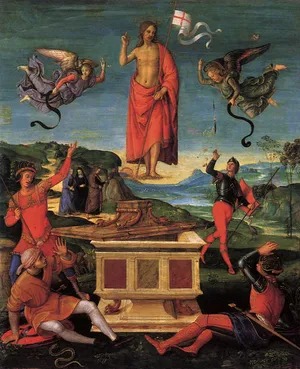
Easter, as widely celebrated today, is understood to mark the death, burial, and resurrection of Jesus Christ.
These events form the very foundation of the Christian faith.
“For I delivered unto you first of all that which I also received, how that Christ died for our sins according to the scriptures;
And that he was buried, and that he rose again the third day according to the scriptures.”
— 1 Corinthians 15:3–4
Without the resurrection, Christianity collapses:
“And if Christ be not raised, your faith is vain; ye are yet in your sins.”
— 1 Corinthians 15:17
Is Easter Commanded in Scripture?
It must be clearly stated:
There is no command in Scripture for Christians to observe an annual feast called Easter.
The word Easter appears only once in the King James Version (Acts 12:4), and even in that context, it is a translation of Passover (Pascha), not a Christian festival.
More importantly, the apostles—who laid the foundation of the Church—never instituted or commanded such a yearly observance.
What Did Christ Command Instead?
Rather than instituting a yearly celebration, Jesus established a continual ordinance—the Lord’s Supper—as the means of remembering His death:
“This do in remembrance of me.”
— Luke 22:19
“For as often as ye eat this bread, and drink this cup, ye do shew the Lord’s death till he come.”
— 1 Corinthians 11:26
The phrase “as often” is crucial.
It removes the remembrance of Christ from a fixed annual calendar and places it into the ongoing life of the believer and the Church.
The early Church did not gather once a year to remember Christ’s death and resurrection.
Instead, this reality was central to their regular fellowship and daily living:
“And they continued stedfastly in the apostles’ doctrine and fellowship, and in breaking of bread, and in prayers.”
— Acts 2:42
“And upon the first day of the week, when the disciples came together to break bread…”
— Acts 20:7
Their focus was not seasonal observance, but constant participation in the life of Christ.
The Resurrection: Not Just Celebrated, But Lived
Scripture does not present the resurrection as an event to be commemorated once a year, but as a present reality to be experienced daily:
“That I may know him, and the power of his resurrection…”
— Philippians 3:10
“Therefore we are buried with him by baptism into death: that like as Christ was raised up from the dead… even so we also should walk in newness of life.”
— Romans 6:4
“If ye then be risen with Christ, seek those things which are above…”
— Colossians 3:1
The resurrection is not merely historical—it is transformational.
Human Traditions
Scripture repeatedly warns against elevating human traditions to the level of divine command:
“In vain they do worship me, teaching for doctrines the commandments of men.”
— Matthew 15:9
“Beware lest any man spoil you through philosophy and vain deceit, after the tradition of men…”
— Colossians 2:
When any observance—no matter how well-intentioned—takes precedence over or replaces scriptural instruction, it must be carefully examined.
The death, burial, and resurrection of Jesus Christ are not seasonal truths—they are the daily life and foundation of the believer.
Scripture does not command an annual Easter celebration.
Instead, it commands:
A continual remembrance of Christ through the Lord’s Supper
A daily walk in the power of His resurrection
A life anchored in truth, not tradition
The real question, therefore, is not:
Do we celebrate Easter?
But:
Are we living in the reality of Christ’s death and resurrection every day?