Nigeria’s D’Tigers no longer resemble the confident and dominant side that once made the nation proud across Africa and beyond.
Recent performances have exposed deeper structural failings that many observers say have long threatened the stability of the men’s programme.
In spite of boasting several gifted players in Europe, Asia, and the United States, the team has struggled to translate potential into consistent success on court.
The decline is worrying and could worsen unless urgent reforms begin immediately.
Their comments followed D’Tigers’ poor showing in the opening window of the 2027 FIBA World Cup African Qualifiers.
The team played three matches and secured only one victory, leaving fans questioning their readiness for the long qualification journey.
They lost 88–78 to hosts Tunisia in Rades after a game dominated by defensive errors and wasted scoring opportunities.
Their second match ended in a disappointing 69–55 defeat to Guinea, who capitalised on Nigeria’s disorganised transition play.
D’Tigers managed a 75–69 win over Rwanda, though the performance still highlighted several weaknesses in defence and team chemistry.
Many stakeholders said these results were predictable, insisting that the national team’s problems stretch back several years.
The team’s decline follows their quarter-final exit at the 2025 AfroBasket tournament in Angola, where they initially showed early promise.
D’Tigers had started the competition brightly but failed to sustain momentum when it mattered in the knockout stages.
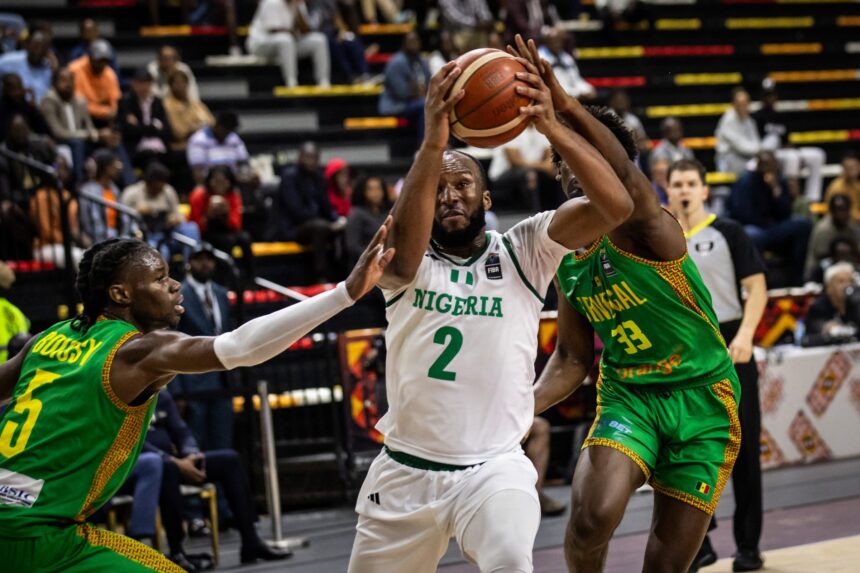
Their campaign ended after a heavy 91–75 loss to Senegal, who simply outplayed them in pace, structure, and discipline.
Since then, confidence in the team has gradually declined, especially with the latest ranking drop recorded by FIBA.
Nigeria slipped 11 places between March and September, falling from 42nd to 53rd in the world rankings.
The fall in ranking represents Nigeria’s worst position in recent years and reflects their inconsistency across key competitions.
Head Coach Mohammed Abdulrahman faced several challenges before the AfroBasket tournament, including limited preparation time and unresolved administrative issues.
In spite of those disruptions, the team impressed briefly in the group stage but could not maintain quality performances when pressure increased.
However, some analysts argue that Nigeria’s problems go beyond coaching limitations or isolated preparation issues.
D’Tigers remain historically significant in African basketball, boasting a continental title in 2015 and several strong Olympic and World Cup appearances.
Nigeria participated in the 2016 and 2020 Olympics and last featured at the World Cup in 2019, under Coach Alex Nwora.
Their absence from the 2023 World Cup was a major setback, and missing another would severely damage the team’s global relevance.
Former international, Seun Akinwunmi, said Nigeria’s decline is a direct consequence of poor organisation and administrative disconnect.
He said the team can no longer match top African sides because their structure fails to support elite competition.
He argued that Nigeria has “fallen from grace” in spite of having several talented players at home and abroad.
Akinwunmi said, “We are no more a force to reckon with, in spite of the top players we have in Europe, Asia and the U.S.”
He added, “The Federation knows what to do, but many of the coach’s plans are not executed, especially regarding proper preparations.”
He said Nigeria’s technical standard has dropped steadily since their impressive 2019 World Cup outing in China.
Grassroots coach, Tubosun Oyeleye, also expressed concerns, noting that the women’s programme is performing well while the men’s team appears directionless.
He said the contrast suggests deeper structural problems that the Nigeria Basketball Federation (NBBF) has failed to address properly.
Oyeleye said the NBBF must urgently address the situation if Nigeria hopes to qualify for the 2027 World Cup.
He warned, “A failure to qualify after missing 2023 will spell doom for our basketball.
“We will lose our standing internationally, and teams will no longer fear us in Africa or beyond.”
Sports commentator, Anthony Onyekachi, described the decline as a “long slide” that has gone unaddressed for too long.
He said results have worsened significantly since the team’s 2019 World Cup performance, which once promised long-term potential.
Onyekachi said, “It’s been like a mudslide since we returned from the World Cup in China.
“Missing the next World Cup will be catastrophic and will further damage the team’s image.”
He warned that previously smaller teams such as Guinea and Rwanda are now closing the gap and even outperforming Nigeria in key matches.
Onyekachi urged the NBBF to “change things for good” and restore proper planning, accountability, and technical direction.
Stakeholders generally agree that administrative lapses, poor funding, and inconsistent technical planning lie at the heart of the current decline.
Some also believe that a stronger domestic league would help produce players more accustomed to structured, high-level competition.
Nigeria now hopes to rebound in the third, fourth, and fifth qualification windows beginning in June 2026.
Each team will face the others again in the next phase of the qualifiers, giving D’Tigers another chance to rebuild momentum.
The top three teams from the group will advance to the final qualification round, increasing pressure on Nigeria to deliver consistent results.
Ultimately, Africa’s top five teams will qualify for the 2027 World Cup in Qatar, scheduled from Aug. 27 to Sept. 12.
Stakeholders say the journey will be difficult but still possible if Nigeria adopts a more unified organisational approach.
They insist that rebuilding D’Tigers is essential not only for competitive pride but for the future of Nigerian basketball as a whole.