Fresh explosions shook several cities across the Middle East on Saturday as the United States Embassy in Baghdad came under a drone attack, intensifying fears of a widening regional conflict following recent military exchanges involving United States, Israel, and Iran.
The strike marked the second time the US diplomatic mission in the Iraqi capital had been targeted since February 28, a development that underscores the growing volatility in the region. The attack comes in the aftermath of coordinated strikes carried out by the United States and Israel against Iranian targets, actions that triggered a series of retaliatory assaults and escalating military confrontations across multiple fronts.
Security officials and eyewitnesses reported that the drone strike caused panic in parts of Baghdad, though the full extent of damage to the embassy complex was not immediately clear. The attack added to the rising tension as various armed groups and state actors continue to exchange threats and military actions.
Meanwhile, authorities in Tehran issued a warning urging civilians in the United Arab Emirates to stay away from port facilities and energy infrastructure, warning that such locations could become targets as the conflict intensifies.
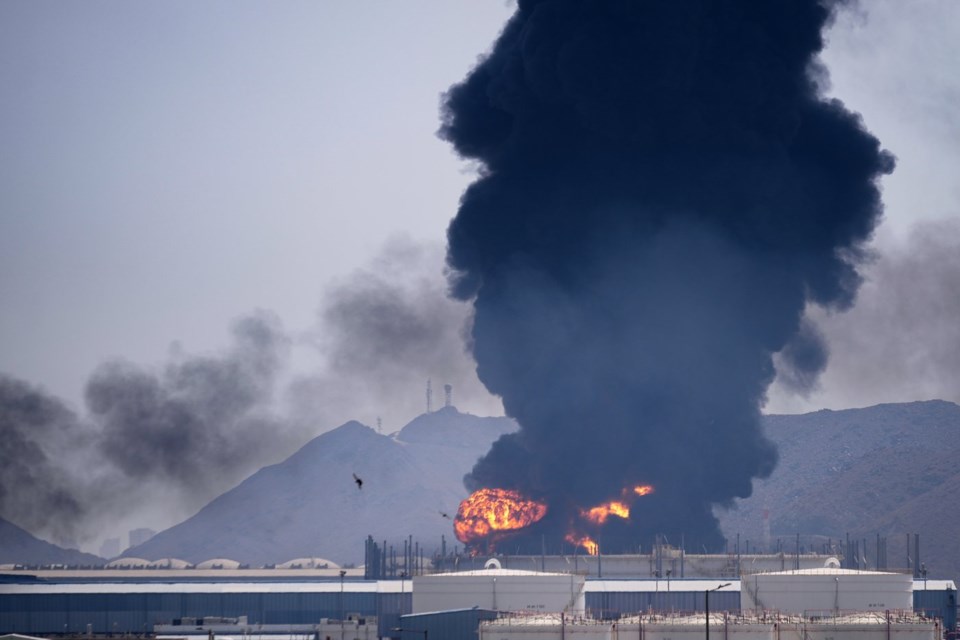
The advisory followed reports of an incident in Fujairah, one of the UAE’s key maritime and energy hubs, where thick black smoke was seen billowing into the sky. Fujairah hosts one of the region’s strategic oil storage and export terminals, making it a critical node in global energy supply routes.
Witnesses in the port city described scenes of confusion as emergency services rushed to the affected areas while authorities moved to assess the situation. Although official details about the cause of the smoke or potential damage remained limited, the development heightened concerns about attacks targeting vital energy infrastructure.
Iranian military authorities had earlier cautioned that ports and other strategic facilities linked to energy exports could become focal points in the ongoing hostilities. The warning was widely interpreted as a sign that supply lines connected to oil transportation and storage might face heightened risk.
The ongoing escalation has already had significant humanitarian and economic consequences. Waves of drone, missile and aerial bombardments across parts of the Middle East have displaced millions of civilians, forcing many families to flee their homes in search of safety.
According to figures released by Iran’s health ministry, more than 1,200 people have reportedly been killed within the country since the start of the latest round of hostilities. The casualty figures, though difficult to independently verify amid the conflict, highlight the growing human cost of the crisis.
Beyond the immediate region, the conflict is also sending shockwaves through the global economy, particularly in energy markets. Analysts warn that attacks targeting oil facilities, shipping lanes, and export terminals could disrupt supply chains and contribute to rising global energy prices.
The Middle East plays a central role in global oil production and transportation, and any sustained disruption in the region could have far-reaching implications for international trade and economic stability.
Diplomatic observers say the current tensions mark one of the most serious confrontations in the region in recent years, with fears that further retaliatory strikes could draw additional countries into the conflict.
International calls for restraint have continued to mount, with governments and global organisations urging all parties involved to de-escalate the situation and pursue diplomatic solutions to prevent a broader regional war.
As military activities intensify and uncertainty grows, millions of residents across the Middle East remain on edge, watching closely as events unfold in a crisis that could reshape the geopolitical landscape of the region.