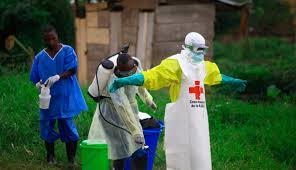
A fresh outbreak of the Ebola virus in the Democratic Republic of Congo has sparked growing concern across Central and East Africa after authorities confirmed dozens of deaths linked to the highly dangerous Bundibugyo strain, a variant for which there is currently no approved vaccine or specific treatment.
The alarming development was disclosed on Saturday by the Democratic Republic of Congo’s Minister of Public Health, Hygiene and Social Welfare, Samuel-Roger Kamba, during a press briefing in the capital city of Kinshasa. Kamba warned that the outbreak poses a serious public health threat because the Bundibugyo strain is known for its high lethality and the absence of targeted medical interventions. “The Bundibugyo strain has no vaccine, no specific treatment,” the minister said while addressing journalists and health officials.
He added that the strain carries a “very high lethality rate” capable of killing up to 50 per cent of infected persons. The latest figures released by Congolese health authorities showed that the death toll from the outbreak had climbed sharply to 80, a significant increase from the 65 fatalities initially announced a day earlier. The rapid rise in deaths has intensified fears that the outbreak may be spreading faster than previously estimated.
Health officials are now racing against time to contain the virus and prevent it from crossing borders into neighbouring countries, especially given the already confirmed cross-border fatality in Uganda. Ugandan authorities confirmed on Saturday that a 59-year-old Congolese national infected with the virus died in Kampala after being admitted to a health facility earlier in the week. According to the Ugandan Ministry of Health, the deceased had travelled from the DRC before succumbing to the disease.
Officials said laboratory tests conducted on the victim confirmed infection with the Bundibugyo strain of Ebola. The man’s body was subsequently repatriated to the DRC on the same day, raising additional concerns over the management of cross-border transmission risks. The Bundibugyo strain is one of several known variants of the Ebola virus and was first identified in Uganda in 2007.
Although less common than the Zaire strain, which has been responsible for several major outbreaks in Africa, health experts say the Bundibugyo variant remains extremely dangerous because of its ability to spread rapidly and cause severe internal bleeding, fever, vomiting and organ failure. The current outbreak has revived painful memories of previous Ebola epidemics that devastated communities in parts of West and Central Africa.
The Democratic Republic of Congo has experienced multiple Ebola outbreaks over the years due to its vast tropical forest regions, weak healthcare infrastructure and difficult security environment in some provinces. Medical experts fear that the lack of an approved vaccine specifically designed for the Bundibugyo strain could complicate containment efforts.
While vaccines exist for some Ebola variants, including the Zaire strain, scientists say they may not provide sufficient protection against Bundibugyo infections. Authorities in the DRC have reportedly intensified surveillance measures, contact tracing operations and emergency public health campaigns aimed at limiting the spread of the virus. Health workers are also being deployed to affected communities to identify suspected cases and isolate infected individuals.
International health agencies are closely monitoring the situation, particularly because of the movement of people between the DRC and neighbouring countries such as Uganda, Rwanda and South Sudan. Public health officials have warned that porous borders and busy regional trade routes could increase the risk of wider transmission if urgent containment measures are not enforced.
The outbreak comes at a time when many African healthcare systems are still struggling with limited funding, shortages of medical supplies and the lingering effects of previous disease outbreaks. Humanitarian organisations are expected to support the Congolese government with emergency response efforts, including protective equipment, laboratory testing and public awareness campaigns. Residents in affected areas have been urged to avoid contact with infected individuals, report symptoms immediately and cooperate with health authorities conducting tracing and screening exercises.
The Ebola virus is transmitted through direct contact with bodily fluids of infected persons or contaminated surfaces. Symptoms often begin suddenly with fever, weakness and muscle pain before progressing to more severe complications. As authorities continue to battle the outbreak, fears remain high that the number of infections and deaths could continue to rise unless swift containment measures succeed in halting transmission.