A public diplomatic spat has broken out between Nigeria’s High Commissioner to South Africa, Femi Fani-Kayode, and the South African Presidency following the alleged exclusion of the Nigerian delegation from the live broadcast of Friday’s credential presentation ceremony.
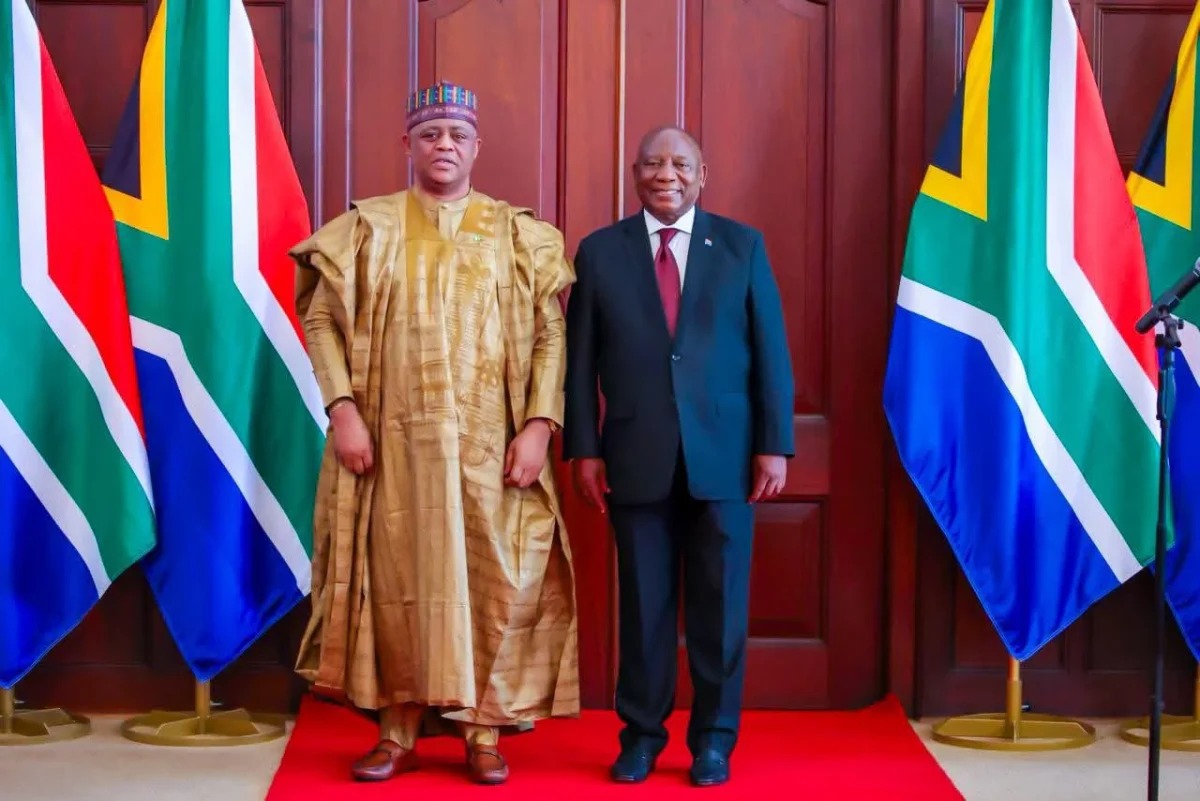
The dispute centers on events that unfolded on Friday, November 13, 2026, at the Sefako M. Makgatho Presidential Guest House in Pretoria (Tshwane), where Fani-Kayode, who also holds concurrent accreditation to Lesotho and Eswatini, formally presented his letters of credence from President Bola Tinubu to South African President Cyril Ramaphosa.
Fani-Kayode, whose appointment marks the first posting of a substantive Nigerian High Commissioner to South Africa in four years, presented his credentials alongside 14 other diplomats. The envoys represented the European Union, France, Germany, South Sudan, Somalia, Comoros, Madagascar, Uruguay, Vietnam, Seychelles, Belgium, Cyprus, Timor-Leste, and the Maldives.
According to the official programme, which was broadcast live on YouTube by the South African Presidency and covered by the South African Broadcasting Corporation (SABC), each envoy was formally introduced and given the floor to deliver brief remarks before presenting their letters to Ramaphosa.
However, the livestream suffered an interruption during the speech of the French Ambassador, Antoine Michon, before cutting directly to President Ramaphosa’s general address, omitting Fani-Kayode, who was the final envoy scheduled to speak.
Taking to his personal X (formerly Twitter) account on Friday evening, Fani-Kayode accused officials of deliberately cutting Nigeria out of the feed.
”Curiously, the South African Presidency refused to air the introduction of my goodself and the Nigerian delegation or to air my speech,” Fani-Kayode wrote. “They went a step further by cutting us out of the livestream completely and went back on livestream only after my speech was concluded. To be clear, I repeat, we were the only ones that were left out.”
The High Commissioner further stated that he protested the omission directly to President Ramaphosa during a subsequent photo session on the premises, claiming that the South African leader walked him over to the officials in charge and directed them to resolve the matter immediately.
Fani-Kayode added that he declined a post-ceremony interview request from SABC News in protest, though he noted that two Nigerian television stations present at the venue captured his full remarks.
Hours after Fani-Kayode’s post, and after the South African Presidency uploaded a separate standalone video clip of the Nigerian envoy’s remarks later on Friday afternoon, Ramaphosa’s spokesperson, Vincent Magwenya, issued a sharp rebuttal on X, accusing the Nigerian diplomat of distorting the facts.
Magwenya denied that President Ramaphosa had intervened in broadcast operations or stepped in on Fani-Kayode’s behalf, characterizing the broadcast interruption as a minor technical and operational issue rather than a deliberate snub.
”President Ramaphosa did not intervene on your behalf, nor does he interfere in the operations of the public broadcaster,” Magwenya stated in his reply. “Frankly, your approach in this regard on a minor operational issue which you misunderstood was grossly inappropriate.”
Magwenya urged the newly accredited High Commissioner to engage constructively through established diplomatic channels as he begins his tenure.
Meanwhile, the Nigerian community in South Africa has taken note of the friction. Speaking to journalists on Saturday morning, November 14, the President of the Nigerian Citizens Association South Africa (NICASA), Hon. Rev. Frank Onyekwelu, confirmed that the diaspora body had been briefed on the broadcast cut-off and was preparing to address the issue publicly.
Despite the diplomatic row over the broadcast, the standalone footage released by the Presidency showed Fani-Kayode striking a conciliatory and historic tone during his actual presentation to Ramaphosa.
In his remarks, he recalled Nigeria’s financial and moral support for South Africa during the anti-apartheid struggle, hailed Ramaphosa’s backing for Nigeria’s inclusion in the Group of 20 (G20), and emphasized that bilateral cooperation between Africa’s two largest economies remains vital to the continent’s destiny.