The ancient Greek philosopher Socrates warned that lies are not harmless distortions of reality; they are assaults on truth itself. Falsehood, he argued, is destructive because it murders truth and corrupts the moral order. Permit me to use his exact words, to wit: “The punishment for a liar is not being believed, even when telling the truth.” His disciple, Plato, carried the argument further.
In The Republic, Plato cautioned that the gravest danger to society comes when those entrusted with public responsibility lose their fidelity to truth. When leaders manipulate truth, the foundations of public trust collapse.
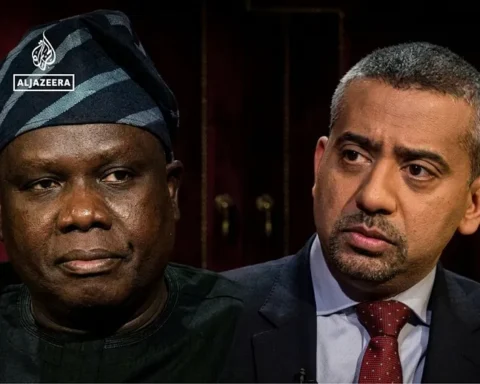
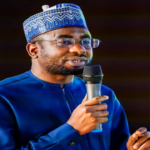
These classical insights provide a useful entry point into the recent outing of Daniel Bwala, Special Adviser on Media and Public Communications to President Bola Ahmed Tinubu, during his appearance on Mehdi Hassan’s Head to Head programme on Al Jazeera on March 6, 2026.
The American playwright, Tennessee Williams, once wrote: “The only thing worse than a liar is a liar who is also a hypocrite.” Williams’ point was simple: hypocrisy magnifies the harm of dishonesty because it disguises falsehood in the clothing of moral certainty. A hypocritical liar is therefore doubly dangerous—deceiving others while pretending to stand for virtue. The playwright goes further to submit that hypocritical liars’ ability to combine dishonesty with hypocrisy paints a picture of more deceptive and damaging personalities that lack any atom of integrity.
Another American voice, the celebrated humorist, Mark Twain, observed that “a lie can travel halfway around the world while the truth is still putting on its shoes.” Twain’s wit captured a stubborn reality: falsehood spreads faster than truth, especially in politics. He also popularised the phrase often associated with British Prime Minister Benjamin Disraeli —“lies, damned lies, and statistics”—a remark that underscores how statistics can either expose deception or be manipulated to sustain it.
Yet Twain also hinted at something deeper about the psychology of lying: when confronted with hard evidence, liars frequently retreat into denial. Whether this reaction springs from embarrassment, self-preservation, or the simple refusal to accept reality is a question for psychologists. But its public consequences are unmistakable.
Twain’s postulations about the reaction of a liar when confronted with statistics, incidentally, find accurate corroboration in the Jacqueline Simpson’s and Steve Roud’s A Dictionary of English Folklores (2003), where the dictionary quotes copiously, a letter written in the British newspaper, National Observer, of June 8, 1891, where the author wrote: “Sir, —It has been wittily remarked that there are three kinds of falsehood: the first is a ‘fib,’ the second is a downright lie, and the third and most aggravated is statistics.”
This psychological drama played out vividly during Bwala’s televised encounter on Head to Head. Over the course of the nearly hour-long programme, the presidential spokesman repeatedly denied or laughed off statements he had previously made about President Tinubu and the ruling All Progressives Congress (APC).
Ironically, many of the positions Bwala took while he was a fierce critic of the Tinubu camp were not inherently illegitimate. In a democratic system, opposition politics often thrives on sharp critique. Indeed, Nigerians will recall how the APC, during its years in opposition to the Peoples Democratic Party (PDP), aggressively challenged the government’s handling of insecurity and terrorism. The APC then gave open support to banditry and other felonious acts by the outlaws that have taken over Nigeria’s security space for more than a decade now.
The party held the then government in power by the jugular in its efforts to fight terrorists, bandits and other non-state actors bearing illegal weapons and laying waste to Nigerians in their homes, on the highways and on their farms. The APC then, under the late self-acclaimed Mai Gaskiya, General Muhammadu Buhari, fought every attempt made by the PDP-led government to fight the felons terrorising the nation.
Buhari’s popularity, especially among the talakawas of the North, I submit, without equivocation here, rose because of his stance against the action taken by the government to curb the activities of the terrorists. The old and functioning PDP then nicknamed the APC, appropriately too, a Janjaweed party, after the Sudanese Arab Baggara nomad militia group operating in Sahel Region, because the APC tacitly encouraged forces that destabilised the country. In the rough-and-tumble of Nigerian politics, such accusations were part of the partisan arsenal.
It was in that context that Bwala, before joining the Tinubu camp, made several statements accusing the APC and its leadership of dangerous tendencies. At one point he suggested that the party functioned like a militia structure ahead of the 2023 elections. Yet on Al Jazeera he denied ever making such claims—even when the host quoted his words and cited their sources.
For every raw statistic of the abysmal performance index of the government he represents, presented to him and his opinion of the government and personality of the President, Bwala either denied, or claimed ignorance or laughed it off! This clear reversal of position exposed a significant contradiction in his public statements. Nothing can be more embarrassing, more demeaning!
That denial is the crux of the problem. Changing one’s political opinion is not a crime. Democracies are built on the freedom to revise beliefs. But denying statements that are publicly documented—especially when confronted with them—is something else entirely.
What I found most nauseating is the tendency for Bwala to act like a typical pea-brained politician as he alluded to the linguistic principle of contextualisation whenever he was confronted with his past bearings on Tinubu and the APC. Whenever, while the encounter lasted, the presidential aide alluded to ‘context’, what he was saying is: under which condition did I say so? Sad!
Nobody denied that Bwala was acerbic while he was in the opposition. But it is purely bovine of him to throw it at us that anyone in opposition could make claims that he would not be able to stand by in the future when the political permutation changes! That is hogwash! Opposition is not about making slap-happy statements, and being unable to put on one’s thinking cap. It is criminal to claim that a man and his party established a nest of killers in the name of a militia group when you believed that the contrary was the case. It is crass irresponsibility for anyone to claim that another man planned to kill him when he knew that was and is never true.
Those are felonies punishable under the laws of the land. The records are there for all to see, read or watch. Pictures don’t lie. The videos of where Bwala made those outrageous claims on either the Channels TV or Arise TV are there to watch. It speaks more to Bwala’s character, background and fidelity to decency for the elephant which his elder sees in the day time to turn into a rabbit at nightfall!
Opposition elements like Bwala are the main reason why decent opposition politicking has gone to the dogs in Nigeria. He is one, if not the major reason, why our politics and politicking are defined by the anywhere-belle-face philosophy. There should be a limit to shamelessness and Bwala defines that limit! Gosh!
The practice in our clime is for anyone looking for an appointment to adorn the garb of a government critic. To get the attention of the President, all a politician needs to do is to pick on the President and daily pummel him. There are many Bwalas in the Tinubu Presidency. From Bayo Onanuga to the two newly appointed ambassadors, Femi Fani-Kayode and Reno Omokri, even up to the perpetual APC ministerial material, Festus Keyamo, and the PDP’s joy-killer, Nyesom Wike, we have spineless individuals who, had, in the past, interrogated Tinubu’s claims to decency, but, who, today, are his yes-men, defending the very odious things they had accused him of doing or being in the past!
Yes, there is nothing wrong if a man has a change of opinion. But I find it absolutely irreconcilable that the same Tinubu these scatological characters once told us was a drug baron, certificate forger, fund embezzler and a man without ancestry, has suddenly turned to a meteor, representing the best gift of the cosmic to humanity!
Political migration is not new in Nigeria, but the brazenness with which past statements are disowned has become almost theatrical. The most shameful aspect is that when we try to draw their attention to their past opinions of their today’s demigod, they fly in our faces, lying, and asking us to understand the ‘context’ under which they held those opinions!
But that defence stretches credibility. Opposition politics is not a licence for reckless accusation. To allege that a political party organised a militia or that a political leader threatened one’s life is not mere rhetorical flourish; such claims, if knowingly false, approach the territory of defamation and criminal misconduct.
Bwala later argued that he had not been informed beforehand that his past statements would be scrutinised during the interview. That explanation raises a curious question: would prior notice have changed the facts of what he had said? Or would it merely have allowed him time to prepare a more careful defence? Or would he have simply declined to feature on the programme?
Consider, for instance, a tweet he posted in November 2022 on his verified X account: “The human brain is unique and miraculous. It works and functions optically 24 hrs a day, 365 days a year, UNTIL YOU JOIN APC, THEN IT STOPS WORKING.”” That was Bwala speaking as a fierce critic of the party he now represents. The contrast between that Bwala and the one who appeared on Al Jazeera could not be more striking.
Faced with these contradictions, the presidential spokesman repeatedly invoked “context.” In effect, he suggested that statements made in opposition should be interpreted differently once political circumstances change.
The deeper issue here is not simply Bwala’s inconsistency but what it says about the character of contemporary Nigerian politics. The country has become accustomed to politicians who attack a leader fiercely today only to defend him passionately tomorrow once political appointments arrive.
Scholars of African moral philosophy have long warned about the corrosive effects of dishonesty in public life. The linguist Kofi Agyekum notes in his study of Akan proverbs on lying that African moral traditions consistently portray falsehood as a social poison. One Tanzanian proverb captures the point succinctly: “The path of a liar is very short.”
The German philosopher Friedrich Nietzsche expressed a similar insight when he warned that the greatest danger of lying is not deceiving others but deceiving oneself. A person, who internalises his own lies, Nietzsche argued, eventually loses the ability to distinguish truth from falsehood—and with it, respect for himself and others.
Even Aristotle framed the consequences with devastating simplicity: the ultimate punishment for a liar is that he will not be believed even when he speaks the truth.
That is the moral of the Bwala episode. Once public trust is eroded, it becomes difficult—sometimes impossible—to restore. Videos do not forget; archives do not fade; and the internet preserves statements long after their authors would prefer them buried.
Bwala’s family, friends, and political associates have surely seen the footage of his Al Jazeera appearance and the earlier recordings of the statements he denied. They have also seen the avalanche of reactions that followed. For them, the question is not merely political but personal: what image of a man does such a spectacle project?
The Irish writer Michael Scott once remarked that the most convincing lie is often built around a kernel of truth. Perhaps that insight explains the paradox at the heart of Bwala’s predicament. His earlier criticisms of the Tinubu camp may have contained elements of genuine conviction. But by denying them outright, he has transformed what might have been a legitimate change of political position into a spectacle of contradiction.
Ironically, the most fitting commentary on the episode comes from Bwala himself. In 2022 he declared that the human brain works constantly—until one joins the APC. If his recent performance is any indication, those words now return to haunt their author.
As the Yoruba would say, when an elder sees an elephant in broad daylight, it cannot suddenly become a rabbit at nightfall. Truth may be delayed, but it rarely disappears. And when it returns, it demands recognition.