By Obinna Uballa
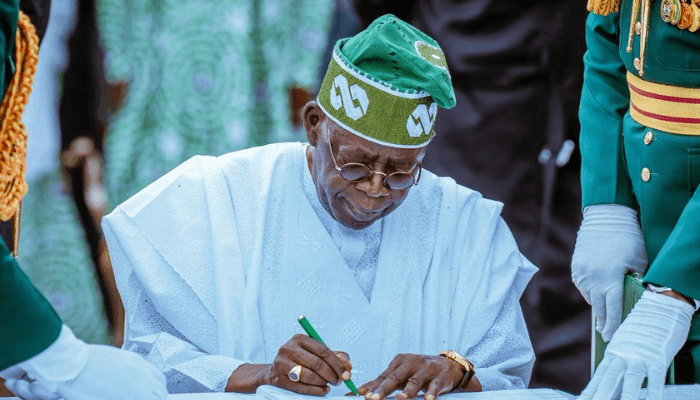
Fresh controversy has erupted in Nigeria’s electricity sector after President Bola Tinubu approved N2.8 trillion as the Federal Government’s verified liability to power generation companies (GenCos), rejecting their N6 trillion claim and insisting he would not pay beyond the audited figure.
Senior officials in the Presidency and the Federal Ministry of Power quoted by Punch Newspaper in a report, disclosed that the decision followed months of negotiations and a tripartite audit involving the Ministry of Finance, the Nigerian Bulk Electricity Trading Plc (NBET), and the GenCos.
The generation companies had argued that accumulated electricity subsidies dating back to 2010 had risen to between N6tn and N6.6tn. They warned that the mounting legacy debt threatened their ability to continue operations. However, the President reportedly demanded a comprehensive audit before committing public funds, drawing parallels with inflated subsidy claims in the defunct fuel subsidy regime.
At an August meeting with the President, the GenCos initially presented claims of about N4tn. They were subsequently directed to subject their figures to deeper scrutiny. With the audit now concluded, government sources say the verified liability stands at N2.8tn, less than half of the amount claimed.
“The President has approved N2.8tn and made it clear that not one naira more will be paid beyond the audited sum,” a senior official said.
As part of interim measures during the audit process, the Federal Government raised N501bn in January through a bond issued under the Presidential Power Sector Debt Reduction Programme. The bond was fully subscribed by pension funds, banks, and asset managers, and the funds have already been disbursed as a show of good faith.
Further payments are expected between May and July, with officials indicating that an additional N600bn to N800bn may be released. This would bring total disbursements to roughly half of the N2.8tn liability by mid-year, while the balance would be spread over 12 to 24 months.
The power sector’s liquidity crisis dates back to the 2013 privatisation of electricity assets for approximately N400bn. Since then, operators have struggled with non-cost-reflective tariffs, foreign exchange constraints, and persistent revenue shortfalls. Generation capacity continues to fluctuate between 2,000 and 5,000 megawatts, far below national demand.
The Nigeria Labour Congress (NLC) has strongly opposed large-scale payments to the GenCos, describing the privatisation as flawed and questioning why companies that acquired national assets for N400bn should receive trillions in government support without significant improvements in power supply.
Adding another layer to the controversy, the Presidency has attached strict conditions to the approved payment. A significant portion of the N2.8tn will be ring-fenced to settle the GenCos’ outstanding debts to gas suppliers, in a bid to address recurring grid collapses caused by gas shortages.
Government sources said operators have frequently attributed low generation levels to unpaid gas invoices, which led suppliers to curtail deliveries. Under the new arrangement, specific percentages of the funds must be used to clear gas debts, with oversight mechanisms to ensure compliance.
In addition, GenCos will be required to commit part of the funds to infrastructure upgrades and expansion. Officials alleged that both generation and distribution companies have underinvested in maintaining and modernising facilities, even as consumers often contribute money to replace faulty transformers owned by private firms.
Five generation companies – First Independent Power Limited, Geregu Power Plc, Ibom Power Company Limited, Mabon Limited, and Niger Delta Power Holding Company Limited – have already signed settlement agreements with NBET covering N827.16bn, to be paid in phased instalments.