Nigeria’s stance on Climate Justice has evolved from a defensive posture to a proactive leadership role in the Global South. By 2026, the conversation has moved beyond just “asking for help” to demanding a seat at the table as a key energy provider for the future.
Nigeria’s argument at recent summits (including the lead-up to COP31) hinges on three main points. Nigerian diplomats argue that while the continent contributes less than 4% of global emissions, it suffers the most from desertification in the North and coastal erosion in the South.
Nigeria continues to push for the use of Natural Gas as a “transition fuel.” The government maintains that immediate total
divestment from fossil fuels is unrealistic for a developing nation with significant energy poverty.
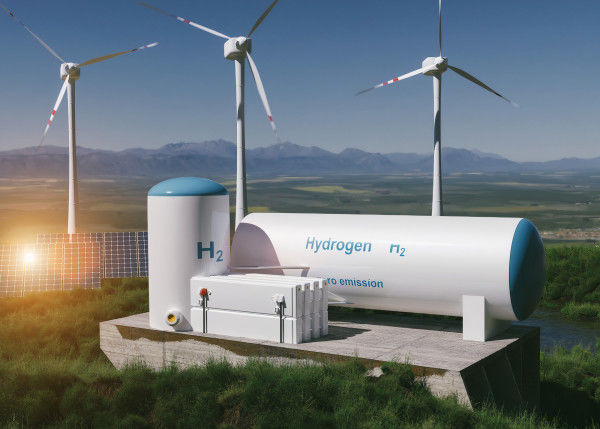
There is a growing push for international creditors to forgive portions of national debt in exchange for verified investments in local green infrastructure. Nigeria is betting big on Green Hydrogen a fuel produced by splitting water using renewable electricity. This is seen as a way to “future-proof” the economy against the eventual decline of oil.
With high solar radiation in the North and vast water bodies in the South, Nigeria has the raw ingredients to produce hydrogen at a competitive cost.
Building on agreements from previous years, 2026 has seen the expansion of “Hydrogen Offices” in Abuja and Lagos, designed to facilitate technology transfer and export pipelines to Europe.
Beyond exports, the goal is to use hydrogen to power Nigeria’s heavy industries, such as the Ajaokuta Steel Mill, reducing the carbon footprint of domestic manufacturing. Nigeria’s Energy Transition Plan requires an estimated $1.9 trillion to reach Net Zero by 2060.
If Nigeria successfully transitions to a green hydrogen exporter, it changes the geopolitical map. It moves the country from being a “petro-state” to an “electro-state,” potentially providing Europe with a stable, non-Russian energy source while industrializing West Africa.
While the diplomacy is polished, the internal challenge remains infrastructure. To be a hydrogen hub, Nigeria must first solve its domestic power grid issues, as green hydrogen requires a massive, consistent supply of renewable energy that the current grid cannot yet sustain.