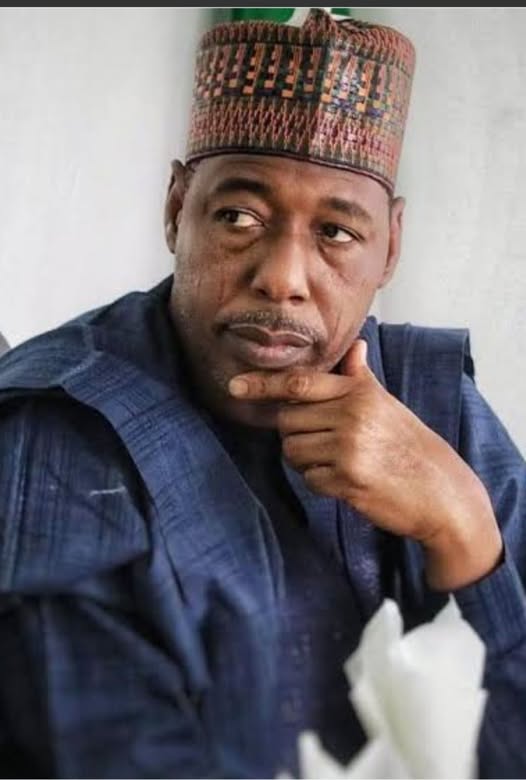
By Ishaya Malgwi
The recent threat by U.S. President Donald J. Trump to invade Nigeria “with guns blazing” has sent shockwaves across the nation. While the statement itself is provocative and contested, it has undeniably highlighted the long-standing grievances and suffering of marginalized Christian communities in Nigeria’s volatile regions—especially Christians in Borno State. In light of these developments, there have been notable shifts in the political rhetoric of Borno State officials, particularly Governor Prof. Babagana Umara Zulum. However, Christians in Borno and indeed Nigerians at large must remain vigilant and not be deceived by these politicians’ newfound declarations of religious tolerance and peaceful coexistence.
The Reality Under Governor Zulum’s Administration
Despite Governor Zulum’s recent public gestures aimed at promoting religious harmony, the reality on the ground presents a starkly different picture for Christians in Borno State. Under his administration, systemic discrimination and marginalization persist, often institutionalized through government policies:
1. *Denial of Christian Religious Education:* Christian Religious Knowledge has consistently been denied recognition and integration into the public school curriculum in Borno State. This educational exclusion marginalizes Christian students and erodes their cultural and religious identities in their homeland.
2. *Neglect of Internally Displaced Christians:* Borno South, where Christians primarily reside, has faced blatant neglect in the rehabilitation and resettlement of internally displaced persons (IDPs). While the state grapples with the consequences of the Boko Haram insurgency, government support overwhelmingly favors Muslim-majority areas, leaving Christian IDPs to fend for themselves.
3. *Political Disenfranchisement:* Christians who legitimately won their primaries to become local government chairmen in Askira/Uba and Chibok have been systematically denied these positions under Governor Zulum’s watch. Such actions institutionalize political exclusion based solely on religious identity.
4. *Religious Educational Imbalance:* The establishment of Islamic schools dominates educational infrastructure development, particularly in Borno South. The absence of Christian schools in these areas further marginalizes the Christian population, restricting their access to faith-based education.
5. *Unpaid Gratuities for Retired Christian Civil Servants:* Pension and gratuity payments remain pending for many retired civil servants, the majority of whom are Christians. This financial neglect violates the principles of justice and equal treatment.
6. *Ban on NGO Interventions in Christian Areas:* Non-governmental organizations seeking to assist vulnerable Christian populations face outright bans, depriving these communities of essential humanitarian aid and development programs.
The list of grievances extends beyond these points, suggesting a systemic bias rather than isolated administrative failures.
The Danger of Political Rhetoric
In this context, Governor Zulum’s recent rhetoric—such as visiting Christian refugees in Cameroon, sponsoring Christian pilgrimages, and politicians publicly acknowledging Christian relatives—must be critically examined. While these gestures may appear appealing on the surface, they are primarily symbolic and fail to address the deep-seated inequalities and institutional discrimination faced by Christians in Borno State.
These acts seem designed to pacify tensions and project an image of religious tolerance without implementing substantive reforms. For the Christian communities that endure daily neglect and persecution, these rhetorical overtures are insufficient and may serve as manipulative distractions.
The Call for Justice and Equity
The inflammatory statements attributed to President Donald J. Trump regarding a military intervention, though extreme, underscore the desperation felt by persecuted groups seeking justice and protection. While the prospect of invasion is neither desirable nor practical, it reflects the international community’s frustration with Nigeria’s failure to uphold the rights and security of all its citizens.
Justice and equity demand more than political rhetoric; they require tangible policy changes that guarantee:
– Equal access to education, including the teaching of Christian Religious Knowledge.
– Fair rehabilitation and resettlement programs for displaced Christians.
– Representation in political offices that reflects community demographics.
– Establishment and support for Christian educational institutions.
– Prompt payment of pensions and gratuities irrespective of religious affiliation.
– Unhindered humanitarian aid to all communities in need.