By Uche Chris
When the report of U.S congressionally bill allegedly asked Nigeria to discontinue close ties with China, many people openly expressed dismay and outrage, and interpreted it as patronizing. But they were wrong. It shows that most people don’t understand the world and the role of power, whether group, local, national or international. Power rules everything and everybody. To shy away from power is to create a vacuum and chaos.
China’s relative silence in the escalating US‑Iran war, an ally, and in the dramatic capture of Venezuela’s Nicolás Maduro, another close ally, is less a sign of indifference than of a conscious strategy: Beijing wants to avoid being dragged into America’s military affairs while quietly recalibrating its posture toward its own vulnerabilities.
China is an economic imperialist, and political actions that could lead to military encounters are disdained. It is a strategy: to overthrow the capitalists through capitalism. As the largest country in the world in population, China has for long agonized over its subservient position to very small countries, such as Japan, Germany, France, etc. Today, China is the second largest economy in the world with a GDP of $19 trillion, only second to U.S with $30 trillion.
A Clay-Footed Elephant
However, in export, China is number one with 46 trillion yuan and a record trade surplus of $1.2 trillion in 2025. It leads globally in the production of steel, solar panels, and electric vehicles (EVs). During last October Communist Party Congress, China rolled out its military technology of the future that left the world in panic. But equipment alone, as we have learned sadly, don’t win wars.
I had said earlier that China’s focus on economic diplomacy and imperialism was strategic. Why? Its political/civil leadership doesn’t trust the military and can’t share power with them as in democracy. Soldiers don’t go to war without the power to execute it . For instance, in the present war on Iran, you see the Secretary of War, Pete Hegseth, chairman Joint Chiefs, Cane, addressing the media together, and Centcom Commander also. They’re exercising power of war.
China has long treated Iran and Venezuela as useful, but not indispensable, partners, shaped by specific interests rather than ideological loyalty. China grew last year at 5% more than any of the big economies, and it is powered by oil. China lives on oil, which through some anti-U.S schemes it was able to get from Venezuela and Iran, both under U.S sanctions. China provided Iran $60 billion for arm development and military technology in exchange for oil. Venezuela is the conduit through which Iranian oil gets to China.
Why China stay quiet
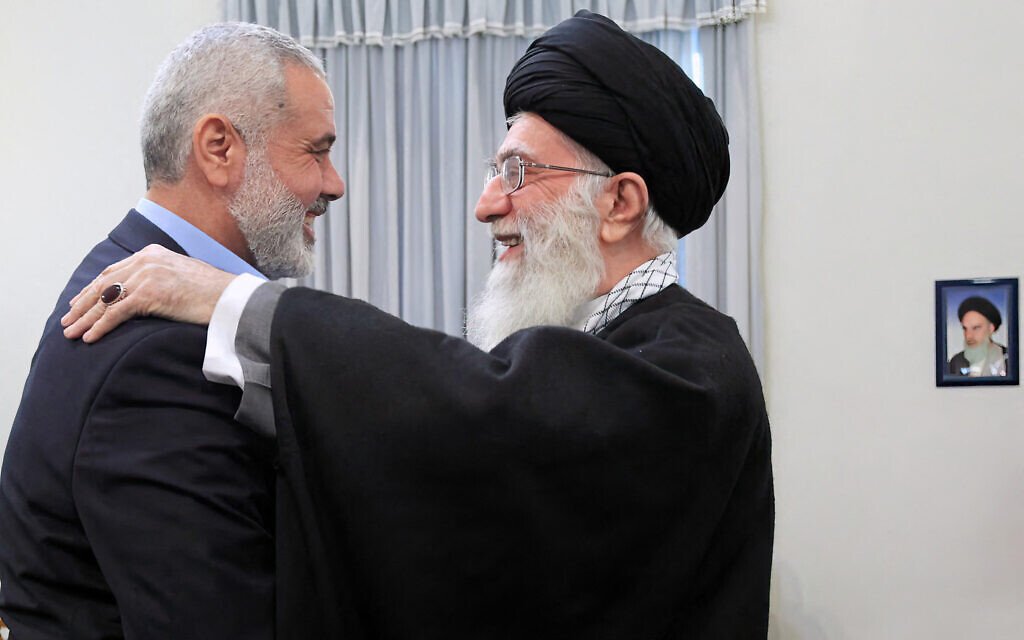
Past U.S presidents failed to see the nexus, or were too myopic to understand its political ramifications. President Trump did in his first term, but it was truncated by his election loss. China depends on Iran, which control the Strait of Hormuz, the chokehold of global oil supply, threatens the existence of U.S and Israel, and sponsors global terrorism. It was its guarantee against the U.S and Israel in terms of oil supply in a volatile region.
Because China eschews formal mutual‑defense treaties, it can maintain “objective and impartial” rhetoric, condemning U.S “military adventurism” and “bullying” actions, without committing to any direct intervention. It is a calculated strategy to keep power with the civil authority and avoid political issues that could be complicated to untangle.
But there is more: Trump’s ability to seize Maduro, protected by Cuban forces and Chinese air defense system, was hugely humbling. It was a realization that brought home the stark truth, and for the first time, China voted alongside U.S on an issue at the UNSC. China has not fought an active war since the WW II and, therefore, lack combat readiness. America has fought in Kuwait, Iraq, and Afghanistan in the past 30 years. So, troops combat readiness and strategic planning are critical. China can’t compete, and Trump uses every opportunity to make the point.
Geopolitical message to China’s allies
With Iran under U.S military crush, China is at its mercy because about 18 percent or 1.8mbpd of its oil supply comes from Iran, which is almost 90 percent of its total export through the Strait of Hormuz, and another 600,000 bpd or 5 percent from Venezuela. Together, U.S now control a sizeable part of energy supply to China, that is power. China used to challenge Trump on trade tariffs, it can’t try it again.
When Maduro was captured in a nighttime raid, Beijing’s response was vocal on international law and sovereignty, yet it stopped short of threatening sanctions, military action, or any step that might trigger a direct confrontation with Washington.
When Iran followed, there were no whimpers from China because the picture was clear and the strategy obvious. Power has changed, and power is nothing if not used as previous U.S presidents since Clinton had failed to do while the problem mutated. The world is not about morality alone, or justice or rightness. All these are part of the ideals for a good world, but definitely, inconsequential without power. It is power that imposes order and ensures peace, both locally and internationally.
There is a lesson here for Nigeria. First we don’t have battle-tested troops to confront the terrorists. It’s a joke. Why are they not in Chad? The troops that fought in ECOMOG are no longer in the military through that mass retirement by Obasanjo in 1999 and the senseless style of appointments of service chiefs. So, what we really have are rag-tag Nigerian military facing battle hardened terrorists. Secondly, there is no effective power in Nigeria. None, because effective power imposes political order.
Wider implications for global order
China’s quiet posture also feeds a larger narrative battle over the future of the international system. Beijing portrays itself as a “responsible counter‑balance” to an impulsive, hyper‑interventionist United States, emphasizing dialogue, restraint, and respect for sovereignty. At the same time, its muted reactions expose the limits of its power: China can influence markets, shape regional narratives, and deepen ties with secondary powers, but it still cannot match the U.S in raw, coercive hard power.
For smaller states aligned with or courted by Beijing, this signals a need for hedging. Countries will likely seek Chinese financing and diplomatic cover while also exploring back‑channel understandings with U.S to avoid being left exposed when the next crisis erupts.
In the long run, China’s quiet in the US–Iran war and the Maduro affair may not diminish its influence, but it will force its allies, and its own strategists, to confront an uncomfortable truth: in a world of expanding U.S strike capabilities, China’s strength lies in staying out of the line of fire.