By Patrick O. Okigbo III
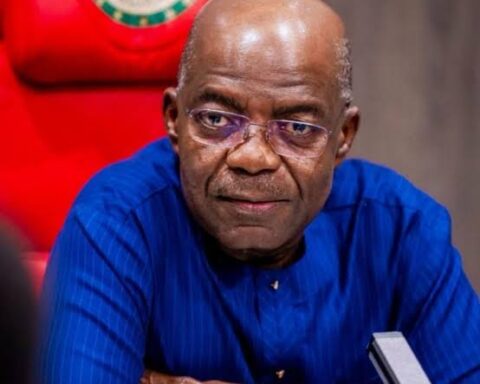
By placing Chima Ubani’s name on a hospital, Alex Otti has offered Nigeria a different measure of a life worth honouring.
Governor Alex Otti has named an 80-bed hospital after Chima Ubani. The news will struggle to survive the week’s noise. A hospital has been built. A plaque has been mounted. Another public building has acquired a public name. And?
A name is an argument about what a society values, and governments make that argument constantly through their actions and inactions. They make it through the people they honour, the monuments they raise and the names they fix to things. In Nigeria, public landmarks tend to carry the names of former rulers who presided over the country’s decline, or of politicians still in office who are busy adding to it.
The lesson arrives without being taught. Power justifies itself. Seek ye first the kingdom and its trappings, and you can be the one adding all the other things unto yourself. Acquire enough power, and you can name anything after yourself.
Otti has taught Ndi Abia something else. He has put an activist inside the state’s official memory, in a space usually reserved for governors, generals and party financiers.
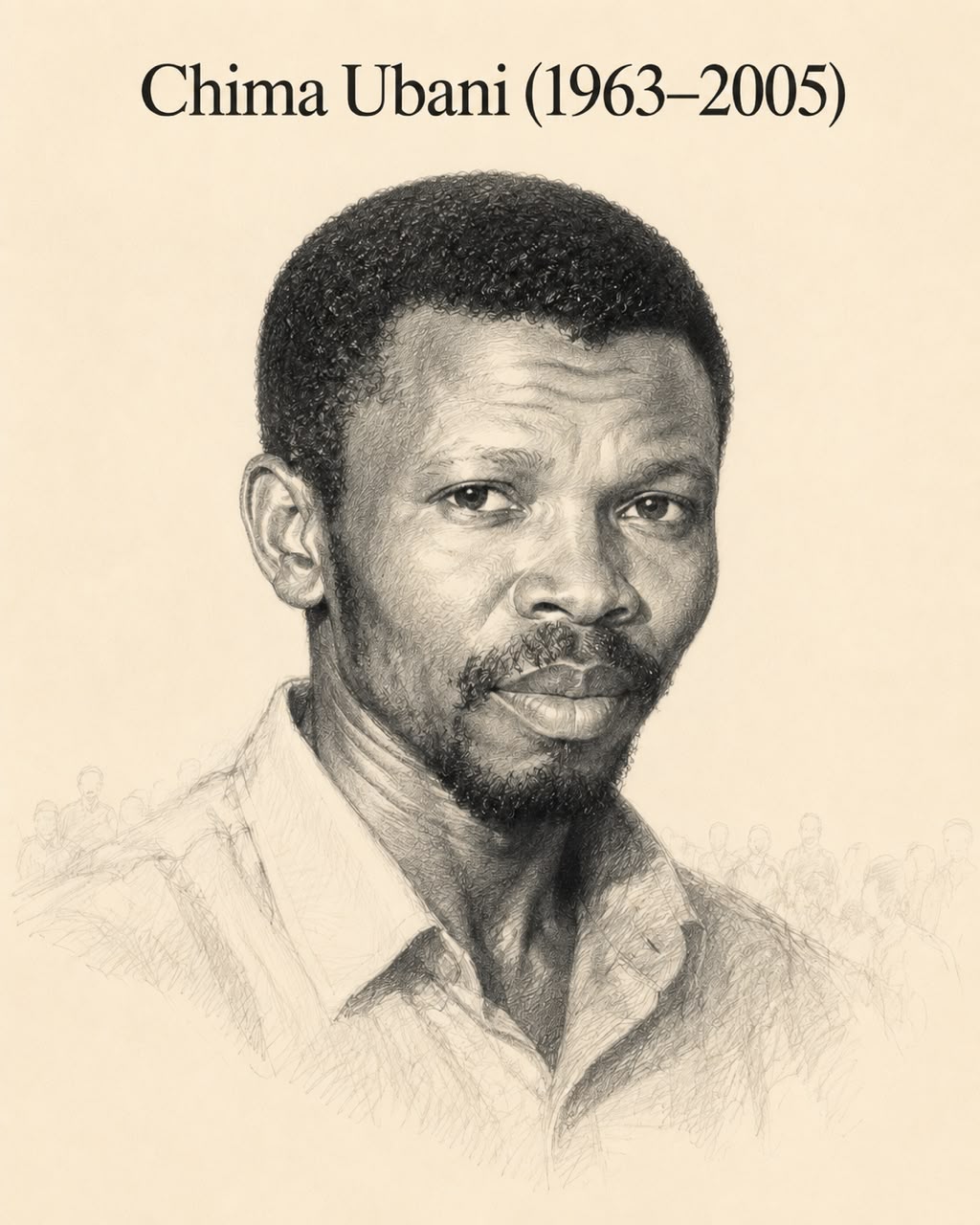
Ubani was born in 1963. He came to public life at the University of Nigeria, Nsukka, as president of the students’ union, and was expelled for leading protests against the Babangida military government. He needed a court order to sit his final examinations. The bargain of his life was already visible in that. He would not keep quiet, and power would make him pay for it.
After the annulment of the June 12, 1993 presidential election, he helped gather several civil society organisations under one roof as the Campaign for Democracy. Outrage alone would not remove a government. The people had to be organised. Through the Campaign for Democracy, the Democratic Alternative, the United Action for Democracy and the Civil Liberties Organisation, which he eventually led, he kept resistance to military rule alive through its most frightening years.
The state raided his home, seized his papers and forced him into hiding. It eventually jailed and tortured him, ignoring court orders for his release. Amnesty International declared him a prisoner of conscience. The return to civilian government in 1999 did not douse his fire. Ubani knew that the arrival of elections and the departure of the soldiers did not complete the work of democracy. He continued to challenge police killings, unlawful detention, official corruption and economic policies that punished the poor most severely.
On September 21, 2005, he died in a motor accident while travelling between rallies in a nationwide protest against increases in fuel prices. He was 42.
I arrived at the University of Nigeria in September 1990, a few years after Ubani had gone. The Students’ Union Government was where the real arguments were happening, and I found my way to them early. Societies do not improve on their own. Someone has to decide that a wrong is no longer tolerable, and then accept whatever follows. That was easy enough to say. Whether I could be that person, when the cost was mine to pay, I did not know.
At Nsukka, certain names boosted our morale when we had to decide whether to organise or to stay quiet. Olu Oguibe. Chima Ubani. Innocent Chukwuma. They had left only a few years before we arrived, yet to us they belonged to an older, more heroic era. Their stories had already hardened into campus legend.
We began to measure our fear against their myth. What would Chima Ubani have done? What would Olu Oguibe have said? How would Innocent Chukwuma have organised this action? We did not always find their courage, but cowardice was harder to excuse with their example in the room. They had shown us that students armed with only placards and slogans could face down those who fired their guns without giving thought to their actions. They had shown us that a university was not only a place to earn a degree but also a place to hone what citizenship demands of us.
So what’s in a name? A child treated at the Chima Ubani Hospital may one day ask whose name is over the entrance. The answer will be that he was a young man who took on a military government to restore the liberties of people he would never meet, and who died protesting a policy he believed punished the poor.
That question may open the hatch for the child to explore and learn about Ubani’s other co-travellers: Emma Ezeazu, Chidi Odinkalu, Olisa Agbakoba, Abdul Oroh, Lanre Ehonwa, Ogaga Ifowodo, O’Mano Edigheji, Omolade Adunbi, Rotimi Sankore, Beko Ransome-Kuti, Yinka Odumakin, Sylvester Odion-Akhaine, Shehu Sani, Femi Falana, Gani Fawehinmi, Alao Aka-Bashorun, Tunji Abayomi, Bamidele Aturu, Femi Aborisade, Auwal Musa Rafsanjani, Frank Kokori, Ken Saro-Wiwa and many others. They are the generation that refused a dictatorship the quiet it needed to thrive.
This naming decision also puts the Otti government on notice. A hospital carrying Chima Ubani’s name must work. Its wards must be clean and staffed, its equipment maintained, its doctors present, and its doors open to the people for whom Ubani fought. Anything less turns the tribute into political theatre. By choosing his name, Otti has indicated the standard by which the hospital must be judged. If it fails, the name meant to honour Ubani will instead indict the government.
This naming decision is much larger than merely commemorating a worthy Abia son. Otti has made a claim about the kind of person Ndi Abia should hold up to their children, and he has put that claim somewhere people go when they are frightened and in need.
In a country that has mostly reserved its plaques for men who seized power or grew rich on it, that is worth saying plainly. Governor Otti did well with this one.