Remembering a Statesman of Courage and Conviction.
By Odera Chidera
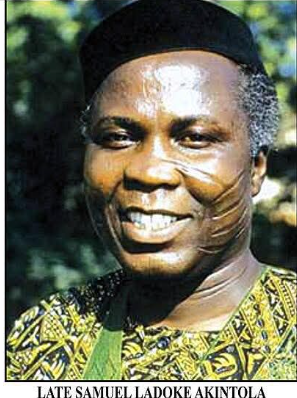
Sixty years ago, Nigeria lost one of its most formidable political figures when Chief Samuel Ladoke Akintola, former Premier of the defunct Western Region, was brutally killed during the country’s first military coup of January 15, 1966. His death marked not only the violent end of a political era but also the silencing of a bold voice whose ideas, choices, and sacrifices helped shape Nigeria’s early democratic journey.
Chief Akintola was a man of intellect, eloquence, and deep political conviction. A trained lawyer and journalist, he rose to prominence as a leading nationalist and a key member of the Action Group, working alongside other foremost figures of the independence struggle. As Premier of the Western Region, he pursued governance with a firm belief in regional autonomy, economic development, and political pragmatism, even when such beliefs placed him at odds with former allies.
History remembers Chief Akintola as a controversial yet courageous leader—one who refused to be defined solely by political rivalry but by his unwavering resolve to act according to his understanding of Nigeria’s best interests. His decision to chart an independent political course, which later culminated in the formation of the Nigerian National Democratic Party (NNDP), reflected a leader unafraid to stand alone in defence of his convictions
Tragically, his life was cut short in the violent upheaval that ended Nigeria’s First Republic. He died in office, a sitting Premier, during a moment that changed the nation’s political destiny forever. His assassination underscored the heavy cost of intolerance, political bitterness, and the breakdown of dialogue in a fledgling democracy.
Six decades on, Chief Samuel Ladoke Akintola deserves to be remembered not merely for the controversies that surrounded his career, but for his contributions to nation-building, his oratorical brilliance, and his commitment to nation building. He served Nigeria as the first Minister of Labour, Minister of Aviation and leader of opposition at the federal parliament. Akintola had the distinction of moving the successful motion for Nigeria’s independence. Just as his motion in Parliament led to the building of the National Stadium, Surulere, Lagos. As Premier of Western region, he built the magnificent University of Ife, brought to fruition Bodija and Ikeja industrial estates as well as the estates in Surulere, Lagos.
His life reminds Nigerians of the dangers of political extremism and the enduring need for tolerance, negotiation, and respect for differing views in a plural society.
As Nigeria continues to grapple with questions of unity, federalism, and democratic stability, the legacy of Chief Akintola remains relevant. He stands as a symbol of a generation of leaders who, despite their flaws, believed deeply in the promise of Nigeria.
May his courage be remembered, his service acknowledged, and his sacrifices never forgotten.
Adieu, Chief Samuel Ladoke Akintola, statesman, nationalist, visionary, and pragmatist