This Sunday, April 26, 2026, marks the 40th anniversary of the Chernobyl Nuclear Power Plant disaster. What was once a day of quiet reflection has been transformed by current geopolitics into a high-stakes debate over nuclear safety and regional sovereignty.
While official ceremonies in Kyiv remain limited due to security concerns, the diaspora and opposition movements have taken the lead in a major symbolic move, the Belarusian opposition (led by Sviatlana Tsikhanouskaya’s office) has organized marches in Warsaw, Vilnius, and Bialystok. This year’s slogan, “For an Independent and Nuclear-Free Belarus,” explicitly ties the 1986 tragedy to current protests against the stationing of Russian tactical nuclear weapons in Belarus.
A major rally is scheduled for Sunday in New York near the United Nations, where activists are calling for “nuclear de-escalation” across Eastern Europe.
From a commemorative concert by the Vesnivka Choir in Toronto to the “Chernobyl is Forever” exhibition in Ireland, events are focusing on the personal stories of the 800,000 “liquidators” who contained the original conflagration.
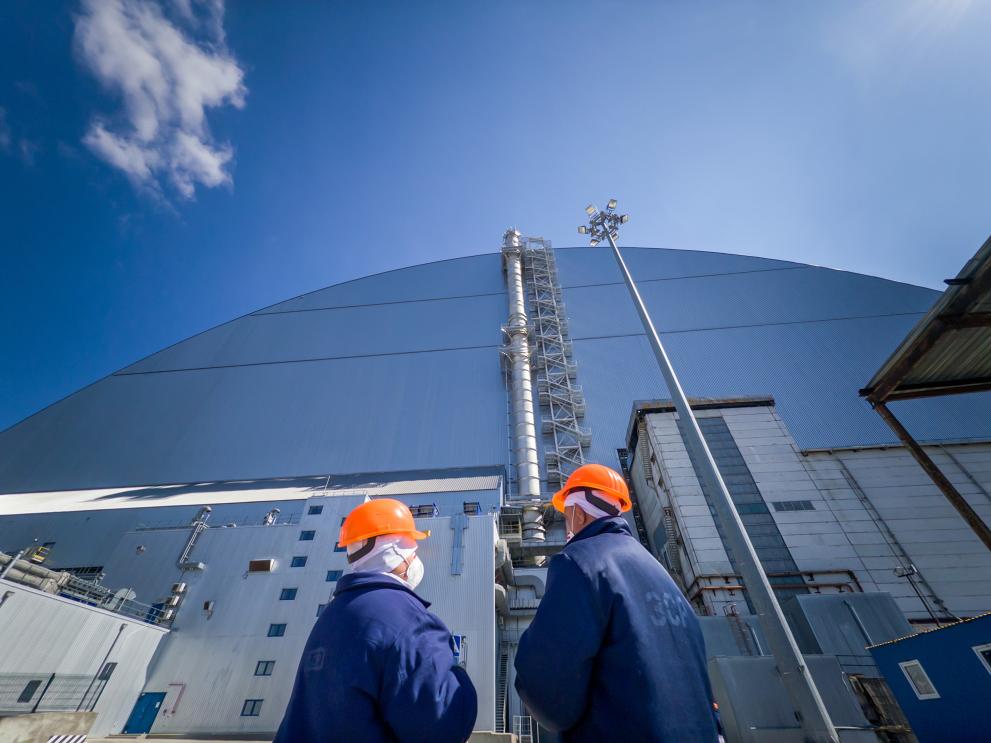
The most alarming news this weekend surrounds the New Safe Confinement (NSC), the $2.1 billion steel arch designed to last 100 years.
Site supervisors confirmed this week that a drone strike in February 2025 punctured the containment arch. Workers are currently battling high radiation levels and logistical hurdles to maintain the structure, which remains under “constant threat” due to its proximity to the Belarusian border.
Ukrainian officials are using the anniversary to highlight the “systematic looting” of laboratories and the ongoing danger at other sites like the Zaporizhzhia NPP, calling it a new era of “geopolitical nuclear risk.”
As scientists gather for 40th-anniversary symposiums, the focus has shifted to the “Chernobyl Paradox.”
In the absence of humans, the Exclusion Zone has become Europe’s largest “accidental” nature reserve. Przewalski’s horses, wolves, and brown bears have reclaimed the ruins.
However, recent studies released for the anniversary show that while the forest looks lush, subtler effects like darker frog skin and cataracts in birds prove the genetic toll of the 1986 fallout is still active.
The anniversary is also being used by some to argue for Generation IV reactors, which proponents claims are immune to the types of failures seen at Chernobyl 40 years ago.