By Fr. Michael Nsikak Umoh
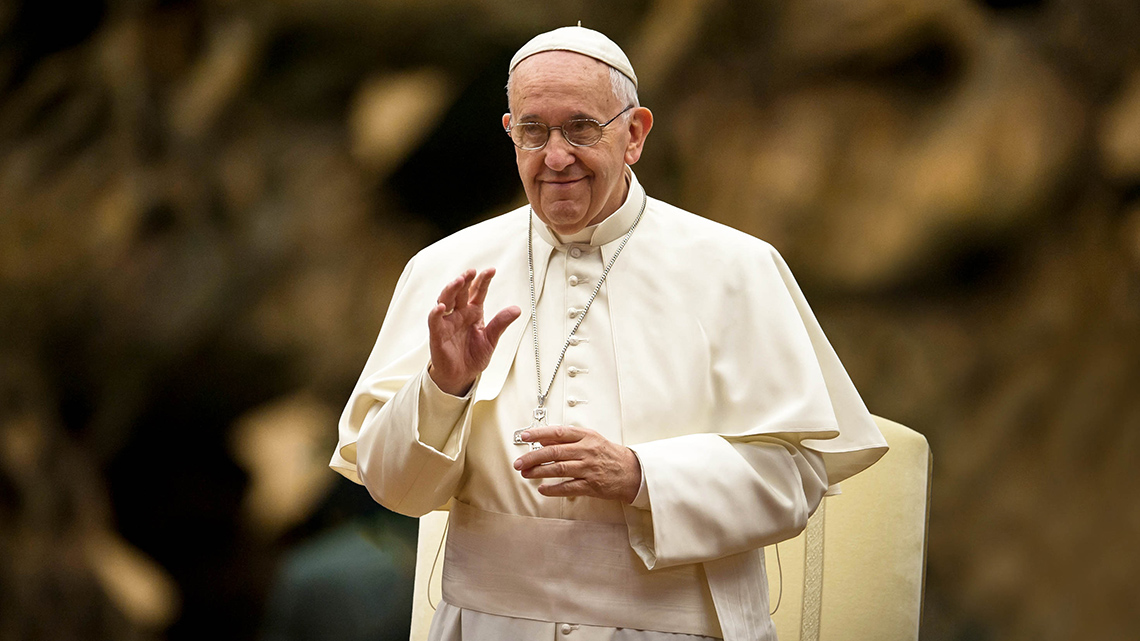
Tuesday 21 April, 2026, the first anniversary of the passing of Pope Francis, the Catholic Bishops’ Conference of Nigeria (CBCN) paid him a tribute by publishing a comprehensive reflection on the Pontiff’s last full encyclical, Dilexit Nos. Titled, “The Encyclical, Dilexit Nos of Pope Francis: A Summary, Its Relevance to the Nigerian Context, and a Tribute”, the document, far more than a routine religious summary, is a sophisticated three-part prophetic theological lens designed to diagnose the moral and structural ailments of modern Nigeria, while honouring a legacy of radical love.
The timing of the work is deeply symbolic. By releasing it exactly one year after Pope Francis’s transition to glory, the CBCN transforms the moment into a renewed loyalty and commitment to his teachings. The document serves as a bridge between the global vision of the “Sacred Heart” and the local “joys and hopes, griefs and anxieties” of the Nigerian people.
The first section offers a textual summary of Dilexit Nos, arguing that modern humanity has become enslaved to market forces and technology. The Bishops highlight a striking theme: in an age of Artificial Intelligence and algorithms, it is the heart (the center of intimacy and genuine love) that must be recovered to save our humanity. Humanity must return to the heart as the center of sincerity and authentic reform.
The document challenges current science and philosophy, which often exalt the brain (reason) or body (biology), to the detriment of the heart which is the unifying center of the person. The summary notes that conflicts and wars are fought in the heart before reaching the battlefield, suggesting that global transformation must begin internally. It clarifies that devotion to the Sacred Heart is not about a single organ, but about contemplating the whole Jesus Christ, whose human heart is a natural sign of infinite love.
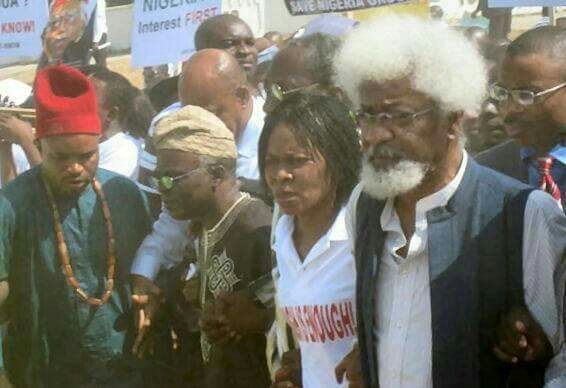
The most striking portion of the document is part two which is the critical contextual application to the Nigerian situation. Here, the Bishops strongly condemn the “merciless raiding” of communities in Benue, Plateau, and Borno. They cite the massacre of over 200 people in Benue as a “crime against humanity” and criticise the government’s perceived complicity and failure to prosecute offenders.
The review points to the brutal crackdown on the 2020 #ENDSARS protests and highlights that over 70% of Nigerians suffer from “multi-dimensional poverty”. It labels all these as symptoms of a society that has “lost its heart”. It describes a “textbook definition of corruption” and criticises the government for spending lavish resources on foreign trips while ordinary citizens face unprecedented hardship and hunger.
Additionally, the document laments the mass exodus of Nigerian youth (the “Japa Syndrome”), warning that this “best of the poor” migration robs the nation of its essential labour force and creative potential. CBCN unequivocally warns against attempts to turn Nigeria into a “one-party state” and calls for the reform of the Independent National Electoral Commission (INEC) to restore its integrity. The Bishops further urged the nation to embrace diversification of economy instead of the mono-economy largely practiced. To this end, educational institutions are urged to form youth who integrate the “head, heart, and hands”.
The final section of the document is a loving tribute to Pope Francis, whom the Bishops described as a “revolutionary of tender love” throughout his twelve-year pontificate. The review details his “Papal Manifesto” on evangelisation and his “Ockham’s razor” approach to simplifying Church bureaucracy.
It also highlights critical legal updates, such as the reform of Matrimonial Nullity cases to make them faster and more accessible to the poor, and the mandatory reporting of clerical sexual abuse through Vos Estis Lux Mundi. The Bishops extol the spirit of inclusiveness inspired by the Holy Father’s strong push for Synodality; the idea of the whole Church walking together, and ensuring that the voices of the marginalised, women, and youth are heard.
The CBCN concludes that Nigeria’s leadership failures and persistent corruption are not just structural issues but deeply moral ones. By weaving together Pope Francis’s calls for social friendship (Fratelli Tutti) and care for the environment (Laudato Si’), the Bishops present a Christian worldview that demands a “civilisation of love”. This document stands as a bold declaration that for Nigeria to move forward, its leaders and citizens must undergo a transformation of the heart.