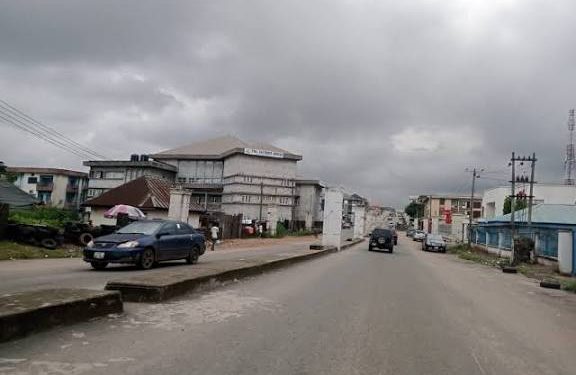
Full-scale economic, commercial and official activities in major cities and towns in Abia and Imo in the South-East have begun to gradually return, following the cancellation of the Monday sit-at-home order.
The proscribed Indigenous People of Biafra (IPOB) issued the order in the entire South-East region on Aug. 2021 to protest the arrest and incarceration of its Leader, Mazi Nnamdi Kanu.
There were reported cases of deadly attacks in some communities, towns and cities in the region in the past four years, allegedly perpetrated by IPOB, while enforcing its order.
Gladly, reprieve came to the region on Sunday, Feb. 8, when IPOB Spokesman, Emma Powerful, in a statement, announced “total cancellation” of the illegal directive, quoting the group’s leader.
Since then, the people of the region have begun gradual return to their businesses and official activities with great delight, albeit cautiously.
A NAN survey carried out in markets, motor parks, schools, banks and government establishments and offices in the two states, proved that normalcy was beginning to gradually but steadily pick up.
Socio-economic activities had long returned to Owerri and its environs, long before the cancellation of the sit-at-home was announced.
Although, motor parks, schools, markets, and banks opened for business Monday, some residents said that there was still palpable apprehension among the people, who feared that IPOB could spring a surprise attack on the city, if Kanu was not granted pardon and released soonest.
In Owerri, FCMB, banks were open for business and customers were seen using the Automatic Teller Machines (ATMs) for withdrawals and other transactions.
A staff member of a new generation bank told NAN, on the condition of anonymity, that the bank resumed normal banking activities more than two years ago.
The source said his branch begin their Monday activities between 9am to 10am as a precautionary measure.
“The measure was put in place for us to, first of all, feel the security pulse of the state before opening to the public.
“Before the sit-at-home order and activities of ‘unknown gunmen’, banks usually opened by 8am, but now we have to make sure that no group is out to enforce the order before we open.
“This is mainly for our safety because we are usually their easy target,” the source said.
It further hinted that a return to normal resumption of banking activities by 8am was being considered at the top management level in Abuja, following the cancellation of the order.
A NAN correspondent, who monitored interstate motor parks, learnt that more passengers turned out on Monday to travel, compared to previous Mondays.
A driver with a private transport company in the town, Mr Fidelis Isinwa, said “we have once again come back to the reality of work on Mondays to the glory of God”.
Isinwa said that for many years, Monday trips were put on hold due to the situation and “for the sake of commuters’ safety” but that had now been restored.
Another transporter, who identified himself simply as Adisa, said that transport companies suffered huge losses during the sit-at-home order.
A private commercial driver on the Owerri – Onitsha route, Mr Ikechukwu Dikeora, explained that passengers were earlier scared of travelling on Mondays, especially within the South-East.
Dikeora, who lauded the cancellation of the sit-at-home directive, expressed the hope that Monday businesses will gradually boom again.
He urged residents to turn out on Mondays for their normal businesses.
The traders in major markets in Owerri have, however, continued to witness a decline in patronage on Mondays, the cancellation of the sit-at-home order, notwithstanding.
At the Relief and Eke Onunwa Markets within Owerri Municipality, there was a lull in activities, while some shops were seen locked.
A trader in the market, Mrs Ozichi Iwuala, said that some traders, especially dealers in non-perishable items, were still skeptical about the reported cancellation of the sit-at-home, hence only open on other days.
Iwuala, however, attributed the situation to other factors outside the sit-at-home order, saying that a lot of people do their weekly shopping on Saturdays.
“Before the sit-at-home order, people shopped on Mondays, but since the order came into effect some years ago, a lot of people prefer to avoid public places to guard against sudden attacks.
“Now, traders, who do not do much on Mondays, like dealers in non-perishable goods, now prefer to rest and open on Tuesdays, not necessarily because of the sit-at-home order,” she said.
Another trader, Mr Paul Nwagwu, who sells second-hand clothes, also said that business was always dull on Mondays due to other reasons.
Nwagwu explained that businesses boomed during other week days.
“We normally open our bales on Wednesdays and Fridays, so most of our customers prefer to come on those days.
“Mondays are not peak selling days for us but not because of the sit-at-home,” he said.
Also, Mrs Ngozi Ahamefule said that rural traders, who usually come to the capital city for business, still remained largely skeptical about the reality of the cancellation of the sit-at-home.
“We are traders and, although those of us in Owerri may be relaxed, there is fear among our customers and traders, who come from the villages,” Ahamefule said.
She, nonetheless, expressed the hope that with time, “if unknown gunmen attacks are not reported on Mondays, the situation will improve“.
A teacher in a public school, who spoke on the condition of anonymity, said that some public schools still observed the sit-at-home on Mondays.
“We have been told to resume our normal activities but we are still cautious.
“Some of our schools are not secure, so Mondays are not really serious school days,” the source said
A civil servant, who identified herself as Margaret Igwe, said although workers always turned up for work on Mondays, the turnout increased and normalised since the sit-at-home order was lifted.
Mr Frank Onwudinjo of the Ministry of Housing praised the State Government for its “interventions, which have led to the cancellation of the order”.
In Abia, residents of Umuahia and Aba expressed cautious optimism about the return of normalcy, in the wake of the reported cancellation of sit-at-home order by the IPOB leader.
The people described the cancellation as “a positive step towards restoring normalcy and economic stability in the region”.
In separate interviews with NAN in Umuahia and Aba on Monday, they said the development would further boost economic activities in the region.
They said that the return of commercial and economic activities on Mondays would help to rebuild investors’ confidence after about four years of economic setback caused by the sit-at-home order, which halted commercial activities every Monday across the five South-East states.
The trading activities in Ohiya Mechanic Village and Ubani Modern Market in Umuahia were going on.
At Ohiya Mechanic Village, traders and artisans opened for business, while customers were transacting businesses.
Also at the Ubani Modern Market, only a few shops opened, while many remained locked.
A motor spare parts dealer at the village, Mr Chinedu Ndubuisi, said that compliance with the lifting of the order was encouraging.
Ndubuisi, who is also a member of the task force at the village, said that traders previously stayed away from the village on Mondays but were gradually resuming since the order was lifted.
According to him, the increasing number of traders opening their shops reflects growing enthusiasm and confidence among residents to return to their normal life on Mondays.
Another trader at the village, Mrs Somtochukwu Ifeani, said that business activities had long returned, saying that there was zero compliance with the sit-at-home order.
Ifeanyi, however, said that customers from outside Abia, particularly Imo, had yet to return to the place on Mondays, stressing the need for sustained sensitisation to rebuild public confidence.
A trader at the Ubani Modern Market, Mr Nzubechi Obia, said that many traders were skeptical about opening their shops, in spite the cancellation.
Obia said the few traders that open on Mondays were doing so cautiously due to the lingering fear and uncertainties.
He said that the market was usually patronised by people from Uzuakoli and other neighbouring communities, where compliance with the order had been strict, adding that the people’s absence on Mondays often left the market dull and practically empty.
The National President of the Agricultural Farmers and Traders Development Association of Nigeria, Mr Elijah Nze, described the lifting of the order as a welcome development.
Nze said that compliance with the order impacted the region’s economy negatively, with huge revenue loss every Monday.
He urged the people to return fully to their businesses, while calling on the South-East governors to establish a joint security network to provide adequate security for lives and property.
Nze also appealed to the National Orientation Agency to intensify its sensitisation campaigns to inform residents about the lifting of the order.
Also speaking, the Executive Director of the Foundation for Environmental Rights Advocacy and Development, Mr Nelson Nwafor, described the cancellation of the order as a welcome development.
Nwafor said that the announcement brought relief to traders, transport operators, students and small business owners, who had endured prolonged economic hardship brought about by the sit-at-home order.
He noted that commercial cities, such as Aba, experienced significant disruptions in trade, education and access to healthcare during the enforcement period.
According to him, movement and business activities have improved, with more shops reopening and transport services resuming operations, though activities have yet to return fully to pre-sit-at-home days.
Nwafor identified safety concerns and fear of the unknown as pending challenges, stressing the need for inclusive dialogue, improved security and sustained confidence-building measures.
He emphasised the importance of credible communication and community-based peace-building initiatives to prevent misinformation and ensure lasting normalcy in the region.
In Aba, the commercial hub of Abia, all the major banks, which have their offices on Sam Mbakwe Road, Aba – Owerri Road, Azikiwe Road and Port Harcourt Road remained closed on Monday.
The bank ATMs in the city were empty and could not dispense cash. They were only operational for money transfers.
Also, both public and private schools in the city were all under lock and key and school children were seen playing football and other games in open spaces and on the streets.
Offices in Aba South and Aba North LGA headquarters were closed as at 10am on Monday, with only the security men seen on duty.
The Cemetery Road Market, Shopping Centre on Asa Road and other major markets also did not open for business on Monday.
Although, Ariaria International Market had for a long time remained open on Mondays, only few traders actually opened their shops for business.
Conversely, small markets, such as Nkwo Ngwa, BonSac, Umungasi, Afo-Une, Abia Nkwo, and other similar foodstuff and provision markets were always open and busy, in spite the Monday sit-at-home.
Although human and vehicular traffic increased on the roads on Monday, many transport companies did not open because of low passenger turnout.
The Manager of a transport company, Mr Ekeoma Onwuka, told NAN that the inactivity in the major markets on Mondays affected their operations, since traders from other states stopped coming to Aba due to the sit-at-home order.
Onwuka said that his company was always ready for business even on Mondays but for the low passenger turnout.
He said that many people resorted to waiting until Tuesdays to travel because of the fear of the unknown, while some comfortably took Mondays as a day to rest and attend to other engagements outside business.
Mr Henry Ibekwe, who sells footwear in front of the Ariaria International Market, confirmed that the market had always remained shut since the inception of the IPOB sit-at-home order but later began to open for traders willing to do skeletal business transactions.
“I am a businessman and my shop is outside the main market. I am not here for the day’s business activity but to pick something for my customer.
“Not that I like the sit-at-home but I am afraid of the unknown. Life has no duplicate and I know I can do my business on other days, apart from Mondays,” Ibekwe said.
An Artist, Alozie Okoro, said his children had yet to resume school on Mondays because of the sit-at-home based on his personal decision.
“My children are my future and I cannot toy with their lives.
“Besides, I do not want stories from their school authorities because the school does not have adequate security,” Okoro said.