The U.S. and Israel launched a coordinated military campaign against Iran, codenamed “Operation Epic Fury” and “Operation Roaring Lion” respectively, conducting nearly 900 joint strikes on Iran within the first 12 hours.
Since then, the world could barely keep up with happenings in the Gulf region.
The opening bombardment on Iran successfully targeted a high-level meeting in Tehran, resulting in the death of Supreme Leader Ali Khamenei and several top military commanders.
President Donald Trump, who entered into the war while negotiations with Iran on shutting down its nuclear programme were ongoing, has been threatening fire and brimstone.
He said that the goal was to “raze the missile industry to the ground” and ensure that Iran never achieves nuclear capability.
According to reports, more than 2,000 strikes have targeted the Islamic Revolutionary Guard Corps (IRGC) facilities, air defenses, and nuclear research sites.
Iran has responded with hundreds of ballistic missiles and unmanned combat aerial vehicles and loitering munitions developed by Shahed Aviation Industries.
The Iranians have expanded their target list to include Gulf Arab states (Bahrain, Kuwait, Qatar, UAE, and Saudi Arabia), striking civilian infrastructure like desalination plants and airports to pressure the U.S. into a ceasefire.
Although this round of conflict has shifted from a shadow war into a direct, large-scale military confrontation, it has its roots in a previous crisis.
In June 2025, the long-simmering hostility between Israel and Iran erupted into overt military confrontation, putting the Middle East on a razor’s edge and sending shockwaves across the globe.
For weeks, the two regional powers exchanged deadly blows, with each strike pushing the spectre of a wider regional war closer to reality.
What began as a shadow war of proxies and covert operations has escalated dramatically, with resultant destruction of lives and property.
On June 13, 2025, Israel launched a series of targeted airstrikes on Iranian military infrastructure and nuclear facilities.
After the attacks, Israel claimed to have set back Tehran’s nuclear programme significantly and decapitated key military leadership.
As expected, Iran swiftly retaliated with barrages of missiles and drones, hitting Israeli cities and towns.
By the time the smoke of bombardments cleared, both parties had suffered significant casualties, with Iran’s Health Ministry stating more than 220 people had been killed, and Israel confirming more than 20 fatalities.
The audacious nature of Israel’s strikes, targeting nuclear sites like Natanz and Fordow, and even the headquarters of Iranian state TV, signified a profound shift in the intensity of the conflict.
Raphael Cohen, an expert at RAND, a nonprofit, nonpartisan think-tank, said then that Israel viewed Iran’s proxy attack as an existential threat.
“Israel believed it was almost out of time to stop an Iranian bomb and that the time was right for a preventative strike,” he said.
According to the White House, Trump framed the war as a “dawn of a new season” for the Iranian people.
Trump has also called for Iran’s “unconditional surrender” and stated that he intends to play a direct role in selecting Iran’s next leader, famously dismissing the late Supreme Leader’s son, Mojtaba Khamenei, as “unacceptable”.
Israeli Prime Minister Benjamin Netanyahu also justified the strikes as an “act of necessity against an existential threat”.
Polish President Karol Nawrocki and some leaders in the Baltics have also offered clear political backing, viewing the operation through a security lens similar to their stance on Russian aggression.
However, the UN Secretary-General, António Guterres, has repeatedly condemned the strikes as a violation of the UN Charter, warning that “when force replaces law, barbarism takes its place.”
Notably, he said that the conflict now directly impacts 16 countries.
While China and Russia have been observing the situation from afar, yet condemning the U.S. and Israel, analysts say they could determine the future of the conflict.
Many of the U.S. allies in Europe oppose or stay neutral, citing the violation of the UN Charter. However, Spain has been the most vocal Western critic of the U.S.
Prime Minister Pedro Sánchez vehemently refused to allow U.S. forces to use Spanish bases and doubled down even after threats of diplomatic retaliation from President Trump.
Regardless of support, neutrality or opposition to the war, conflict analysts are debating whether the world will, again, be plunged into an unending regional conflict.
The International Institute for Strategic Studies said the U.S. has transitioned from a state that uses diplomacy to one that chooses results over rules.
It warned that, while air superiority is near-complete, the shift toward targeting the 1.2 million-strong IRGC and Basij forces will require a massive increase in strike capacity.
The Center for Strategic & International Studies reported that the cost of the first 100 hours of the war was 3.7 billion dollar, most of which is unbudgeted, posing a significant long-term fiscal challenge for the U.S.
Middle East Institute (MEI) labelled the war as an intelligence gamble, questioning if the decapitation of leadership would lead to a collapse or if the regime would prove adaptive and resilient potentially leading to a protracted insurgency.
Others, such as the Just Security, argue that the preemptive justification of the war fails the legal test of imminent assault, setting a dangerous global precedent for unilateral regime change.
Meanwhile, a consensus is emerging among analysts that, while the military campaign has been seemingly successful, the political endgame is murky.
They claim that 80 per cent of Iran’s air defence system has been destroyed.
However, other analysts, such as those at the Council on Foreign Relations, point out that, by excluding allies from the initial planning, the U.S. may find itself without a coalition of the willing.
This, they warn, might disrupt the management of post-war humanitarian and governance crisis that follows a regime collapse.
There are also consequences for global trade and cooperation, even in regions not directly affected by the conflict.
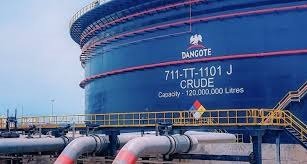
Already, oil prices have surged due to the crisis, with global supply chain disruption and economic growth decline further forecast by analysts.
According to the BBC, crude oil prices surged over 20 per cent to exceed 100 dollars to -114 dollars per barrel; the highest level since 2022.
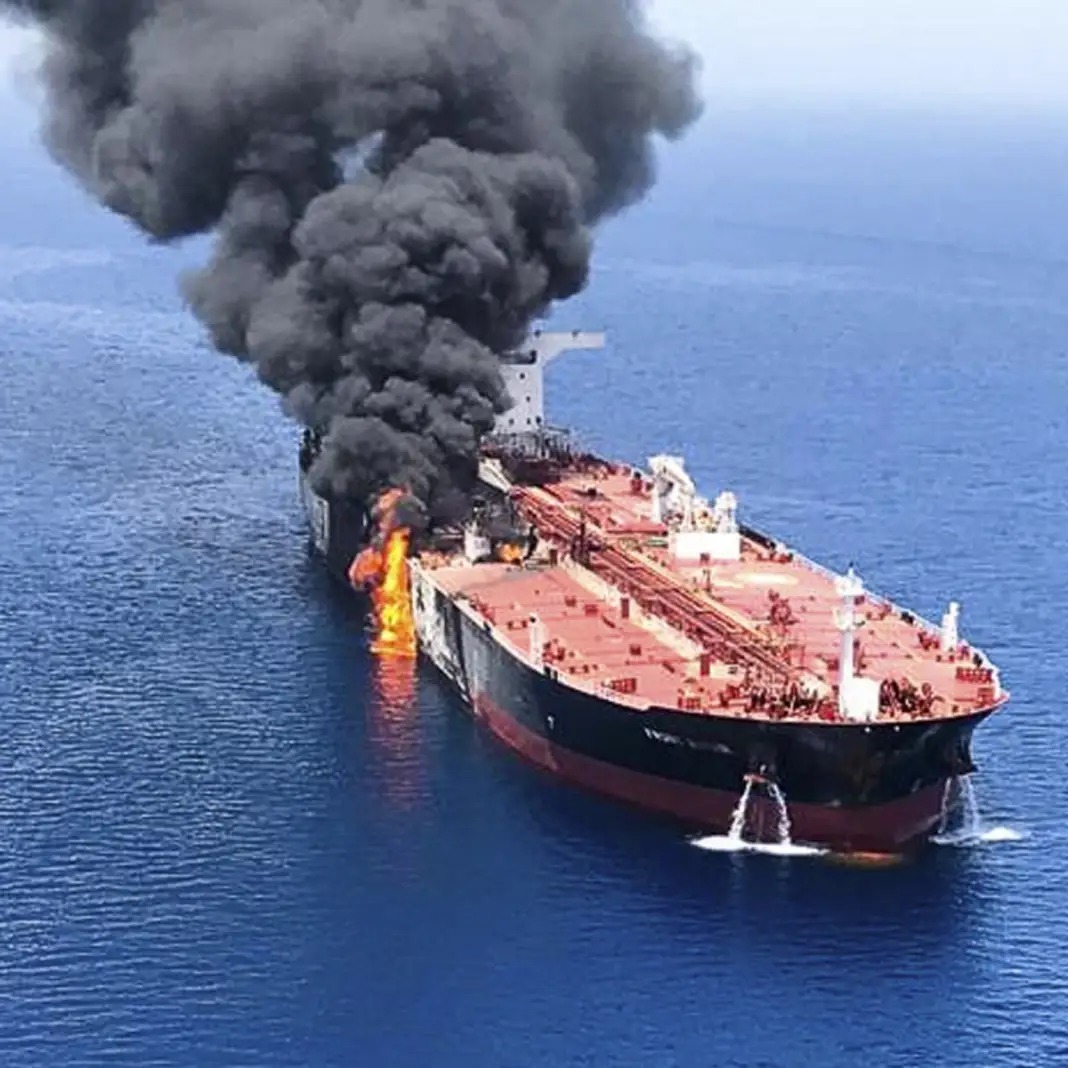
It further reported that trend is threatening regional and global shipping, causing sharp declines in global stock markets.
In Nigeria, the impact of the conflict has started to tell on citizens, with oil prices going up since the conflict started.
Of course, with oil price hike comes an increase in commodity prices, cost of living crisis and, ultimately, domestic inflation.
With conflicts in the eastern flank of Europe and elsewhere, public affairs analysts, including Azubuike Ishiekwene, believe that the U.S and Israel’s action amounts to war mongering and a deliberate destabilisation of global peace.
While Tehran’s regime is not far from blame, the urgent question remains: Can the international community sustain the cost of another protracted, unending conflict?