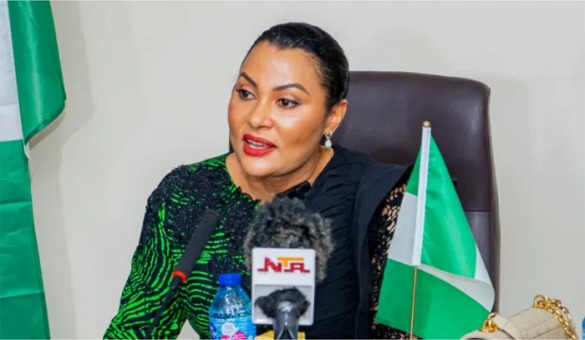
The Minister of State for Budget and Economic Planning, Dr. Doris Uzoka-Anite, has assured women and vulnerable Nigerians that the Federal Government’s budgeting process will increasingly prioritise their needs, stressing that inclusive economic planning is not only a social responsibility but also a critical component of national development.
Uzoka-Anite gave the assurance in Abuja while speaking at a joint symposium for special needs groups in Nigeria themed “Rights, Justice, Action for Women & Girls With Special Needs in Nigeria: Exploring Strategies & Approaches for Acceleration and Impacts.” The event brought together policymakers, civil society organisations, development partners, and advocates for persons with disabilities and other vulnerable groups to discuss strategies for improving inclusion and access to opportunities.
In her address, the minister emphasised that Nigeria must move beyond traditional budgeting methods that often treat citizens as a uniform group, noting that such an approach fails to address the specific challenges faced by vulnerable populations. According to her, modern budgeting must be inclusive, data-driven, and targeted at groups that require special support to participate fully in the economy.
She explained that women living with HIV, persons with disabilities, elderly women, and internally displaced persons face unique social and economic barriers that require deliberate government intervention through budgetary allocations and policy implementation. She said the government is working towards ensuring that public spending directly impacts these groups in measurable ways.
Uzoka-Anite noted that inclusive budgeting would involve identifying the specific needs of vulnerable populations and allocating funds to programmes that directly address those needs, including healthcare, education, social protection, skills acquisition, and access to finance. She added that the ministry is collaborating with relevant stakeholders to improve data collection and monitoring systems to ensure that funds allocated for vulnerable groups are properly utilised and achieve the intended impact.
The minister further stated that empowering women and vulnerable groups is not just a humanitarian gesture but an economic strategy that can significantly contribute to national growth. She explained that when women and vulnerable persons are given access to education, healthcare, and economic opportunities, they become productive members of society who contribute to economic development and poverty reduction.
She also highlighted the importance of partnerships between government agencies, civil society organisations, and the private sector in achieving inclusive development. According to her, the government alone cannot address all the challenges faced by vulnerable populations, and therefore collaboration is necessary to design and implement effective programmes.
Participants at the symposium called on the government to ensure that policies designed for vulnerable groups are fully implemented and not left only on paper. They stressed the need for transparency, accountability, and regular evaluation of programmes targeted at women and persons with special needs.
Advocates at the event also emphasised the importance of including persons with disabilities and vulnerable women in decision-making processes, noting that policies affecting them should not be made without their input. They argued that inclusion in governance and planning would lead to more effective and realistic policies.
The symposium ended with a renewed call for stronger legal frameworks, increased funding for social programmes, improved accessibility in public infrastructure, and greater awareness about the rights of women and girls with special needs in Nigeria.
Uzoka-Anite reassured participants that the government is committed to building an inclusive economy where no group is left behind, adding that future budgets will increasingly reflect the needs of women, persons with disabilities, and other vulnerable Nigerians.
She concluded by stating that national development can only be achieved when every citizen, regardless of gender, age, health status, or physical ability, is given the opportunity to live with dignity and contribute meaningfully to society.