The capital of Benin Republic descended into chaos on Sunday morning as military forces launched an apparent coup attempt against President Patrice Talon’s government, Apples Bite Reports.
According to reports from Beninese media outlet TchadOne, armed soldiers led by Lieutenant Colonel Pascal Tigri stormed the president’s residence in Cotonou’s Le Guézo neighbourhood shortly after dawn on December 7, 2025.
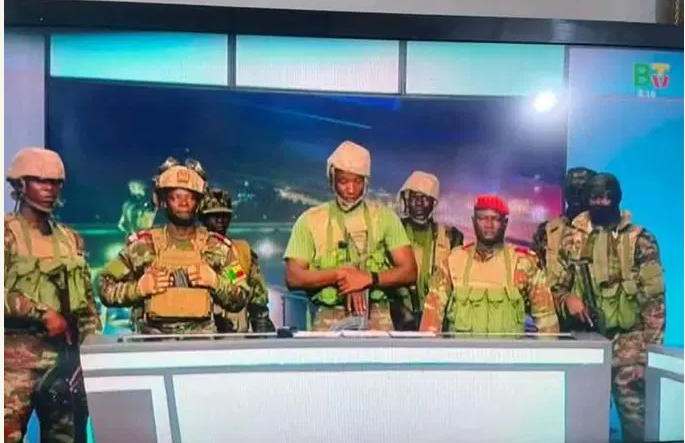
By mid-morning, Lieutenant Colonel Tigri had seized control of national television and declared himself “chairman of the military re-establishment committee” in a broadcast to the nation. Military personnel have reportedly taken up positions at key strategic points throughout Cotonou, leaving the situation highly unstable.
Just last month, the Benin Republic parliament reviewed the constitution to extend the presidential term by another seven years. This morning, December 7, the military announced a palace coup on state TV, and Talon government has yet to issue any official response to the attack.
The developments in Benin add to a concerning pattern of military takeovers that have swept across West Africa in recent years, threatening the region’s democratic progress.
Just last month, Guinea-Bissau plunged into crisis when army generals seized power on the eve of presidential elections in November 2025. President Umaro Sissoco Embaló was detained following gunfire near the presidential palace, and General Horta Inta-A assumed leadership of a transitional government. Nigeria subsequently offered asylum to opposition candidate Fernando Dias da Costa.
Mali has remained under military control since coups in 2020 and 2021 brought Colonel Assimi Goïta to power. The junta announced it had prevented another coup attempt in August 2025, detaining two generals and a French citizen. Political parties remain outlawed, and elections have been postponed indefinitely as the military consolidates its authority amid ongoing jihadist violence.
Burkina Faso, governed by Captain Ibrahim Traoré following a 2022 coup, disrupted a coup plot in April 2025. Officials claimed senior military officers had collaborated with terrorist organizations to overthrow the junta, prompting security crackdowns in the capital Ouagadougou. The government has delayed elections and introduced measures including restoring capital punishment for treason and terrorism.
Niger’s military takeover in July 2023 saw democratically elected President Mohamed Bazoum detained by his presidential guard. General Abdourahamane Tchiani declared himself leader with military backing, citing economic difficulties and security concerns. Two years later, Niger continues under military governance despite ECOWAS sanctions and deteriorating Western relationships.
The capital of Benin descended into chaos on Sunday morning as military forces launched an apparent coup attempt against President Patrice Talon’s government.
According to reports from Beninese media outlet TchadOne, armed soldiers led by Lieutenant Colonel Pascal Tigri stormed the president’s residence in Cotonou’s Le Guézo neighborhood shortly after dawn on December 7, 2025.
By mid-morning, Lieutenant Colonel Tigri had seized control of national television and declared himself “chairman of the military re-establishment committee” in a broadcast to the nation. Military personnel have reportedly taken up positions at key strategic points throughout Cotonou, leaving the situation highly unstable.
President Talon and his government have yet to issue any official response to the attack.
The developments in Benin add to a concerning pattern of military takeovers that have swept across West Africa in recent years, threatening the region’s democratic progress.
Just last month, Guinea-Bissau plunged into crisis when army generals seized power on the eve of presidential elections in November 2025. President Umaro Sissoco Embaló was detained following gunfire near the presidential palace, and General Horta Inta-A assumed leadership of a transitional government. Nigeria subsequently offered asylum to opposition candidate Fernando Dias da Costa.
Mali has remained under military control since coups in 2020 and 2021 brought Colonel Assimi Goïta to power. The junta announced it had prevented another coup attempt in August 2025, detaining two generals and a French citizen. Political parties remain outlawed, and elections have been postponed indefinitely as the military consolidates its authority amid ongoing jihadist violence.
Burkina Faso, governed by Captain Ibrahim Traoré following a 2022 coup, disrupted a coup plot in April 2025. Officials claimed senior military officers had collaborated with terrorist organizations to overthrow the junta, prompting security crackdowns in the capital Ouagadougou. The government has delayed elections and introduced measures including restoring capital punishment for treason and terrorism.
Niger’s military takeover in July 2023 saw democratically elected President Mohamed Bazoum detained by his presidential guard. General Abdourahamane Tchiani declared himself leader with military backing, citing economic difficulties and security concerns. Two years later, Niger continues under military governance despite ECOWAS sanctions and deteriorating Western relationships.