By Professor Toyin Falola
many have described BJ’s death “as the end of an era in Nigerian and African literary scholarship, for he belonged to that generation of thinkers who believed that literature mattered not merely as an aesthetic pursuit but as a vital instrument for understanding, challenging, and transforming society.” For years to come, BJ will be a yardstick by which we measure incisive, crisp thinking and the ability to be politically engaged without being intellectually dishonest.
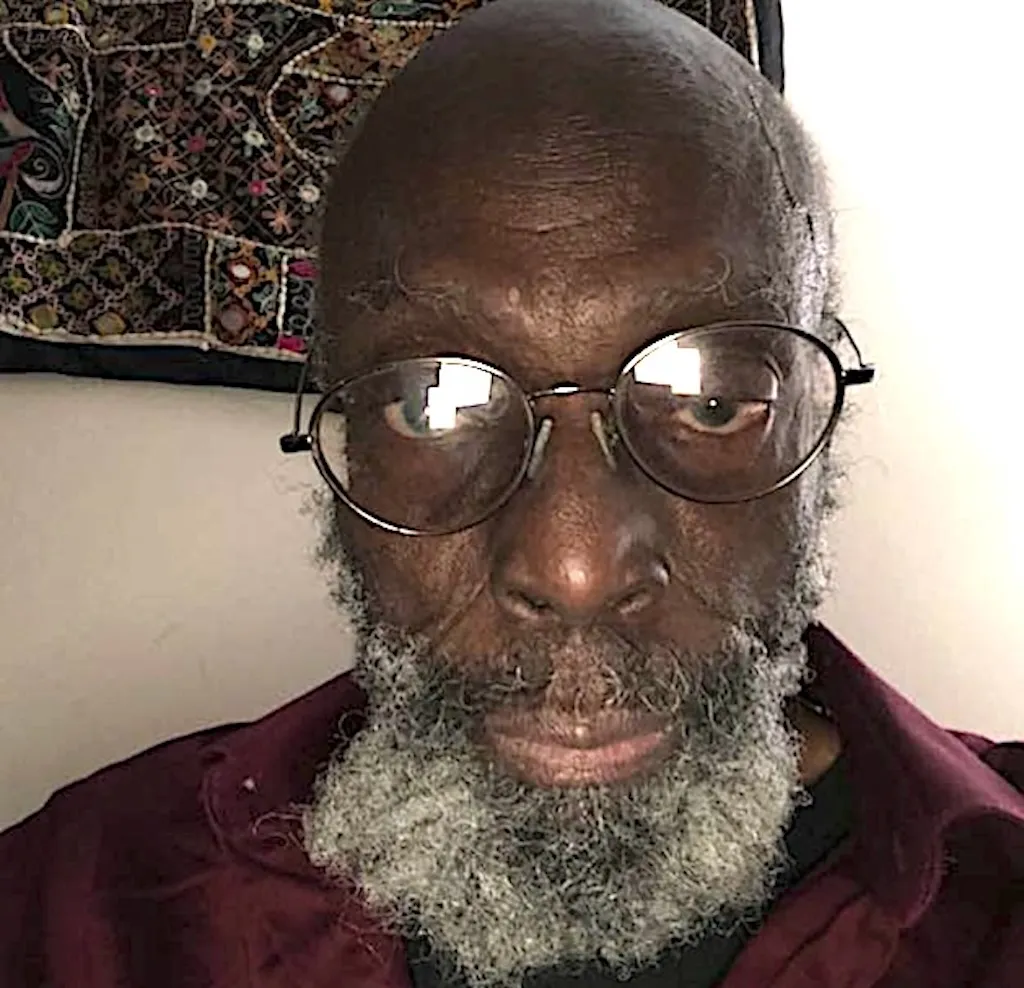
ASUU, the union BJ helped found and once led, will continue to hold the Nigerian state accountable for ensuring academic freedom and stronger universities. I read the news early in the morning of 11 February. The activist for African intellectual freedom, Biodun Jeyifo, had passed away at the age of 80. I had just seen him one month earlier in photographs at his 80th birthday celebration symposium held at the MUSON Centre in Lagos. BJ looked frail but was as mentally acute as ever. He was still being himself — asking hard questions and making us uncomfortable about accepting our past accomplishments.
He belonged to the generation of Nigerian intellectuals who matured in the 1970s; that magical period when anything seemed possible. We were only recently independent. The Civil War was over, and Nigerian unity was taken for granted. We were awash with oil money funding our dreams and believing that scholarship could truly change Africa and elevate the Black race. Jeyifo would follow slightly different scholarly paths: he became a literary critic and theorist. However, he shared the conviction that scholarship must serve the people, rather than serve as a vehicle to further our individual careers.
Over the decades, he attended conferences in Ibadan, Accra, New York, and London, asking uncomfortable questions when others wanted the easy celebrations of incipient “African achievement.” His death seems like the end of an era, when Nigerian intellectuals believed that ideas could change our world and were willing to sacrifice to prove it. FIRST BANK AD Do you live in Ogijo BJ was born on 5 January, 1946, in Ibadan, the city that shaped many of his generation’s greatest minds; it was the city that was and arguably remains West Africa’s intellectual hub, playing home to its first modern university and a robust cultural environment.
The Ibadan of those years was a receptacle of British colonial education, fusing with emerging Pan-African idealism to create something entirely new. BJ revelled in all of this, graduating with a First Class honours in English in 1970, only the third student in UI’s history to do so at the time. This was unsurprising to many who knew him then; BJ’s intellectual ferocity had begun to manifest at a young age. What was, however, unexpected was the unusual path he chose. Defying the migration of many intellectually gifted Nigerians who may never return home after studying abroad, BJ remained in Nigeria to do his Master’s at Ibadan. Settling into Nigerian intellectual life first helped shape his ideas before he left for New York to pursue a PhD.
He studied under noted performance studies scholar, Richard Schechner, which may have informed his view of literature as an active process through which we create and perceive meaning. His time in America never fully disconnected him from Nigeria: he once stated that no matter “how complex my theoretical armature grew, it would grow out of storytelling strategies and knowledge systems I absorbed at home.” What many younger scholars don’t realise is that before BJ became internationally famous for his literary criticism, he was a revolutionary. He lived in a commune in the late 1970s and put his socialist principles into practice.
When the commune dissolved, some people mocked him. Still, many admired his willingness to test his theories in practice, rather than just talking about revolution from an armchair in the ivory tower. In 1980, at just 34 years old, BJ became the first national president of ASUU (Academic Staff Union of Universities). We watched him transform a loose collection of frustrated academics into a coordinated force capable of challenging gun-toting military regimes using their voices and pens.
Those were dangerous years in which the military administrations saw universities as an opposition to be crushed in a bid to trample on independent thinking. His Marxism was imbued with humanism, tempered by a recognition of culture’s autonomy and attention to what makes us human beyond the political economy. When asked to explain his politics, BJ wrote a brilliant essay titled, “Who’s Afraid of Biodun Jeyifo’s Marxism?” He spelt out that his “absolute insistence now is that I be taken, I be judged on how consistent I am with my passion for redistributive justice in our country and our world.”
Scholars compared him to the greatest postcolonial theorists… It was into this situation that young, seemingly feather-light BJ stepped, unfazed. I remember him travelling across Nigeria, organising, strategising, and building solidarity, while somehow holding down a tenure at Ife, where he was teaching. His biographer captured that, “we never lost a single contention with the Federal Government, never” because BJ and his team were “so well prepared,” such that “we baffled them.” Rather than through violence, they won through superior argumentation, using data, better logic, and moral authority. Femi Falana would later say that “Without doubt, we owe the vibrancy of the intellectual struggle of ASUU to Professor Jeyifo and his colleagues.” The vibrancy and fighting spirit he pioneered continue today, some forty years later.
What impressed me most was that at such a young age, BJ risked his potential future career for the genuine belief that universities must serve the public good, rather than the elite. In 1987, something happened that many couldn’t believe: When Ife refused to grant BJ unpaid leave to write a book, he simply resigned from his tenured role. The pervasive thinking among colleagues was, “Is he crazy? Throwing away that security.” But that was BJ; he favoured intellectual freedom more than material comfort or assured career advancement. For him, it was principle more than position. He moved to America, teaching a year at Oberlin, then seventeen years at Cornell, before finally settling at Harvard, one of the world’s most elite institutions. At Harvard, he became Professor of African and African American Studies and Comparative Literature, bringing African perspectives to an institution that pioneered Western frameworks.
I learnt that at Harvard, he had promoted the study of African literature with the same rigour and seriousness as Western literary traditions while retaining the essence of African philosophical frameworks. Some of his Cornell and Harvard students are now distinguished professors themselves and fondly remember him as demanding beyond measure, teaching them not only how to read literature but also how to think. Students, over time, gave him a nickname — “Professor O le gan ni o” (He’s tough beyond measure). It’s said lovingly, though, because they know he pushed them.
After all, he respected them and believed in them. He received Harvard University’s WEB Du Bois Medal in 2019, one of the highest awards in African and African American Studies. This award was given for his lifelong contributions to broadening the world’s perspective and experience, gained throughout his life, but not necessarily the rigid, dogmatic kind found in political quarters. His Marxism was imbued with humanism, tempered by a recognition of culture’s autonomy and attention to what makes us human beyond the political economy.
When asked to explain his politics, BJ wrote a brilliant essay titled, “Who’s Afraid of Biodun Jeyifo’s Marxism?” He spelt out that his “absolute insistence now is that I be taken, I be judged on how consistent I am with my passion for redistributive justice in our country and our world.” Scholars compared him to the greatest postcolonial theorists: “No other scholar, apart from Edward Said, Gayatri Spivak and Homi Bhabha, is more attentive to the radically dispersed accents or strands of thinking postcolonial the way BJ has done.” What was not evident behind BJ’s fierce intellectual reputation was his gentleness in private, his generosity that benefitted the next scholarly generation, and his surprisingly good sense of humour. BJ demanded excellence ruthlessly but also invested time and energy in helping people achieve it. His biographer describes him as having lived a “Spartan lifestyle.”
By this, he means that he lived simply without extravagance, devoted himself to scholarly pursuits and social justice work, and never sought enrichment for himself or wealth or possessions. But unlike other theorists lost in wordsmithing and foggy abstraction, BJ always wrote clearly. He always insisted that theory should illuminate reality, not obscure it. He wrote about the Yoruba travelling theatre, popular culture, and how they made sense through performance and ritual. This demonstrated that his Marxism was rooted in real African cultural expression and didn’t have to be the imported, political version. What was not evident behind BJ’s fierce intellectual reputation was his gentleness in private, his generosity that benefitted the next scholarly generation, and his surprisingly good sense of humour.
BJ demanded excellence ruthlessly but also invested time and energy in helping people achieve it. His biographer describes him as having lived a “Spartan lifestyle.” By this, he means that he lived simply without extravagance, devoted himself to scholarly pursuits and social justice work, and never sought enrichment for himself or wealth or possessions. He fathered three children who are successful in their own right – Okunola (a neuroscientist), Olalekan (an architect and public art muralist), and Ruth (an activist) – with each pursuing their interests and continuing the legacy of working for society. That his children are in such different lines of work is indicative of how BJ allowed people to follow their own paths while remaining committed to justice and service.
On his passing, many have described BJ’s death “as the end of an era in Nigerian and African literary scholarship, for he belonged to that generation of thinkers who believed that literature mattered not merely as an aesthetic pursuit but as a vital instrument for understanding, challenging, and transforming society.” For years to come, BJ will be a yardstick by which we measure incisive, crisp thinking and the ability to be politically engaged without being intellectually dishonest. ASUU, the union BJ helped found and, once led, will continue to hold the Nigerian state accountable for ensuring academic freedom and stronger universities. Every successful callout will be a tribute to him.
A member of the Nigerian Academy of Letters calls his work, “foundational and transformative, a bridge between generations of scholars, connecting post-independence intellectuals with fresh perspectives in contemporary African studies.” In writing this tribute, I know BJ would hate it if we sentimentalised our grief or celebrated uncritically. He would want us to keep fighting. We will miss talking to him, picking his brain, arguing with him, commiserating with him about how excruciatingly slow progress is, but sometimes celebrating with him when some of our battles get won. We will miss his blistering honesty, his intolerance of laziness, and his expectation that if we were going to do something, we might as well do it right. Rest well, the activist in the struggle.
The fight continues, and many will carry your legacy forward. Toyin Falola, a professor of History, University Distinguished Teaching Professor, and Jacob and Frances Sanger Mossiker Chair in the Humanities at The University of Texas at Austin, is the Bobapitan of Ibadan land.