By Asokota Ezeanya-
Nigeria’s political landscape has long been marred by a stark and troubling paradox: many former state governors leave office as extraordinarily wealthy individuals—often described in public discourse as billionaires, while the states they governed remain mired in deep poverty, serving as glaring signatures of underdevelopment and deprivation. This phenomenon is not isolated but systemic, reflecting broader issues of governance, resource mismanagement, and weak accountability mechanisms in Africa’s most populous nation.
Nigeria operates a federal system with 36 states, each led by a governor elected for a maximum of two four-year terms. Governors control substantial budgets derived from federal allocations (primarily from oil revenues), value-added tax shares, and internally generated revenue. In theory, these funds should drive infrastructure, education, healthcare, and poverty alleviation. Yet, numerous reports and public perceptions highlight a pattern where personal fortunes explode during or after tenure, while human development indicators stagnate or worsen.
Prominent examples illustrate this disparity. James Ibori, former governor of Delta State (1999–2007), an oil-rich region, was convicted in the UK for laundering tens of millions of pounds stolen from state funds. He accumulated vast assets abroad, including properties in London and the US, far beyond his official salary. Delta State, despite its resource wealth, continues to grapple with environmental degradation, militancy, and high poverty levels among its people.
Orji Uzor Kalu, governor of Abia State (1999–2007), faced corruption charges involving embezzlement through family-linked companies. Allegations suggest he diverted millions, and investigations revealed significant US property acquisitions during and after his tenure. Abia State remains plagued by infrastructure deficits, unpaid salaries, and persistent poverty.
Other cases include Godswill Akpabio (Akwa Ibom, 2007–2015), whose “Uncommon Transformation” agenda raised questions about personal enrichment amid state spending. Willie Obiano (Anambra, 2014–2022) was arrested post-tenure on charges of misappropriating security vote funds, with probes into US assets. Yahaya Bello (Kogi) and others like Theodore Orji (Abia) have faced Economic and Financial Crimes Commission (EFCC) indictments for alleged fund diversion.
Public discussions often point to northern states, where former governors like those from Gombe, Zamfara, or Kebbi are accused of similar patterns—leaving behind impoverished populations while allegedly amassing wealth through inflated contracts, ghost projects, or diverted allocations. Even in cases where governors entered office already wealthy like some businessmen-turned-politicians, their tenures frequently coincide with exponential wealth growth that defies transparent sources.
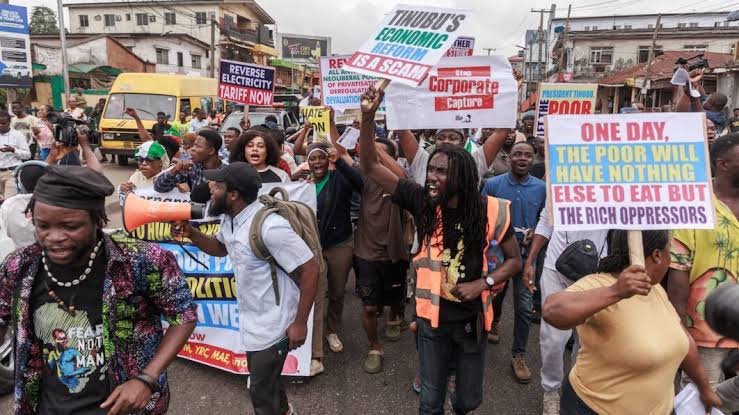
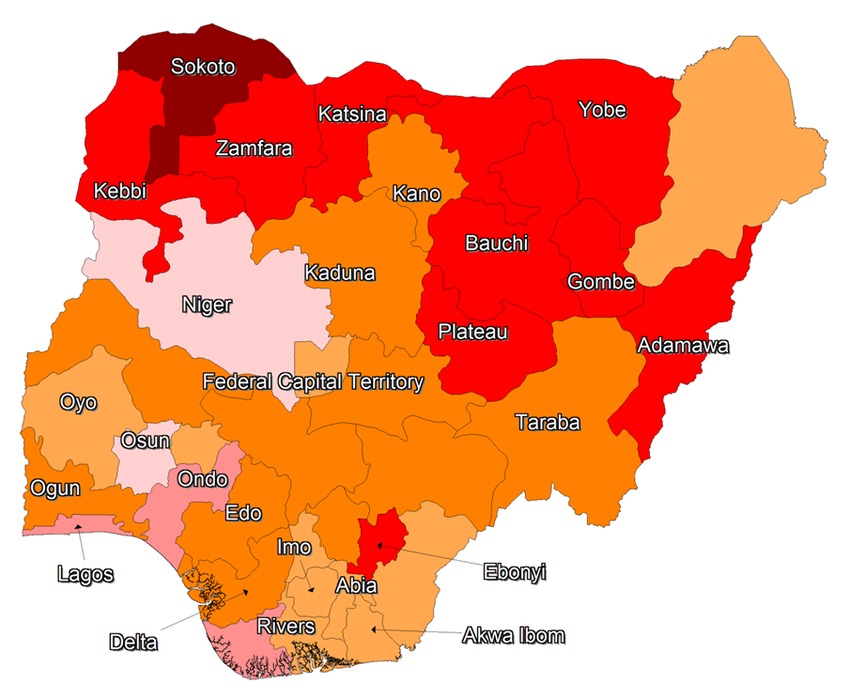
This wealth accumulation contrasts sharply with Nigeria’s poverty crisis. Recent data from the National Bureau of Statistics and World Bank indicate multidimensional poverty affects over 130 million Nigerians, with rates highest in northern states like Sokoto (around 90.5%), Bayelsa (88.5%), Gombe (86.2%), Jigawa (84.3%), and others exceeding 70–80%. These figures encompass deprivations in health, education, living standards, and income.
Southern states like those governed by some of the mentioned ex-officials also feature high poverty pockets, despite resource endowments.
For instance, oil-producing states in the Niger Delta, like Delta, Bayelsa, Rivers, should theoretically benefit from derivation funds, yet they rank among the poorest due to mismanagement, corruption, and conflict. Northern states, reliant on federal transfers, suffer from low internally generated revenue, insecurity, and poor investment in human capital. Former governors often depart with luxurious lifestyles with private jets, foreign properties, and family empires, while states inherit debt, unpaid workers, decaying schools, and hospitals lacking basic supplies.
The mechanisms enabling this are well-documented: opaque security votes (discretionary funds with minimal oversight), padded contracts awarded to cronies, diversion of local government allocations, and abuse of state-owned enterprises. Nigeria’s weak institutions—underfunded anti-corruption bodies, politicised judiciary, and a culture of impunity—allow many to evade justice. Some ex-governors transition to senatorial seats or ministerial roles, enjoying pensions and immunities that shield them further.
This cycle perpetuates poverty by starving states of development funds. Resources meant for roads, schools, hospitals, and jobs vanish into private pockets, leaving citizens dependent on patronage rather than sustainable growth. It erodes public trust, fuels cynicism, and discourages civic participation.
To break this vicious cycle, Nigerians must demand greater accountability and transparency in state governance. Citizens should push for:
• Strict enforcement of asset declaration laws, with public verification of pre- and post-tenure wealth.
• Independent audits of state budgets and security votes.
• Strengthened anti-corruption agencies like the EFCC, insulated from political interference.
• Judicial reforms to ensure swift prosecution of corruption cases.
• Civic education and grassroots movements holding leaders accountable beyond elections.
• Reduced political patronage where appointments and contracts favour loyalty over merit, and a shift toward development-focused governance.
Ultimately, the people hold the power. Through vigilant oversight, electoral choices prioritising competence over connections, and collective advocacy for reforms, Nigeria can ensure governors serve as stewards of public wealth rather than its primary beneficiaries. Only then can states transform from poverty signatures into beacons of progress, fulfilling the promise of democratic governance.
*Ezeanya writes from Lagos