By Mallam Salman Yusuf
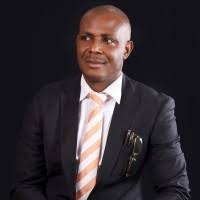
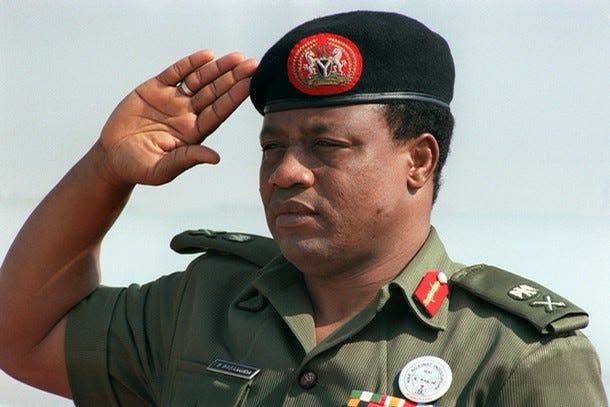
Few figures in Nigeria’s modern history have shaped the nation’s political landscape as decisively as General Ibrahim Badamasi Babangida, GCFR. As he reaches another significant milestone, the nation takes stock of a legacy defined by bold strategy, complex leadership, and sweeping institutional reform.
Affectionately and universally known as IBB, the former Military President remains a central titan in the Nigerian narrative—a leader whose era continues to invite deep reflection on the art of statecraft, national unity, and vision for Africa’s most populous nation.
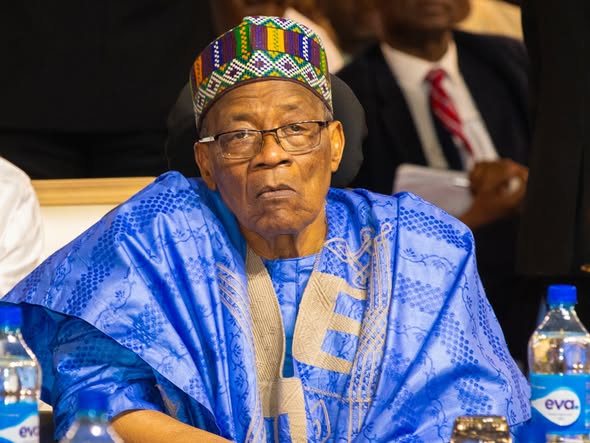
To describe General Babangida merely as a former head of state is to capture only a fraction of his impact. He was – and remains – a master strategist, an architect of modern Nigerian federalism, a pioneer of economic deregulation, and an incomparable political visionary. His tenure was defined by boldness: the willingness to tackle long-standing economic defects, the foresight to build lasting infrastructure, and the agility to navigate the complex social tapestry of Africa’s most populous nation.
The Making of a Military Strategist and National Leader
Born in Minna, Niger State, General Babangida’s rise through the Nigerian Armed Forces was marked by brilliant tactical acumen and an innate understanding of human psychology. His military career was a rigorous preparation for national stewardship. From his early training at the Nigerian Military Training College to advanced studies abroad, IBB developed a sharp intellect that combined military discipline with statecraft.
When he assumed leadership in August 1985, Nigeria stood at a critical crossroads. Economic stagnation, rigid state control, and geopolitical isolation threatened to stall the nation’s trajectory. Babangida did not step into office merely to hold power; he brought a clear blueprint for dynamic governance. He introduced a consultative, intellectual, charismatic, and inclusive leadership style previously unseen in military rule.
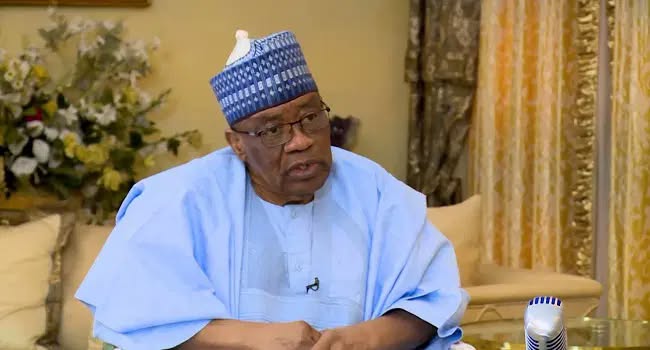
IBB brought to the presidency a rare ability to process complex ideas and synthesise them into public policy. He surrounded himself with the brightest minds-renowned scholars, economists, jurists, and technocrats. By bridging the gap between military authority and civilian intellect, Babangida elevated governance and set a benchmark for policymaking in Nigeria.
Structural Economic Reforms: The Blueprint of Capitalism
The most durable pillar of General Babangida’s legacy lies in his economic vision. Prior to his administration, Nigeria’s economy was dominated by overbearing state monopolies, inefficient import licensing, and rigid price controls that stifled initiative. Recognising that sustainable growth required private enterprise and market efficiency, IBB introduced the Structural Adjustment Programme, SAP, in 1986.
While economic transitions are inherently challenging, the fundamental principles of IBB’s restructuring paved the way for Nigeria’s thriving private sector today, laying foundations for commercial banking, telecommunications, and media.
Financial Sector Liberalisation
His administration deregulated the banking sector, sparking a boom in financial institutions, merchant banking, and capital market growth.
Establishment of the NDIC to protect depositors and enforce stability within the expanding financial ecosystem, the administration established the Nigeria Deposit Insurance Corporation, NDIC, in 1988.
Promoting Agriculture
Through the Directorate of Food, Roads, and Rural Infrastructure, DFRRI, his government opened up thousands of kilometers of feeder roads, linking rural agrarian communities to urban markets.
Privatisation Initiatives: The Technical Committee on Privatisation and Commercialisation, TCPC, created under his watch, laid the framework for what later became the Bureau of Public Enterprises (BPE).
Grand Architect of Infrastructure: Building Modern Nigeria
General Babangida’s achievements remain visible across the length and breadth of the country, possessing a grand vision for infrastructure, believing that state-of-the-art national monuments and transportation networks were crucial for national integration.
The Realisation of Abuja
While moving Nigeria’s capital away from Lagos was conceived earlier, Babangida brought Abuja to life. On December 12, 1991, President Babangida formally relocated the seat of power to Abuja. Under his direct supervision, an expanse of savannah was transformed into a modern capital city featuring the Aso Rock Presidential Villa, the International Conference Centre, ICC, and key arterial highway networks.
Engineering Marvels: The Third Mainland Bridge
In Lagos, traffic congestion had reached crisis levels by the late 1980s. Recognising the economic importance of the commercial capital, President Babangida prioritised and completed the Third Mainland Bridge. Opened in September 1990, this 11.8-kilometer engineering feat was, for years, the longest bridge in Africa, remaining a vital economic artery today.
Institutional Engineering: Securing and Organising the State
Recognising that effective governance requires resilient institutions, Babangida established key bodies that still govern daily life in Nigeria –
.Federal Road Safety Corps, FRSC: Established in 1988 to curb highway fatalities, appointing Nobel Laureate Professor Wole Soyinka as its pioneer Chairman.
.National Drug Law Enforcement Agency, NDLEA: Created in 1989 to tackle narcotics trafficking and protect youth.
.Restructuring Security: In 1986, he reorganised national security into specialised bodies: the State Security Service, SSS, National Intelligence Agency, NIA, and Defence Intelligence Agency, DIA.
Devolving Power: State Creation and Grassroots Democracy
General Babangida firmly believed that unity required bringing governance closer to the people. Through deliberate state creation exercises, he restructured the geopolitical layout of Nigeria.
In 1987, he created Akwa Ibom and Katsina States.
In 1991, he created nine additional states: Abia, Enugu, Delta, Jigawa, Kebbi, Osun, Kogi, Taraba, and Yobe.
By expanding the federation to 30 states, Babangida created new urban administrative hubs. Areas previously marginalised became state capitals, sparking localised development and employment. Furthermore, he introduced models like the People’s Bank of Nigeria to provide smallholder farmers and artisans direct access to credit.
Foreign Policy and Regional Leadership
On the international stage, General Babangida elevated Nigeria to a position of unquestioned regional leadership.
When civil war broke out in Liberia in 1989, IBB rallied neighbouring nations to form the Economic Community of West African States Monitoring Group, ECOMOG. This marked the first time an African regional coalition organised a peacekeeping mission without Western intervention.
At the continental level, President Babangida was an unyielding champion against South African apartheid, providing critical financial and diplomatic support to the African National Congress, ANC.
Upon his 1990 release from prison, Nelson Mandela promptly visited Nigeria to express personal gratitude to IBB.
Conclusion: A Nation Salutes its Master Strategist
Beyond decree texts and infrastructure, Ibrahim Babangida’s defining leadership trait was his charisma and strategic intellect. Dubbed the “Maradona of Nigerian politics” for his agility, IBB managed state affairs with charm and firmness. In his post-presidential years at his Minna residence, he has evolved into a revered elder statesman whose wisdom remains sought after by leaders across the political spectrum.
True leadership is judged by the strength of institutions built, bold decisions taken, and long-term national impact. On all these counts, IBB’s legacy shines. The roads we drive on, the financial systems that power our economy, and the federal capital where our national destiny is forged, all carry his visionary imprint.
We salute General Ibrahim Badamasi Babangida, GCFR, for his courageous service, unwavering optimism, and enduring contributions to the Nigerian Republic.
Happy 85 years birthday, General.
Mallam Yusuf lives in Minna