By Casmir Igbokwe
When a Nigerian politician makes a promise, one needs to double-check to be sure. When the promise is from the Chairman of the Independent National Electoral Commission (INEC), there is every need to wear binoculars to read the tiny details.
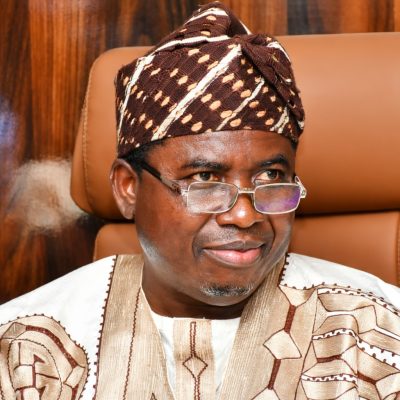
Last Friday, INEC Chairman, Professor Joash Amupitan (SAN), assured Nigerians that their votes would count in the 2027 general election. He made the promise when he visited former Head of State and Chairman of the National Peace Committee, Gen. Abdulsalam Abubakar (retd), at his residence in Minna, Niger State. The Presidential and National Assembly elections will hold on January 16, 2027 while the governorship and state Houses of Assembly elections will hold on February 6, 2027.
Amupitan noted, “The Commission’s determination under my leadership was to see ordinary Nigerians go out and vote, confident that their votes would be duly counted and reflected in the outcome of elections.”
INEC Chairman has been giving this assurance since he was appointed in October 2025. At the 2026 Induction and Strategic Retreat of INEC in Lagos in January 2026, he warned that the commission would not tolerate any misconduct in the electoral process.
He enunciated the commission’s five non-negotiable pillars: free, fair, credible, transparent and inclusive elections and added, “We are here to organize elections that are free from any form of interference; fair to all contestants and political parties; credible in the eyes of the global community; transparent in every process…and inclusive of every Nigerian, regardless of physical ability or location.” He asserted that the 2027 election will be a watershed in Nigeria’s election history. Good!
Even Senate President, Godswill Akpabio, also promised that every vote would now count when he spoke to State House correspondents after the signing of the 2026 Electoral Act (Amendment) Bill in February 2026.
Amupitan’s predecessors made similar promises. Almost all of them slipped on banana peels lined up on their paths to credible elections. They were prisoners to Nigeria’s systemic and institutional rot. This was the case from Eyo Esua (1964 to 1966) to Chief Michael Ani (1976 to 1979); from Justice Victor Ovie Whiskey (1980 to 1983) to Professor Eme Awa (1987 to 1989); from Humphrey Nwosu (1989 to 1993) to Professor Okon Uya (1993); and from Sumner Dagogo-Jack (1994 to 1998) to Justice Ephraim Akpata (1998 to 2000), Dr. Abel Goubadia (2000 to 2005), Professor Maurice Iwu (2005 to 2010), Professor Attahiru Jega (2010 to 2015), and Professor Mahmood Yakubu (2015 to 2025).
Professor Yakubu said that the result of the 2023 general election would be transmitted electronically to the INEC Result Viewing (IReV) portal. He practically vowed that the election would be transparent, free and fair.
Many Nigerians believed Yakubu. They trooped out en masse to exercise their franchise. But they met many obstacles on the way. In some polling stations, electoral officials failed to turn up. Some didn’t come with election materials. Some thugs suspected to belong to the ruling party threatened opposition party supporters, especially people of Igbo extraction in Lagos, not to come out to vote. Some of those who dared to come out were brutalized. Some were killed.
Despite all these, many Nigerians still had hope. They trusted in the Bimodal Voter Accreditation System (BVAS). They believed that the IReV portal would sieve the chaff from the wheat and give the country a credible result.
Alas, INEC failed on its promises. Suddenly, technical glitches gripped the electronic transmission process. That was after the result of the parliamentary election, held the same day with the presidential election, had been seamlessly announced. Nigerians cried foul. But they were asked to go to court after INEC had announced questionable results in the wee hours of March 1, 2023. To say that the majority of Nigerians were disappointed for this breach of trust will be an understatement.
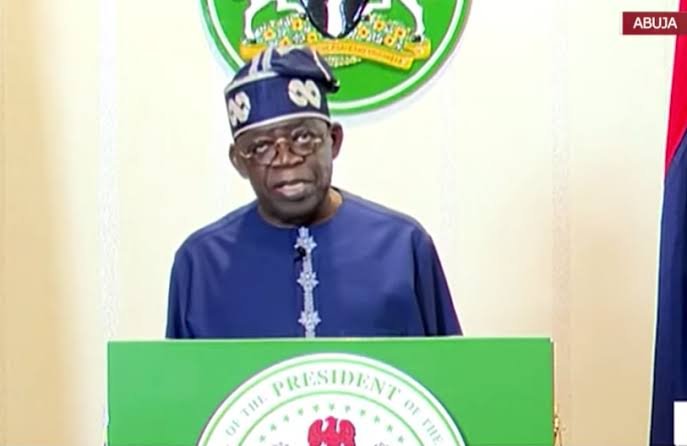
This trust deficit has lingered. The appointment of Amupitan has been dogged by optimism and pessimism in equal measure. The worst is that the man who appointed him, President Bola Tinubu, is someone who does not brook any opposition. His belief is that power is not served a la carte. As he once put it, you snatch it, grab it and run with it. Will such a man stand by and watch INEC deliver a credible election?
Amupitan knows where some of the landmines are buried. For instance, the commission is not fully independent because it depends on the Federal Government for its funding. The INEC boss said last week that the umpire should be funded directly from the federation account to guarantee autonomy, free, fair and credible elections.
According to him, the current budgetary process undermines the umpire’s financial independence and operational efficiency; and that as long as INEC is still subject to the normal envelope system and the processes of appropriation, having to go to the National Assembly, “it is very difficult to operate in such a situation without wasting your time.”
The second landmine is the Electoral Act 2026. Despite some concerns raised by many Nigerians with regard to the mode of transmission of election result, President Tinubu swiftly signed the Electoral Act (Amendment) Bill 2026 into law within 24 hours after the National Assembly passed it on February 17. Many Nigerians had demanded real-time mandatory e-transmission of election results.
Nevertheless, Section 60(3) of the amended Act made e-transmission mandatory, but with a proviso that manual transfer should be used in areas where there is communication failure. The manipulation of results of the 2027 elections may start from here.
The manual transfer caveat was made without taking cognizance of the assurance of INEC that Nigeria had the capacity to transmit election results electronically from different parts of Nigeria. The Nigerian Communications Commission (NCC) had also assured that the country had over 93 per cent of network coverage.
Even if INEC decides to do its work effectively, will the judiciary also conduct its affairs credibly? Will the election petition tribunals give fair and transparent judgment on post-election litigation? Meanwhile, the Federal Government appears not to desire a free, fair and transparent election with its proposed N135.22billion in the 2026 budget for the 2027 post-election litigation.
This is a sharp increase from the costs of litigation and legal defence in 2023, estimated at N3.08 billion. Judges are the ones who will benefit more from this. Little wonder, the late eminent jurist, Justice Kayode Eso, had described some judges as billionaire judges after the litigation that trailed the 2007 general election. According to the Independent Corrupt Practices and other related Offences Commission (ICPC) between 2018 and 2020, lawyers reportedly gave bribes amounting to N9.45 billion to judges. May this not happen in 2027!
Besides, will security agencies show professionalism by not siding any candidate or party, or by arresting and prosecuting any thug found to be snatching ballot boxes? Will politicians desist from vote-buying and some other inducement of voters? Will voters turn out massively to vote and defend their votes? Will INEC officials provide the necessary logistics and election materials in every station on time?
Amupitan has conducted a few off-cycle polls since he assumed office. Among others, he oversaw the Anambra State governorship election held in November 2025, the February 2026 FCT Area Council elections, and the Ekiti State governorship election held in June 2026. Osun State governorship poll is coming up on August 15, 2026. The chief electoral umpire had described these elections as the testing grounds for the commission’s resolve and readiness. Though the elections were relatively more credible than most other past elections, certain malpractices still occurred. Vote-buying and manipulation of the process were common.
Voter turnout was still very poor. In the November 2025 Anambra governorship election, a mere 21.4 per cent of voters turned out to vote. Incidentally, this was even an improvement of the 2021 governorship election where the voter turnout was 10.3 per cent. In Ekiti, only 36.07 per cent voted.
This has been the major weak point of Nigeria’s democracy. Our population is growing. So is the number of registered voters. But rather than the voter turnout improving with every new election, it has continued to plummet. In the 2003 election, about 69.1 per cent of the electorate voted; the highest turnout since 1999. Ironically, the lowest turnout in Nigeria’s history was in 2023 when only 25 million voters (about 27 per cent) turned out to cast their votes despite a record of over 93 million registered voters.
INEC must guard against voter apathy in 2027. To make the work easier for the commission, a neutral, independent body outside the President should be saddled with the responsibility of appointing INEC Chairman and Resident Electoral Commissioners.
Despite all odds, Nigerians must get their Permanent Voter Cards (PVCs) and turn out in large numbers to vote and defend their votes. Amupitan should ensure that his commission makes collection of PVCs seamless. Fulfilling his promise of free and fair election should start from there.