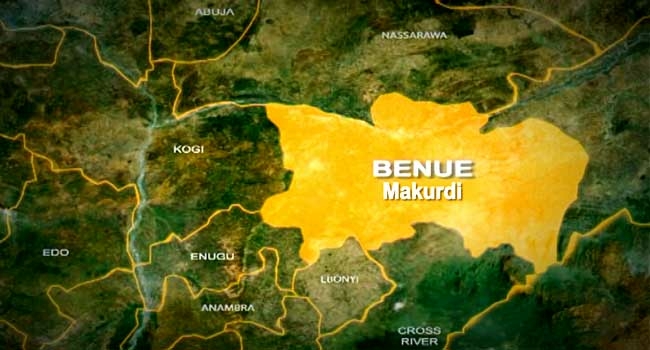
Local government employees in Benue State have commenced a two-week warning strike over unpaid salaries, delayed promotions, and unresolved pension remittances, a development that has significantly disrupted administrative activities across the 23 local government councils in the state.
The industrial action was declared by the Nigeria Union of Local Government Employees (NULGE), Benue State chapter, following what the union described as the failure of the state government to address longstanding welfare concerns affecting workers at the grassroots level.
The strike action came after the expiration of a 14-day ultimatum earlier issued to the administration of Governor Hyacinth Alia, as well as an additional seven working days’ reminder reportedly sent to the government without any meaningful resolution.
According to a strike notice dated May 13, 2026, and signed by the Benue State NULGE President, Joshua Adah Adiniya, alongside the State Secretary, Aseneshi Musa Yusuf, the union accused the state government of neglecting critical issues affecting the welfare and morale of local government workers.
The union stated that workers had endured months of financial hardship due to irregular salary payments and non-remittance of pension deductions, adding that repeated appeals and engagements with government officials had failed to yield concrete results.
NULGE further lamented the continued delay in staff promotions and implementation of entitlements, noting that many workers had stagnated in the same positions for years despite meeting the requirements for career advancement.
The union maintained that the warning strike became inevitable after all efforts to resolve the issues through dialogue proved unsuccessful.
As the strike commenced, operations at several local government secretariats across Benue State were reportedly brought to a standstill, with offices locked and workers staying away from duty posts in compliance with the directive.
Residents in some council areas expressed concern over the disruption of essential administrative services, including documentation processes, local revenue activities, environmental operations, and other grassroots government functions.
Union leaders insisted that the action was not intended to create hardship for residents but to compel the government to urgently address the plight of workers who, according to them, had remained patient despite worsening economic conditions.
Speaking on the development, labour representatives argued that local government workers remained among the most vulnerable public servants in the state and deserved better treatment considering their role in delivering services at the grassroots level.
The union also warned that failure by the government to respond positively to its demands within the warning strike period could lead to an indefinite industrial action capable of paralyzing local government administration across the state.
Among the key demands raised by the union are the immediate payment of outstanding salaries and arrears, settlement of pension remittances, implementation of pending promotions, and improved welfare conditions for local government staff.
Workers also reportedly demanded greater transparency in the management of local government allocations and financial obligations relating to employee welfare.
Political observers say the strike represents another major labour challenge for the administration of Hyacinth Alia at a time when many state governments across the country are facing growing pressure over workers’ welfare amid difficult economic realities.
Analysts note that unresolved labour disputes at the local government level often have wider implications for governance and public service delivery, especially in rural communities where council administrations provide direct access to basic government services.
The development has also renewed conversations around local government autonomy, fiscal management, and the capacity of councils to independently meet their financial responsibilities.
Meanwhile, residents and stakeholders have appealed to both the state government and labour leaders to urgently return to the negotiation table in order to prevent a prolonged shutdown of local government activities.
Some community leaders warned that continued closure of council secretariats could negatively affect rural development programmes and administrative coordination across the state.
As of the time of filing this report, the Benue State Government had yet to issue an official response to the warning strike, while workers remained resolute in their demand for immediate action on the issues raised by the union.
With tensions rising and public attention focused on the unfolding labour dispute, many observers believe the coming days will be critical in determining whether dialogue can resolve the impasse or whether the industrial action will escalate further across Benue State.