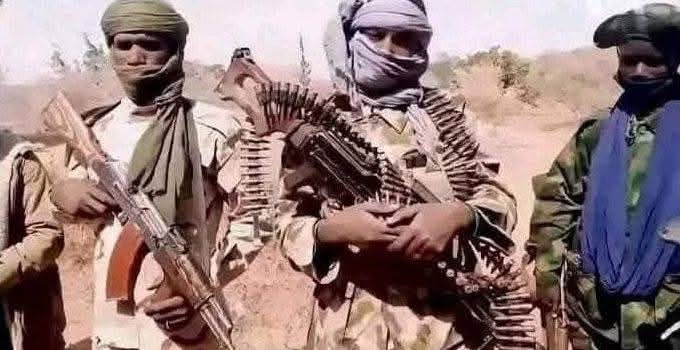
It has now come to light that in Nigeria’s North-West, a deadly trade thrives in the shadows — gold mined from Zamfara’s earth is being bartered for guns that fuel terror across the region.
“We exchange the gold for weapons. We give them the gold and they bring us the guns,” said notorious bandit leader Kachalla Mati, in an interview with Daily Trust through an intermediary. “Sometimes we sell it here; sometimes we send it to Dubai.”
Mati, said to have succeeded the slain warlord Halilu Sububu, controls several mining camps scattered across Anka, Kawaye and Dan-kamfani in Zamfara State. According to the Daily Trust investigation, he earns between ₦200 million and ₦300 million weekly from illicit gold mining.
The proceeds, he admitted, are mostly channelled into buying firearms from suppliers operating along the Nigeria–Niger–Mali corridor.
The trade is straightforward but deadly efficient. Gold mined under armed supervision is stockpiled, smuggled through porous borders, and exchanged directly with gunrunners. These dealers supply automatic rifles, ammunition, and motorcycles used for raids on villages. When direct exchange is impossible, the gold is sold in regional black markets, with the cash used to purchase weapons from intermediaries in the Sahel.
Over time, bandits like Mati have transformed from cattle rustlers and kidnappers into powerful warlords with organized mining systems. In many communities, miners are forced to work under their control. Those who resist are punished or killed.
“They beat us, sometimes shoot to scare us,” recalled one miner in Anka. “We dig, wash, and they take the gold.”
To maintain order and avoid clashes, Mati’s men issue “mining passes” — small paper tickets bearing his name. Possession of the ticket protects the holder from attacks by other gangs. The passes also serve as proof that a miner is under Mati’s authority and must surrender part of his gold yield to the leader’s camp.
Through these methods, the bandits have created a shadow economy that rivals the formal gold sector. “We don’t trust banks,” Mati said. “Gold is better. It’s money you can carry anywhere.”
The trade’s reach extends far beyond Zamfara. Gold from Mati’s fields is smuggled through Niger and Mali, where regional smugglers refine and resell it to brokers linked to Dubai’s gold market. A 2024 SWISSAID report confirms that much of Nigeria’s undeclared gold ends up in the United Arab Emirates through this route.
In the bandits’ hierarchy, gold represents not just wealth, but survival and power. It funds the purchase of motorcycles for raids, pays foot soldiers, and secures alliances with gunrunners from neighbouring countries.
“We use the gold to protect ourselves,” Mati boasted. “If the government attacks us, we defend ourselves. That’s why we need the guns.”
For the thousands of villagers living under their rule, however, this “self-protection” means constant fear and violence. And for the bandits, the cycle of gold and guns has become the currency of control — one that keeps their war against the state alive.
Follow us on all social media platforms @dailyquery for news and analyses around the globe.