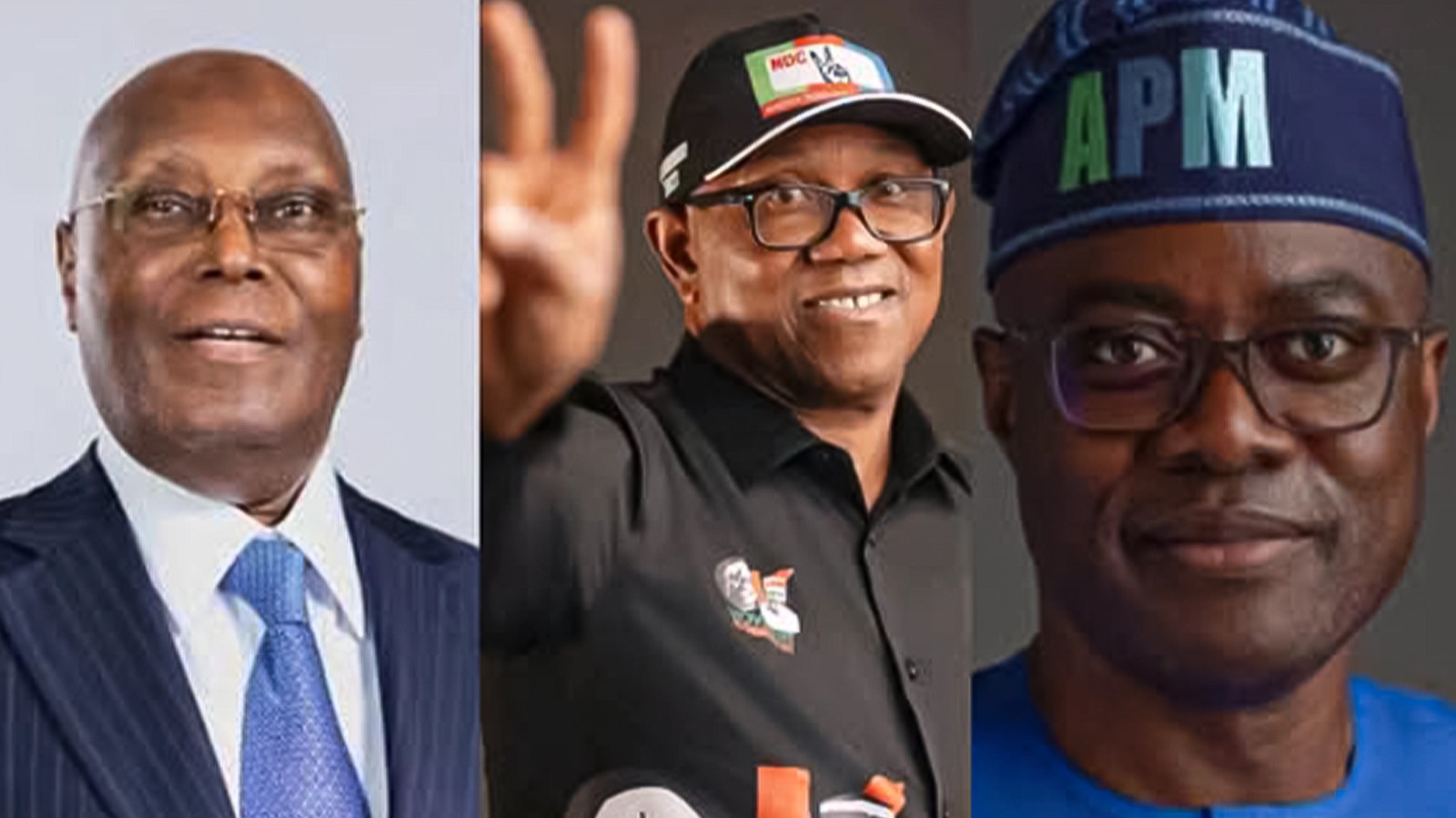
Presidential candidates and leaders of major opposition political parties, including Atiku Abubakar of the African Democratic Congress (ADC), Peter Obi of the Nigeria Democratic Congress (NDC), and Seyi Makinde of the Allied Peoples Movement (APM), are scheduled to reconvene in Abuja on Monday, November 23, 2026, to formally sign a joint Covenant for Democratic Renewal ahead of the 2027 general elections.
The Second Summit of Nigeria’s Opposition Political Parties will hold at the NAF Conference Centre in Abuja, according to a press statement issued on Monday, November 16, 2026, by Salihu Moh. Lukman, spokesperson for the Coalition for Democracy, formerly known as the G100. The coalition’s statement did not specify the exact commencement time for the event.
The upcoming summit builds directly on the groundwork laid during the First Summit of Opposition Leaders, which was convened by the G100 in collaboration with the House of Representatives Minority Caucus at the Shehu Musa Yar’Adua Centre in Abuja on August 31, 2026.
Over the intervening months, multi-party working groups developed three foundational policy and governance instruments that participating parties will formally receive, adopt, and sign on November 23: the National Covenant for Democratic Renewal, the Framework for Opposition Unity, and the National Reform Programme.
In the statement, Lukman emphasized that the coalition is deliberately shifting away from fragile, personality-driven alliances toward enduring institutional cooperation.
He noted that past opposition collaborations too often relied on personal understandings that failed to survive the political circumstances that birthed them, adding that participating parties have now chosen to put their commitments in writing and establish principles designed to outlive both the current political moment and individual ambitions.
Alongside the ADC, APM, and NDC, the Coalition for Democracy brings together the Peoples Democratic Party (PDP), the Peoples Redemption Party (PRP), and the Social Democratic Party (SDP), uniting six core opposition platforms under a single strategic umbrella.
While the alliance is actively exploring broad strategic options, including the possibility of fielding a consensus presidential candidate in 2027, the coalition maintained that its doors remain open to other political parties committed to electoral integrity, constitutional governance, and national reform.
During the proceedings, the presidential candidates of the participating parties will deliver goodwill messages to publicly affirm their commitment to the pact. Elder statesmen Oba Oladipo Olaitan, the Alaago of Kajola Alago in Ileshan, and Professor Ango Abdullahi are also slated to deliver keynote addresses examining the theme, “The Doctrine of a Necessary Democratic Opposition.”
The summit is expected to draw national chairmen, national secretaries, members of the parties’ National Working Committees and Presidential Campaign Councils, as well as National Assembly lawmakers, civil society leaders, diplomats, and members of the press.
Atiku, Obi, Makinde, Other Opposition Leaders Set to Sign Democratic Renewal Pact in Abuja on November 23
Presidential candidates and leaders of major opposition political parties, including Atiku Abubakar of the African Democratic Congress (ADC), Peter Obi of the Nigeria Democratic Congress (NDC), and Seyi Makinde of the Allied Peoples Movement (APM), are scheduled to reconvene in Abuja on Monday, November 23, 2026, to formally sign a joint Covenant for Democratic Renewal ahead of the 2027 general elections.
The Second Summit of Nigeria’s Opposition Political Parties will hold at the NAF Conference Centre in Abuja, according to a press statement issued on Monday, November 16, 2026, by Salihu Moh. Lukman, spokesperson for the Coalition for Democracy, formerly known as the G100. The coalition’s statement did not specify the exact commencement time for the event.
The upcoming summit builds directly on the groundwork laid during the First Summit of Opposition Leaders, which was convened by the G100 in collaboration with the House of Representatives Minority Caucus at the Shehu Musa Yar’Adua Centre in Abuja on August 31, 2026.
Over the intervening months, multi-party working groups developed three foundational policy and governance instruments that participating parties will formally receive, adopt, and sign on November 23: the National Covenant for Democratic Renewal, the Framework for Opposition Unity, and the National Reform Programme.
In the statement, Lukman emphasized that the coalition is deliberately shifting away from fragile, personality-driven alliances toward enduring institutional cooperation.
He noted that past opposition collaborations too often relied on personal understandings that failed to survive the political circumstances that birthed them, adding that participating parties have now chosen to put their commitments in writing and establish principles designed to outlive both the current political moment and individual ambitions.
Alongside the ADC, APM, and NDC, the Coalition for Democracy brings together the Peoples Democratic Party (PDP), the Peoples Redemption Party (PRP), and the Social Democratic Party (SDP), uniting six core opposition platforms under a single strategic umbrella.
While the alliance is actively exploring broad strategic options, including the possibility of fielding a consensus presidential candidate in 2027, the coalition maintained that its doors remain open to other political parties committed to electoral integrity, constitutional governance, and national reform.
During the proceedings, the presidential candidates of the participating parties will deliver goodwill messages to publicly affirm their commitment to the pact. Elder statesmen Oba Oladipo Olaitan, the Alaago of Kajola Alago in Ileshan, and Professor Ango Abdullahi are also slated to deliver keynote addresses examining the theme, “The Doctrine of a Necessary Democratic Opposition.”
The summit is expected to draw national chairmen, national secretaries, members of the parties’ National Working Committees and Presidential Campaign Councils, as well as National Assembly lawmakers, civil society leaders, diplomats, and members of the press.