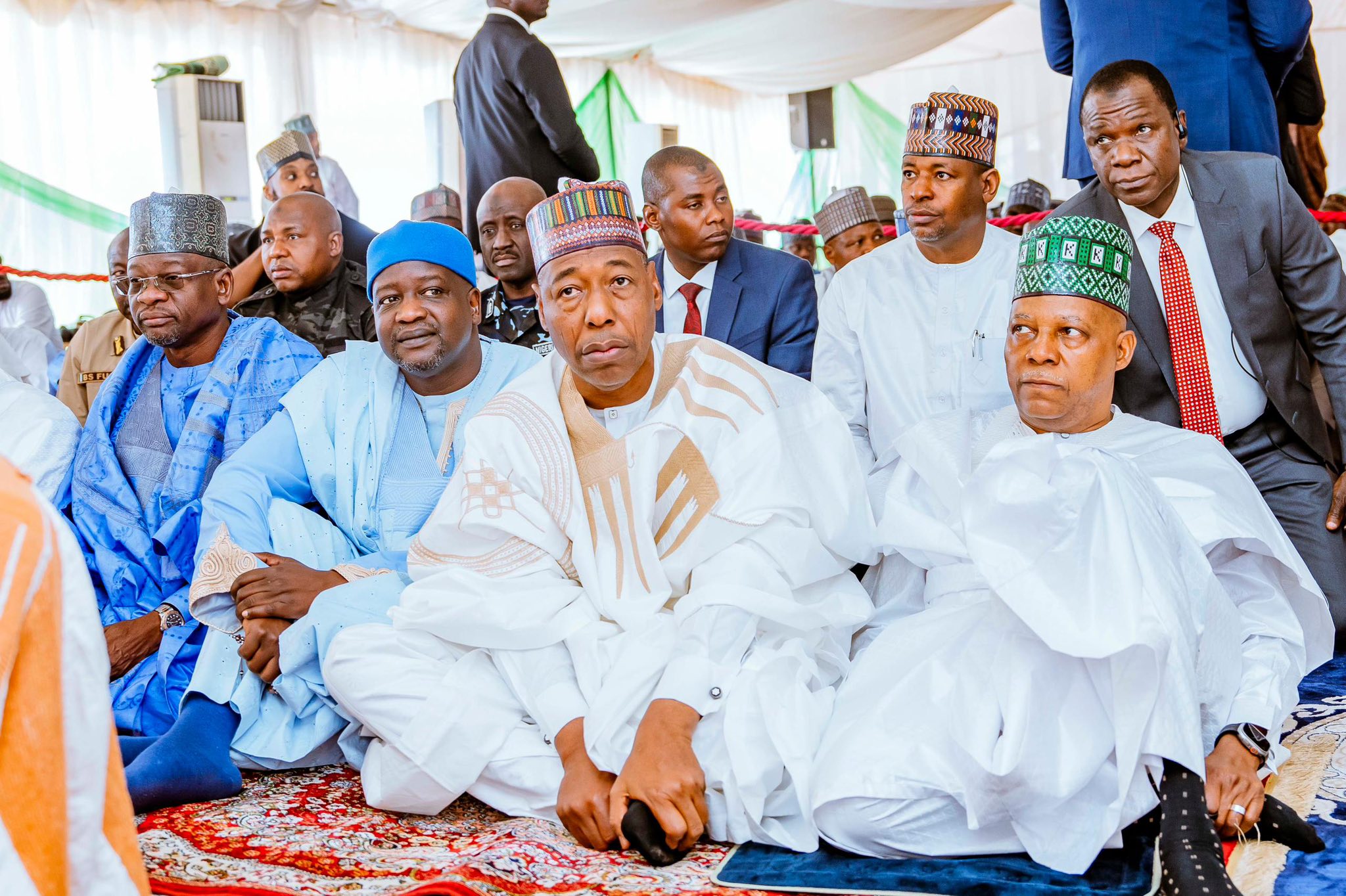
The early morning sun cast a golden hue over Maiduguri as thousands of worshippers streamed into Ramat Square, their hearts filled with gratitude and quiet reflection at the close of Ramadan. It was a moment of deep spiritual significance—one that brought together men, women, and children in a powerful display of unity, resilience, and unwavering faith.
Amid the sea of worshippers stood Nigeria’s Vice President, Kashim Shettima, who joined the faithful on Friday to observe the Eid-el-Fitr prayers. His presence carried both symbolic and practical weight, underscoring a message of solidarity with the people of Borno State and the broader Nigerian population.
The expansive Ramat Square, filled to capacity, echoed with chants of devotion as the faithful bowed in prayer, marking the end of a month defined by sacrifice, discipline, and spiritual renewal. The atmosphere was both solemn and celebratory—a testament to the enduring spirit of a people who have weathered years of hardship yet continue to stand strong.
Leading the prayers was the Chief Imam of Borno State, Shettima Mamman Saleh, whose voice carried across the grounds, guiding the congregation through the sacred rites. His sermon emphasized peace, compassion, and the importance of unity—values that resonated deeply with the gathering.
Among the dignitaries were Governor Babagana Zulum, Senator Ali Ndume, and Senator Kaka Shehu Lawan, alongside other prominent sons and daughters of the state. Their collective presence reflected a shared commitment to the welfare and progress of the region.
In his message following the prayers, Vice President Shettima spoke with calm assurance, addressing the pressing concerns of insecurity and national development. He acknowledged the challenges facing the country but emphasized that the Federal Government remains resolute in its efforts to restore peace and stability.
His words struck a chord with many in attendance, particularly in a region that has long been at the frontline of Nigeria’s security struggles. Yet, there was a sense of cautious optimism in the air—a belief that progress, though gradual, is within reach.
The gathering at Ramat Square was more than a religious observance; it was a moment of collective reaffirmation. It symbolized a community’s refusal to be defined by adversity and its determination to embrace hope, unity, and a shared future.
As the prayers concluded and worshippers exchanged greetings of “Eid Mubarak,” the square slowly emptied, leaving behind not just footprints in the dust, but a renewed sense of purpose. In that sacred space, faith had once again proven to be a unifying force—one capable of inspiring both leaders and citizens to strive for a better Nigeria.