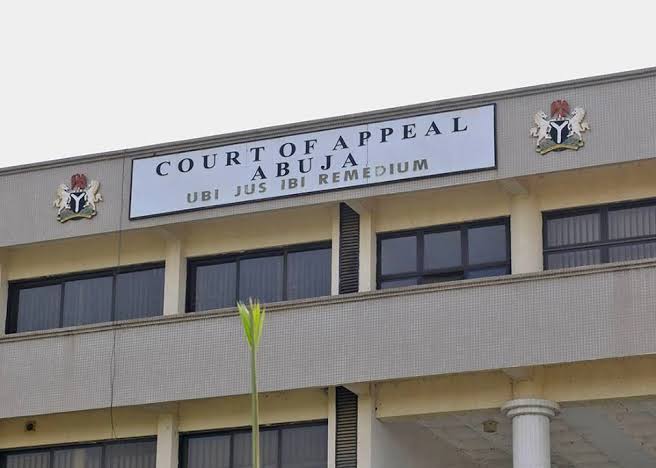
A special panel of the Court of Appeal sitting in Abuja on Monday, November 16, 2026, reserved its judgment on two separate appeals seeking to overturn a Federal Capital Territory (FCT) High Court verdict that ordered the Socio-Economic Rights and Accountability Project (SERAP) to pay ₦100 million in damages for defaming two officials of the Department of State Services (DSS).
The three-member appellate panel took the decision during its afternoon sitting at the Abuja Division of the Court of Appeal after counsel representing all parties adopted their respective briefs of argument and made final oral submissions. The court announced that a date for the delivery of the judgment will be communicated to the parties in due course.
The appeals stem from a judgment delivered in May 2026 by the FCT High Court in Abuja in suit number CV/4547/2024. The original defamation suit was instituted by two DSS operatives, Sarah John and Gabriel Ogundele, against SERAP and its Deputy Director, Kolawole Oluwadare.
The operatives had sued the civil society organization over publications alleging that DSS personnel unlawfully invaded SERAP’s Abuja office and harassed its staff, claims the trial court found to be false and injurious to the officers’ reputations.
In addition to awarding ₦100 million in general damages against SERAP and Oluwadare, the FCT High Court ordered the organization to tender public apologies to the two operatives in two national newspapers.
Leading the legal team for the appellants, Tayo Oyetibo (SAN), urged the Court of Appeal to allow the appeals and set aside the lower court’s verdict in its entirety. Relying on a 24-ground notice of appeal, SERAP’s counsel argued that:
The claimants failed to prove they were specifically named or identifiable in the contested publications, which were directed at the DSS as a state institution rather than individual officers.
The publications were protected under Section 39(1) of the 1999 Constitution (as amended) and qualified privilege, with no evidence of actual malice established during the trial. The trial court erred in awarding ₦100 million without concrete proof of specific financial, professional, or reputational injury.
Opposing the appeals, Oluwagbemileke (O. S.) Kehinde, counsel to the first and second respondents (Sarah John and Gabriel Ogundele), asked the appellate panel to dismiss the applications for lacking merit.
Kehinde maintained that under Nigerian defamation law, a claimant does not need to be mentioned by name if witnesses can reasonably identify them from the descriptions contained in the publication.
Monday’s hearing followed several procedural delays at the appellate court. The appeals were initially scheduled for hearing on Friday, October 9, 2026, before being adjourned to Tuesday, October 13, 2026, to allow parties to regularize their filings.
On October 13, the court vacated an earlier order reserving judgment and returned the case files for reassignment to a fresh special panel following procedural applications, culminating in Monday’s final arguments at the Abuja Division.