By Okoh Aihe
Speaking at the BON General Assembly Meeting penultimate week, INEC Chairman, Prof Joash Amupitan, said excessive regulatory pressure may inadvertently erode the watchdog role of the media in democratic societies, adding that another area of concern is the risk of regulatory overreach.
Less than two weeks later, on April 17, 2026, the National Broadcasting Commission (NBC), released a formal notice to Broadcasters over Code Breaches in News, Current Affairs, and Political Programmes, which has attracted a flurry of angry responses. Commentaries have also been legion.
Quoting relevant sections of the Code to support its position, the NBC warned that, “Henceforth, any anchor or presenter found to have expressed personal opinion as fact, bullied or intimidated a guest, denied fair hearing to opposing views, or otherwise compromised, shall be deemed to have committed a Class B breach.”
“Broadcast platforms must not be used for hate speech, personal attacks, or content inciting disorder along political lines. The Code places non-transferrable obligation on broadcasters to exercise editorial judgment at all times, including during Live programming,” the statement also said.
NUJ called the statement which threatened broadcasters with “strict and uncompromised compliance” nothing short of a veiled attempt to gag the media and institutionalise censorship. It also described the NBC order as “an assault on editorial independence and tools of intimidation which directly work against Section 39 of the 1999 Constitution which guarantees the freedom of expression, including the freedom to hold opinions and to receive and impart ideas and information without interference. The NBC Code cannot and must not be used to override the supreme law of the land.” NUJ said.
In the statement signed by Achike Chude, National Secretary, NUJ reminded the broadcast regulator that “The media is the watchdog of society, and not the lapdog of the government and opposition. Any attempt to break the screen or silence the microphone is an attack on Nigerian democracy itself.”
The Socio-Economic Rights and Accountability Project (SERAP) said “the NBC’s notice represents a dangerous attempt to impose prior censorship on the media and suppress legitimate journalistic expression.”
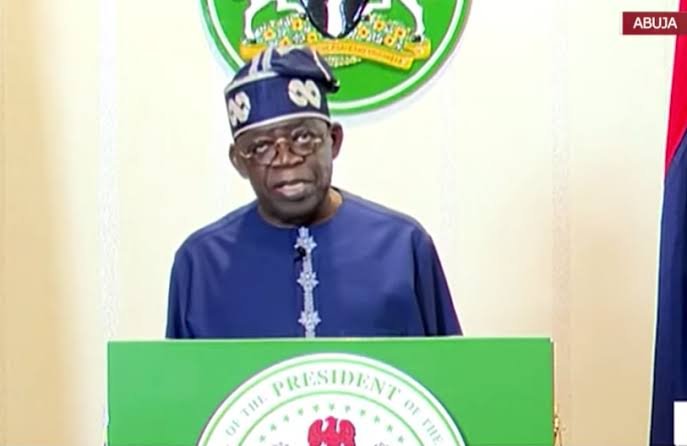
While requesting President Bola Ahmed Tinubu to instruct the Minister of Information and national Orientation, Mohammed Idris, and the regulator to withdraw the order, SERAP in the statement signed by Kolawole Oluwadare, Deputy Director, advised the government to “abstain from imposing prior censorship on broadcast stations and Nigerian journalists, including presenters and to allow them to freely carry out their constitutional responsibilities.”
Amnesty International condemned the development, describing it as “an outrageous and desperate attempt” to “impose unduly restrictive and invasive controls on the nation’s media landscape.”
“The Nigerian authorities must stop using the NBC in an unrelenting quest to silence journalists and media organisations that are crucial to ensuring an independent and diverse media space that fulfills people’s right to information,” said Isa Sanusi, Executive Director of Amnesty International, who also warned that the regulator’s position was authoritarian and unconstitutional.
Did the NBC just fall into a trap or it is acting out of genuine concern for the various stakeholders, and obedience to the Act and Code which guide its operations?
Amupitan raised some salient issues about the NBC at the BON meeting, as observed below.
“However, the effectiveness of the NBC has been a subject of sustained critique. Concerns have been raised about its institutional independence, given its placement within the executive branch. This raises the possibility of regulatory capture, where enforcement actions may be influenced by political considerations. Furthermore, the NBC’s sanctioning powers, though significant on paper, are not always consistently applied.”
I thought this was a subtle dig at the broadcast regulator aimed at forcing it into some kind of self-introspection that would equip it for future actions and interventions. That doesn’t seem to have happened as demonstrated by the order to broadcasters.
Amupitan hinted at regulatory capture. Has there been regulatory capture at the NBC? My candid answer is yes. Regulatory capture became very pronounced under the APC administration, beginning from the time of President Muhammadu Buhari, a troubling skeleton which this administration has found difficult to shake off.
At the time, government image makers lived in an ephemeral bubble and dreaded and suspected anybody with contrary views to their own chimerical effusions. Anything and everything was weaponised. The Code was partially amended and it smelt more trouble instead of achieving real results.
In the Code we had to be schooled on the meaning of new phrases, at least, to aid our education and understanding.
For instance, under Definition of Terms, Fake News: A deliberate misinformation or hoaxes spread via traditional broadcast media or social media (p190); and Hate speech: A speech which attacks a person or group on the basis of attributes such as disability, ethnicity, gender, political leaning, race or religion (p190).
So, it was fake news when CNN reported that there was a massacre at Lekki Toll Gate on October 20, 2020, during the @EndSARS protests, and and the Minister of Information said there couldn’t have been a massacre without blood, even though Amnesty International had said that 12 protesters were killed. Unfortunately, the people who lost their loved ones retreated into their shells in fear, even afraid to grieve in the open.
People always have reasons to suspect the government. But under the Buhari regime, suspicion rose ignobly sky-high. Unfortunately, the present administration is an inheritor of some of the past missteps.
Some of the actions of the government were challenged in court. For instance, when a fine of N500,000 each was placed on 45 broadcast stations on March 1, 2019, as a fallout of the elections, the Media Rights Agenda went to court. The NBC’s appeal against an earlier judgment in favour of the Media Rights Agenda in 2023 was dismissed on April 2, 2026.
People believed that the sanctions on the broadcast houses were influenced externally and they still believe today that the present order by NBC is also externally influenced to send jitters down the opposition voices as the nation heads towards a defining election period.
But does the broadcast regulator have a reason to call for moderation in the air waves? Yes, quite frankly. There is no reason to heat up a system that is already struggling to cope with a number of contradictions. There is the urgent need to call for moderation and professional decorum.
However, while I want to observe that there is a certain arrogance that comes from a position of knowledge, permit me to say that quite a number of the people, especially politicians, who go on television are ill-prepared for what awaits them, and they simply flare up when confronted with superior knowledge. They go to a station with all the arrogance of political power and suddenly dissolve into a pitiable wreck when confronted with real knowledge based on facts and reality. They need to build capacity in themselves instead of hiding under systems or pulling political strings to fight perceived enemies.
I want to make an appeal here that the broadcasters and their guests should be civil enough and engage each other in such a way as to elicit and pass needed information and knowledge to the Nigerian public. There is so much that the people don’t know; it is the responsibility of the media to help them with such information by professionally but persuasively obtaining them from devious and professional hoarders.
Following from the order, the regulator said that any presenter or anchor found in breach, shall be deemed to have committed a Class B breach. This is like placing judgment already on a case that doesn’t exist yet.
Under Penalties, Class B falls to the category of Heavy which fine is between N2m and N10m. Some industry voices say this is intended to throw a scare into the broadcasters and keep them in line. But I don’t see anybody running for cover if I know the journalism profession well.
The last thing I want to say is that the Nigeria Broadcasting Code is good and provides generous cover for the broadcast industry. The NBC should be allowed to superintend the industry without unnecessary pressure. This is also to remind the regulator that there will always be pressure from the government, especially from politicians at the fringes, but the responsibility of the agile regulator is to manage those pressures and still deliver balanced services that can sustain an industry.