By Agbeze Ireke Kalu Onuma (AI-KO)
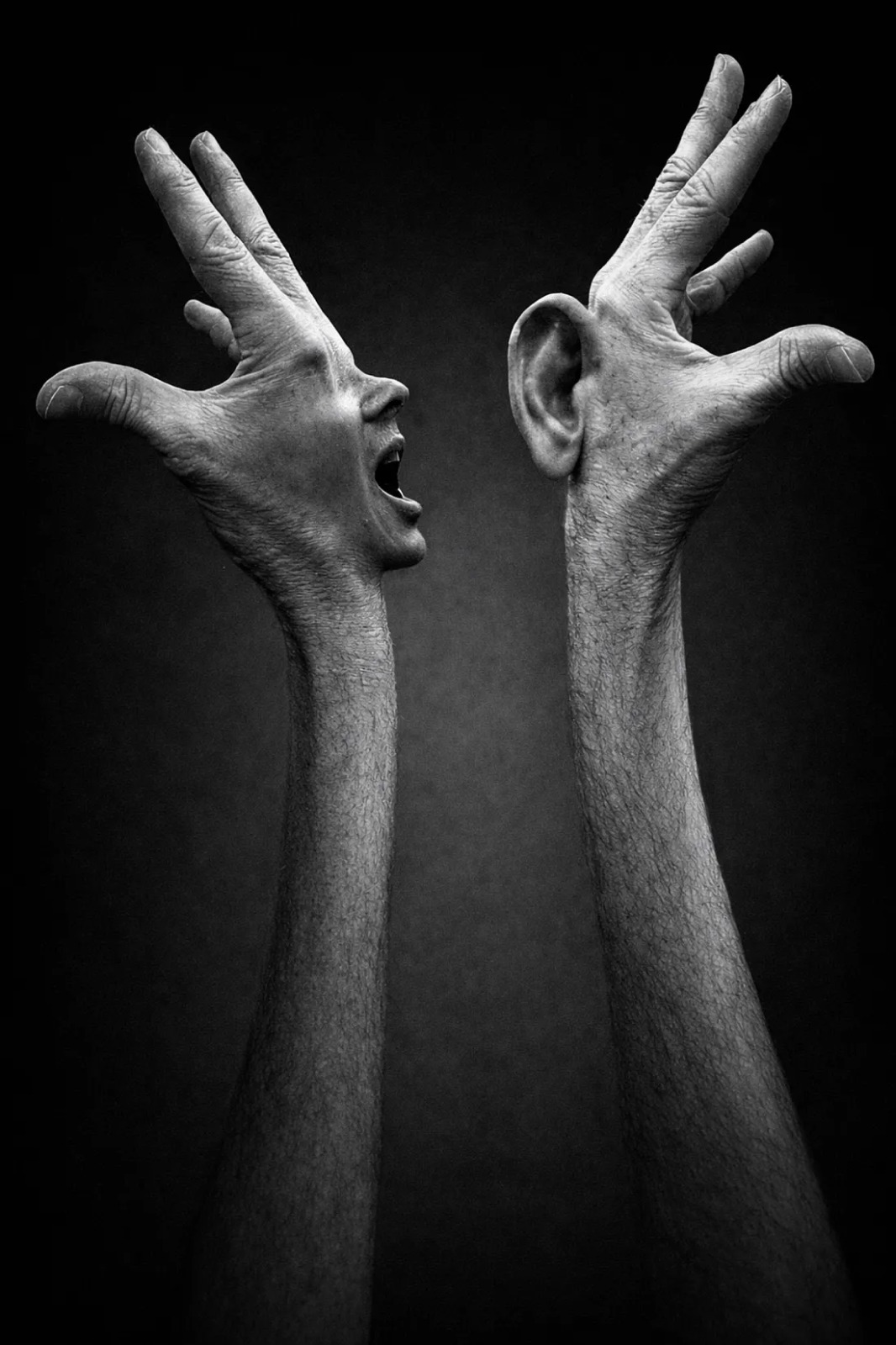
When a country’s caretakers grow deaf to the suffering of the public and blind to the wreckage of their own making, a unique brand of national insanity takes hold. Nigeria, under the stewardship of Bola Ahmed Tinubu, has become precisely that – an anarchy of the deaf and blind, where the president hears nothing but the sycophantic chorus of his courtiers and sees nothing but the mirage of his own ambition. I write this not as a partisan hack seeking to settle scores, but as a citizen who has watched, with growing horror, the systematic dismantling of everything that once gave this country a semblance of hope. The evidence is overwhelming, the testimony damning, and the verdict, I am afraid, already delivered by history. This is not analysis. This is a reckoning.
Let us begin with the most elemental indictment: the government does not care. This is not my conclusion alone; it is the accumulated verdict of a battered, hungry, terrorised nation. The Coalition of United Political Parties has accused Tinubu of adopting an “I-don’t-care” attitude toward the suffering of Nigerians. During the nationwide #EndBadGovernance protests of August 2024, the president chose studied silence over leadership, allowing his spokesmen to insult the sensibilities of a hungry populace while he retreated into presidential…
The economic catastrophe unfolding across the country is not a matter of opinion; it is a matter of verifiable, documented, internationally confirmed fact. The World Bank’s April 2026 Nigeria Development Update confirms that poverty in Nigeria reached 63 per cent in 2025, affecting approximately 140 million people, despite a concurrent slowdown in inflation. That figure is a straight line of indictment: poverty rose from 56 per cent in 2023, the year Tinubu assumed office, to 61 per cent in 2024, and peaked at 63 per cent in 2025. Every single year, under this administration, the number of poor Nigerians has increased.
The same World Bank in its October 2025 Nigeria Development Update had already documented 139 million Nigerians living in poverty – a figure that World Bank Country Director Mathew Verghis described with undisguised alarm: “In 2025, we estimate that 139 million Nigerians live in poverty. The challenge is clear: how to translate the gains from the reforms into better living standards for all.” The International Monetary Fund, in its 2026 Article IV Consultation, corroborated this nightmare, estimating that more than 60 per cent of Nigerians were living below the poverty line and that over 27 million faced food insecurity during 2025. Twenty-seven million people – more than the entire population of Ghana – went hungry on Tinubu’s watch.
And what was the Presidency’s response to this devastating global consensus? Rejection. Denial. The Special Adviser to the President on Media and Publicity, Sunday Dare, dismissed the World Bank’s findings as not reflecting “current realities.” The figure, he argued on his X handle, was merely “an analytical construct, not a direct reflection of local income realities.” Analytical construct. Tell that to the mother in Maiduguri who has not eaten in two days. Tell that to the father in Zamfara who watches his children waste away. Tell that to the family in Lagos whose food bill has increased by more than 300 per cent since this government took office. Tell that to the 27 million Nigerians who woke up hungry this morning and will go to sleep hungry tonight. Denial does not change reality. It merely delays the reckoning. And the reckoning is coming.
And what of the First Lady? Senator Remi Tinubu has proven herself a masterclass in tone-deafness and delusional grandeur. In October 2025, during an official visit to Gombe State, she stood before cameras and declared that “the era when Nigeria was branded the most corrupt country is over.” She urged Nigerians to “stop badmouthing your nation” and insisted that international perception of the country was shifting positively. “Gone are the days when they say Nigeria is the most corrupt country. You won’t hear that again,” she proclaimed. She even compared Gombe State’s landscape to “the London countryside.” Gombe. The London countryside. This is the level of delusion we are dealing with.
This is the same First Lady whose husband’s administration has been plagued by corruption allegations, including documented claims of N2.9 billion in missing funds in the Auditor-General’s 2025 report. This is the same First Lady whose government has been accused of keeping an alleged certificate forger in the cabinet. This is the same First Lady whose husband’s personal history of alleged forgery and perjury has, in the words of Atiku Abubakar, “effectively institutionalised falsehood in public service.” Yet she stands before Nigerians and tells them to stop badmouthing a nation where 140 million people – two thirds of the country – live in poverty. The disconnect is not just staggering. It is obscene.
The wastefulness of this administration is legendary, and it has now graduated from embarrassing to criminal. President Tinubu’s foreign trips have become a running national scandal. Analysts estimate that his state visit to the United Kingdom alone cost Nigeria over $5 million, or approximately N7 billion. Chief Martin Onovo was direct: “Our own very conservative estimate shows that this visit cost Nigeria over $5 million. The Tinubu regime in its wastefulness has the highest cost of governance ever in the history of Nigeria.” In 2015, recurrent expenditure was approximately N2.6 trillion.
Today, under Tinubu, it has ballooned to over N15 trillion – nearly six times higher – while public services have collapsed and poverty has skyrocketed. Mahdi Shehu documented that the Presidency spent more than N34.39 billion on foreign exchange for international trips and related official duties within just two years, describing it as “heartless governance” and “governance terrorism, democratic robbery, and political banditry.” “Even angels in heaven will put a continuous curse on this recklessness. Nigerians are sufficiently afflicted,” he declared. For a government demanding that citizens absorb the pain of fuel subsidy removal, electricity tariff hikes, and currency devaluation, these expenditures are not just indefensible – they are an act of psychological violence against a suffering people.
Nigeria’s public debt now stands at N159.28 trillion, equivalent to approximately $110.97 billion as of December 2025. Tinubu has disclosed that Nigeria will spend approximately $11.6 billion – about N18 trillion – on debt servicing in 2026 alone. In the same year, the State House Headquarters received a budget allocation of N43.20 billion. In a country where only N36 million of the N218 billion appropriated for healthcare capital expenditure was released in 2025, where hospitals are in ruins, where doctors are emigrating in droves and nurses are striking in their hundreds, the government finds N43 billion for the State House and N34 billion for foreign travel. This is not mismanagement. This is contempt. This is what a government looks like when it has given up pretending to serve the people it governs.
Let us turn to the security situation, which has become the most damning indictment of this administration – and which the administration’s friends in the international community can no longer explain away. The House of Representatives coalition “House to the Rescue” has condemned the Federal Government for negotiating with bandits to secure the release of kidnapped students. The lawmakers declared: “This is not leadership. This is an abdication of responsibility.” They warned that engaging bandits in dialogue legitimises criminality, encourages further kidnappings, and erodes public trust in security agencies.
No functioning nation rewards criminality with dialogue,” they stated. Yet the Tinubu government continues down this path, creating what the lawmakers described as “a dangerous business model where abductors take citizens and wait for government representatives to arrive with negotiations instead of force.” Bandits have now industrialised kidnapping in Nigeria. They have set tariffs, employed logistics teams, opened bank accounts in neighbouring countries, and issued public demands. They have become a parallel government – and the Tinubu administration’s response has been to legitimise them at the negotiating table.
The human cost defies comprehension. According to the International Society for Civil Liberties and Rule of Law (Intersociety), in the first 220 days of 2025 alone, at least 7,087 Christians were massacred across Nigeria – an average of 32 killed every single day. An additional 7,800 were abducted during the same period. The United States has redesignated Nigeria as a “country of particular concern” for severe violations of religious freedom. Nigeria ranked as the world’s fourth most terrorised country in 2026, having deteriorated from eighth in 2024 and sixth in 2025. While communities in Zamfara, Katsina, Niger, Benue, and Plateau states live in daily terror – farmers abandoning their fields, children unable to attend school, families unable to travel – the President is attending summits in Windsor Castle and posing for photographs with King Charles.
The abduction of pupils and teachers in Oyo State on 15 May 2026 represents a turning point that the administration’s spin doctors cannot walk back. Armed men raided three schools in Oriire Local Government Area, seizing over 49 pupils, teachers, and even a toddler. Two days later, a video circulated across Nigerian social media showing the beheading of mathematics teacher Michael Oyedokun by his captors. A mathematics teacher. Beheaded. On camera. While his family watched.
While Nigeria watched. While the President released a statement of condolences and vowed rescue. Vows of rescue have become the government’s speciality. They vow. They do not deliver. The abducted remain in captivity for weeks. The Nigeria Union of Teachers declared an indefinite strike effective 1 June 2026. The kidnappers escalated their demands to include a ransom of N1 billion, two Hilux vehicles, the release of detained associates, and – in a demand that reveals the ideological depth of the crisis – the implementation of Sharia law in Oyo State. This is not crime. This is insurgency. And the government has no answer.
The Civil Society Legislative Advocacy Centre (CISLAC) has called on Tinubu to declare a national emergency on insecurity, noting that kidnappings and attacks on rural communities and schools continue to rise. The organisation’s statement was sharpened in its moral force by the death of Retired Major General Rabe Abubakar in bandits’ captivity in June 2026. The retired General, a former Director of Defence Information, was ambushed and kidnapped alongside his wife on 30 May 2026 while travelling in Katsina State. Despite efforts by state and federal authorities to secure his release, he died in captivity.
A man who gave his life to defending Nigeria, who wore the uniform and bore arms for this country, died as a hostage of the criminals his country could not protect him from. If a decorated military officer who dedicated his life to defending Nigeria can fall victim to bandits, then ordinary Nigerians face even greater risk. The Punch has documented that Nigeria has lost at least three senior military officers to terrorist attacks in the months since November 2025 alone – Brigadier General Musa Uba in November, Brigadier General Oseni Braimah in April 2026, and now Retired Major General Rabe Abubakar. We are burying our generals. What more must happen before this government acts?
Nigeria’s healthcare system has simultaneously collapsed – silently, systematically, almost without the government noticing. Of the N218 billion appropriated for capital expenditure in the Federal Ministry of Health in 2025, only a paltry N36 million was released. That is not a typo. N36 million out of N218 billion. A release rate of less than 0.02 per cent. Public hospitals lack basic consumables. Doctors are emigrating at rates that constitute a haemorrhaging of national capacity – a crisis that has been dubbed the ‘japa’ exodus.
Health workers continue to embark on strikes over welfare concerns that the government ignores. Nigerian mothers are dying in childbirth at rates that shame the continent. Children are dying of diseases that are preventable and treatable. And the government cannot account for what happened to the hundreds of billions appropriated in their name. This is a government that has perfected the art of allocating money on paper and making it disappear in practice.
And when Nigerians finally took to the streets to protest this cascade of catastrophes – when they were pushed beyond endurance, when their children were hungry, when their businesses were dead, when they had nothing left to lose – security forces opened fire. Amnesty International’s comprehensive investigation confirmed that at least 24 people were killed during the #EndBadGovernance protests of August 2024, with Nigerian police firing live ammunition at close range – often targeting the head or torso – in what the organisation described as clear evidence that officers were shooting to kill.
Twelve were killed in Kano, three in Jigawa, three in Maiduguri, three in Niger state, two in Kaduna, one in Katsina. Those killed included 20 young people, an older person, and two children. Two children. Shot by the police of the government they were protesting against. Over 1,200 people were detained, charged with treasonable felony – some of them minors who appeared before a Federal High Court in Abuja so frail and malnourished from their detention that they collapsed in the dock. The sight prompted a national outcry. Tinubu ordered their release. Not because it was wrong to charge them. Because the optics became unbearable. There is a difference between justice and damage control, and this government has never learned it.
In Lagos, around 1,000 people marched peacefully in the mainland area, chanting “Tinubu Ole” – Tinubu the thief. Five states remained under curfew with heavy police presence. The police descended on protesters as if they were enemies of the state, and the irony of the whole spectacle was captured perfectly by the Obidient Movement: “Ironically, Asiwaju Bola Tinubu led protests against President Goodluck Jonathan, repeatedly calling for his resignation over what he described as failed governance.” Today, he has become the very thing he once opposed. The man who once marched in the streets now sends the police to shoot the people marching in the streets. Power corrupts. And absolute power – the kind that comes from controlling the executive, the legislature, the judiciary, and the security services – corrupts absolutely.
Former Minister of Education Dr. Obiageli Ezekwesili has condemned what she described as “a deeply troubling trend” of shrinking civic space and state intolerance of dissent. She cited the harassment of activist Yemi Adamolekun during a peaceful memorial for #EndSARS victims, the police clampdown on protesters supporting Nnamdi Kanu, and the repeated arrest of Omoyele Sowore despite a valid court order granting him bail. “It is clear that President Tinubu is running a government and security apparatus that are increasingly intolerant of dissent,” Ezekwesili said.
True strength of a government does not lie in its ability to suppress criticism, but in its capacity to protect the rights of those who speak truth to power. Nigeria’s democracy cannot survive on the silencing of conscience. Every act of repression against one citizen diminishes the liberty of all.” These are not the words of a radical. These are the words of a former World Bank Vice-President, a former Nigerian Minister of Education, a woman who has served this country with distinction. When such a person speaks in these terms, the government has a responsibility to listen. Instead, it has responded with more repression.
Nowhere is the administration’s authoritarian drift more terrifyingly visible than in its assault on the judiciary and the multiparty system. In June 2026, a Federal High Court judgment sought to deregister the African Democratic Congress (ADC) and four other opposition parties – ADC, Accord, Action Alliance, Action Peoples Party, and the Zenith Labour Party. The ruling was delivered by Justice Peter Lifu despite a clear and subsisting order of the Court of Appeal, Abuja Division, issued on 22 May 2026, which had explicitly stayed further proceedings pending the determination of an appeal. The Court of Appeal subsequently described Justice Lifu’s conduct as a “brazen disregard for judicial authority” amounting to “judicial rascality.”
INEC itself – the government’s own electoral umpire – was “shocked” by the judgment and opposed it. Atiku Abubakar condemned the ruling as “a dangerous escalation of authoritarian tactics and a blatant assault on Nigeria’s democracy.” Peter Obi called for its immediate reversal. The Court of Appeal has since stayed execution. But the mask has slipped. The intent is plain. This government wants a one-party state. It wants the ADC – now home to Atiku, Amaechi, and millions of opposition voters – eliminated before the 2027 elections. What cannot be won at the polls must be stolen through the courts. This is not democracy. This is the beginning of the end of democracy.
Political analyst Professor Udenta Udenta has gone further, alleging that “the National Assembly was procured to amend the Electoral Act to get Tinubu reinstated into power.” He accused the administration of “the dwindling or shrinking civic spaces, the brutal assault on labour centres, the weaponisation via lawfare of the criminal justice system” and “the war declared on political parties, that is, multi-party democracy, by a regime tiptoeing into totalitarianism.” The Electoral Act (Amendment) Bill was signed with alarming speed, prompting the ADC to declare that President Tinubu had “signed the death warrant on credible elections and, by so doing, set Nigeria’s democracy back by several decades.”
These are not hyperbolic accusations from fringe actors. These are the considered judgements of serious political thinkers, former ministers, and mainstream opposition parties watching a government systematically dismantle every institutional check on its power ahead of a presidential election in which its candidate has already secured his party’s ticket with 10.9 million votes – more than the nine million votes with which he won the 2023 election. Someone needs to explain that arithmetic to the Nigerian people.
The weaponisation of anti-corruption agencies has become a signature instrument of this administration’s political management. A coalition of opposition figures has raised the alarm over what they describe as a covert agenda to deploy the EFCC, the Nigeria Police, and the ICPC as instruments of political intimidation. “Across our nation, state power is being deployed not for the prevention of economic crimes, but for the persecution of perceived political adversaries,” the coalition stated. The pattern is documented and unmistakable: opposition politicians are investigated with urgency; allies are protected with diligence.
Former Minister of Power Saleh Mamman was convicted and sentenced to 75 years in prison for stealing N33.8 billion meant for the Mambilla and Zungeru hydroelectric power projects – a conviction the EFCC rightly celebrated. But the same government that prosecuted Mamman is accused of shielding its own. Former Minister of Innovation, Science and Technology, Uche Nnaji, allegedly ignored multiple invitations from the ICPC over an ongoing investigation into allegations of certificate forgery. A Federal High Court subsequently ordered his arrest. Yet he served in the cabinet until his tenure ended. This is not the rule of law. This is the rule of those whom the law selectively serves.
The electricity sector – once a symbol of Nigeria’s potential, however frustrated – has become a monument to failure and denial. Nigeria’s national grid has collapsed at least 20 times since Tinubu took office, including twice in a single week in January 2026 when power generation crashed from 3,825 megawatts to a catastrophic 39 megawatts within minutes – plunging the entire country into darkness. Electricity tariffs have increased by over 230 per cent since Tinubu assumed office.
Meanwhile, the GenCos are owed N6.8 trillion in accumulated debts, gas supply covers less than 43 per cent of daily requirements, and over six million customers remain unmetered. The administration promised 24-hour electricity. Nigerians remain in darkness. Tinubu himself told Nigerians: “Do not vote for me again if I fail to stabilise power supply.” They are already preparing their response. The manufacturers of Nigeria spent a record N1 trillion on self-generation in 2024 alone – a N1 trillion tribute to the government’s failure, extracted from the private sector because the public sector cannot keep the lights on.
What of the youth – the 60 per cent of Nigeria’s population under thirty, the demographic that ought to be this country’s greatest asset? President Tinubu has himself lamented the high rate of graduate unemployment. Yet the government’s flagship response – the Renewed Hope Employment Initiative – targets just over 21,782 unemployed youth. Twenty-one thousand, in a country where millions of graduates cannot find work. The ‘japa’ exodus has accelerated beyond anything Nigeria has seen before. Doctors, engineers, nurses, academics, lawyers – the best and brightest are leaving in their hundreds of thousands, not because they lack ambition but because this government has destroyed the conditions that would reward ambition. They are voting with their feet, and their destination says everything about their verdict on the Tinubu administration.
The social media landscape – often a more honest barometer of national mood than any official survey – reflects the fury of a nation at breaking point. “Tinubu running most useless government in the history of useless Governments,” declared popular activist Mr Macaroni, in a statement that was crude in its formulation but precise in its targeting. Human rights activist Aisha Yesufu has criticised Nigerians for turning on one another instead of demanding accountability from the Tinubu administration: “I give it to the illegitimate administration of Mr Bola Ahmed Tinubu. He has gotten defeated people fighting themselves instead of fighting him and his illegitimate administration over the killings in Nigeria.”
The government, meanwhile, has responded to dissent with legal prosecution. SERAP and Amnesty International have called on Tinubu to withdraw charges against Omoyele Sowore, describing the prosecution as “an alleged legal tactic used to silence critics.” The government charged Sowore, Facebook, and X with cybercrimes and defamation over anti-Tinubu posts. Let that sit for a moment. The Nigerian government is suing a social media platform for allowing criticism of the President. This is not the behaviour of a confident administration. This is the behaviour of a regime that fears a smartphone.
The proposed amendments to the Petroleum Industry Act represent the final frontier of this administration’s assault on the Nigerian people’s patrimony. The ADC has warned that the amendments form part of “a deliberate and calculated effort to hollow out NNPC Limited, dismantle institutional checks and balances, and pave the way for the sale of Nigeria’s most valuable national assets to private, politically-connected interests at the expense of 200 million Nigerians.” “They represent not reform, but regression,” the party declared.
By handing decisive control of Nigeria’s oil and gas infrastructure to private interests with the right political connections, the government is not pursuing efficiency – it is pursuing enrichment. It is the systematic looting of a nation’s future, executed with the bureaucratic precision of a government that has confused state power with personal licence. Nigeria’s oil belongs to Nigerians. Not to Tinubu’s allies. Not to the political class that has feasted on this country for generations. To Nigerians.
Let me be absolutely clear about what I am, and what I am not. I am not a member of the PDP, the ADC, the Labour Party, or any other opposition formation. I am not writing this on behalf of any politician, any faction, or any presidential ambition. I am a Nigerian – born in Abiriba, formed by the memory of what this country promised its children, and alarmed by the speed with which that promise is being extinguished. I am writing this because silence, at this moment in Nigeria’s history, is complicity. I am writing this because the argument that “there is no alternative” is the oldest excuse in the despot’s playbook, and I refuse to accept it. There is always an alternative. The alternative is a government that governs. The alternative is leadership that leads. The alternative is a president who actually cares whether his people live or die.
Rotimi Amaechi captured the tragic irony of this administration when he asked: “How can a man who said he is a democrat, who fought on the side of NADECO, be stopping democracy?” Tinubu fought for democracy. He was jailed, exiled, and persecuted by military regimes. He stood with NADECO. He demanded accountability. He spoke truth to power. And now, in power, he has become what he once fought against. The man who once marched has become the man who orders the shooting of those who march. The man who once demanded democratic rights has become the man who deregisters opposition parties and sues social media platforms. The man who once spoke for the people now speaks only to his courtiers, in the sealed chambers of a presidency that has lost all connection with the nation it was elected to serve.
The question before Nigeria today is not whether Tinubu’s administration has failed. The evidence of that failure is everywhere – in the empty pots, in the abandoned farms, in the tears of kidnapped children, in the blood of 24 protesters shot by the state’s own police, in the shredded constitution, in the weaponised courts, in the silenced journalists, in the 140 million Nigerians living below the poverty line. The question is whether Nigerians will accept this reality, or whether they will rise up and reclaim their democratic rights. The battle before us transcends political parties.
It is a battle for the soul of Nigerian democracy. It is a battle between those who believe in freedom of choice and those who seek to impose political uniformity through intimidation and institutional capture. Nigeria’s democracy was not won cheaply. It was won through the blood of activists, the sacrifice of exiles, the courage of journalists, and the determination of ordinary citizens who chose dignity over submission. It must not be surrendered cheaply.
The Nigerian people can see what is happening. They can see opposition parties being targeted, democratic institutions being pressured, anti-corruption agencies being weaponised for political ends. But the Nigerian people also have power – the power of their numbers, the power of their voices, the power of their votes. The 2027 election looms as a defining moment between the Tinubu hegemony and the democratic will of the people. Will Nigerians remember? Will they act? Or will they allow this administration to complete its project of turning Africa’s largest democracy into a one-party police state?
I have spoken to traders in the markets of Kano, to farmers in the villages of Benue, to students on the campuses of Lagos, to civil servants in the offices of Abuja. The anger is palpable. The despair is real. The hunger is not a statistic; it is a lived reality, a daily humiliation. The insecurity is not a headline; it is the terror of knowing that your child might not come home from school, that your father might be beheaded on a rural road, that the men in uniform sent to protect you might shoot you instead. The repression is not an abstraction; it is the arrest of your neighbour for posting a tweet, the silencing of your voice, the theft of your democracy in broad daylight, dressed up in the language of reform and renewal.
The Nigerian people are watching. The Nigerian people are remembering. And when the time comes, the Nigerian people will speak. They will speak for the mothers who skip meals so their children can eat. They will speak for the fathers who cannot afford school fees. They will speak for the graduates who cannot find jobs. They will speak for the farmers who cannot access their land. They will speak for the protesters who were shot. They will speak for the journalists who were arrested. They will speak for the opposition politicians whose parties were deregistered. They will speak for the generals who died in bandits’ captivity. They will speak for the teacher beheaded on camera while a nation watched and wept. They will speak for the democracy that is being slowly, systematically, deliberately stolen from them.
And when they speak, Tinubu and his administration will finally have to listen – because denial, no matter how loud or how persistent, cannot drown out the truth. The truth is that Nigeria is suffering, and Tinubu is responsible. The deafness and blindness of this administration will not save it from the judgment of history. The anarchy of the deaf and blind cannot endure. The people will have their day. And on that day, the deaf will hear, the blind will see, and the wicked will be brought to account. That is not a threat. That is a prophecy. And in this country, prophecy has a way of becoming history.