By Emmanuel Gandu
HIGHLIGHTS
* Abstract
* Intro : killing in the name of God ?
* How useful has man put religion to?
* Religion as opium for hate or love?
* Those who kill in the name of God
* World’s top religious terrorists groups
* Why they kill in the name of God
* Maitatsine crisis
* Sharia riots/crisis
* Boko Haram
* Miss World beauty pageant crisis
* Danish Mohammed cartoons crisis.
* Implication of religiously provoked wars/killings to Nigeria.
* Conclusion
ABSTRACT
“This presentation is an attempt to examine, highlight, interrogate and achieve some level of exposition of the role of religion in the promotion of love, or in the various crisis of hate, conflicts, wars, killings, and destruction that has engulfed the entire world in catastrophic proportion thereby threatening the very existence of man as God’s creation on earth.”
INTRODUCTION
It is observed that man in his quest to be as religiously compliant as possible goes out of his way to serve his God with all his strength, mind and talent. He even goes to the extent of killing in the name of God.
Unarguably, religion is said to be as old as the history of man.
Civilizations, scholars, archaeologists, and anthropologists have discovered that there was never in existence any people, anywhere, anytime, who were not in some sense religious in nature.
During the thousands of years of man’s history of existence on earth, the search for God has led to enormous diversity of religious expression and pathways worldwide.
From Judaism, Christianity, Islam, Hinduism. And to the Oriental philosophies of Buddhism, Shintoism, Taoism, Confucianism, and African traditional religion.
In other vast regions of the world mankind has turned to Animism, Magic, Spiritism, and Shamanism.
These quest for God has further pushed man to break and diversify into denominations, sects, and cults – all in search of God.
HOW USEFUL HAS MAN PUT RELIGION TO ?
In his book ‘Man’s Religion’, John B. Noss points out that all religions say that man does not and cannot stand alone because he is vitally related with and dependent on powers in Nature and Society, hence he cannot stand apart.
According to another book ‘World Religions – from Ancient History to the Present’, religion is an important feature that is longing for value in life, that leads to search for meaning, faith, and a power greater than the human and the superhuman mind.
Accordingly, religion satisfies a basic human need, much as food satisfies our hunger.
We very well know that eating indiscriminately when we are hungry may stop the pangs of hunger. In the long run, however, it will damage our healthy life.
We obviously need food that is wholesome and nutritious.
Likewise, we need wholesome spiritual food to nurture and maintain our spiritual health.
This presentation is therefore an attempt to examine, highlight, interrogate, and achieve some level of exposition of the role and place of religion in the promotion of love, or in the various crisis of hate, conflicts, wars, destruction, and killings that has engulfed the entire world in catastrophic proportion thereby threatening the very existence of man as God’s creation on earth.
RELIGION AS OPIUM FOR LOVE OR FOR DIVISION OR FOR HATRED ?
God created man in His own image and likeness in order to worship Him, serve Him, and to love one another.
God also gave man the freedom and choice of worship.
It is in the exercise of these freedom that man worships God through different ways and means.
These ways and means have therefore translated to the different religions, denominations, sects, and cults.
Rather than bringing man together in the course of worshipping God, these differenes seems to be tearing up the different adherents further apart.
Lamentably, these schism have caused a great lot of troubles, crisis, wars, destruction, and deaths all over the world.
This ambiance of religious intolerance no doubt negates God’s plans and philosophy of creation, choice, and freedom of worship.
Little wonder the great German sociologist and economic theorist Karl Marx in 1843 describe (s) religion as the “Opium of the People”
Unfortunately, the moral corruption and decadence, extreme violent terrorism, extermination of life, destruction of property, and other vices rampaging the entire world by religious adherents in the name of God lives much to be desired.
They have lost their moral rudder thereby causing shipwreck on the rocks of faithlessness, fanaticism, greed, self indulgence, blind followership, and high religious opium intoxication.
THOSE WHO KILL IN THE NAME OF GOD
One wonders the role religion has played in the many theatres of war that have devastated mankind and caused untold hardship, loss of life and property.
Why have so many people killed and being killed in the name of God ?
The crusades, the Inquisition, the endless conflicts in the Middle East especially between the Arabs and Israel over, the many decades of the Northern Ireland conflicts between Catholics and Protestants, the 1980’s slaughter between Iraq and Iran, the Hindu – Sikh clashes, the Kosovo massacres of Armenian Muslims, the endless killings and reprisals of Christians and Muslims in Northern Nigeria, etc – all these religiously ignited killings and massacre events certainly makes one to raise doubts and questions about the sincerity of the different religious beliefs, ethics, and doctrines about the sanctity of human life.
The worst and most violent is the increasing rise of religious fundamentalism, fanaticism, terrorism, and death squads that leave behind in their trails thousands of innocent wasted lives and souls across countries and regions of the world – all in the name of God.
WORLD’S TOP RELIGIOUS TERRORISTS GROUPS
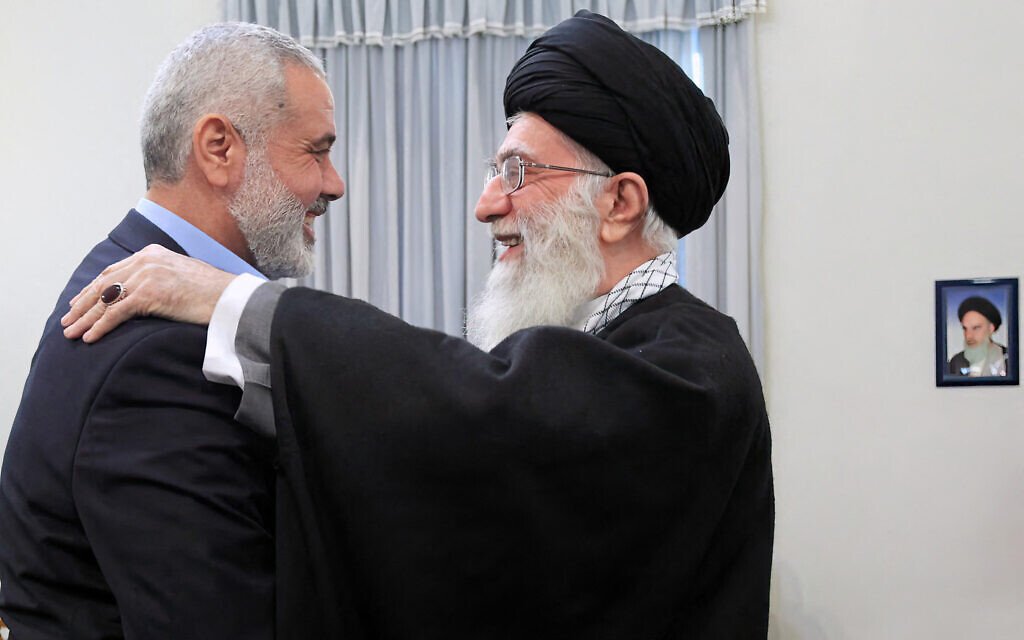
Terrorists groups like Osama Bin Laden’s Al- Qa eda, The Taliban in Afghanistan, Al- Shabaab in Somalia and East Africa, ISWAP, ISIS, Hizbulah, Hamas, Maitatsine, Boko Haram, Lakurawa, and other tribal/religious affiliated war Lord’s/gun men.
Regrettably, these violent religious terrorist groups operating and killing people with reckless abandon in Europe and America, Afghanistan, Pakistan, Iran Asia, Israel, Gaza, Palestine, Syria, Somalia, Nigeria, Kenya, Niger, Chad, etc claim to kill in the name of God.
TOP 20 TERRORIST GROUPS IN THE WORLD
1. Islamic State (ISIS/ISIL) – Islam (Sunni Extremism) – Iraq/Syria
2. Al-Qaeda – Islam (Sunni Extremism) – Afghanistan/Pakistan
3. Taliban – Islam (Sunni Extremism) – Afghanistan
4. Boko Haram – Islam (Sunni Extremism) – Nigeria
5. Al-Shabaab – Islam (Sunni Extremism) – Somalia
6. Hezbollah – Islam (Shia Extremism) – Lebanon
7. Hamas – Islam (Sunni Extremism) – Palestine (Gaza Strip)
8. Lashkar-e-Taiba (LeT) – Islam (Sunni Extremism) – Pakistan
9. Jaish-e-Mohammed (JeM) – Islam (Sunni Extremism) – Pakistan
10. Islamic Jihad Movement in Palestine – Islam (Sunni Extremism) – Palestine
11. Tehrik-i-Taliban Pakistan (TTP) – Islam (Sunni Extremism) – Pakistan
12. Abu Sayyaf Group – Islam (Sunni Extremism) – Philippines
13. Ansar al-Islam – Islam (Sunni Extremism) – Iraq
14. Hayat Tahrir al-Sham (HTS) – Islam (Sunni Extremism) – Syria
15. Jemaah Islamiyah (JI) – Islam (Sunni Extremism) – Indonesia
16. Hizbul Mujahideen – Islam (Sunni Extremism) – India (Kashmir)
17. Islamic Movement of Uzbekistan (IMU) – Islam (Sunni Extremism) – Uzbekistan
18. Revolutionary Armed Forces of Colombia (FARC) – None (Marxist–Leninist) – Colombia
19. Liberation Tigers of Tamil Eelam (LTTE) – None (Ethno-nationalist) – Sri Lanka
20. National Socialist Underground (NSU) – None (Neo-Nazi ideology) – Germany
WHY KILL IN THE NAME OF GOD ?
If all religions preach peace, love, kindness, faith, self control, being a neighbour’s keeper, why is there much HATRED and KILLING in the world ?
(1) Roger Shinn, a research professor of social ethics at the Union Theological Seminary New York in his findings concluded that “Religious wars tend to be extra furious. When people fight over territory for economic advantage, they reach the point where the battle isn’t worth the cost and so reach a compromise. But when the cause is religious, compromise and reconciliation seem to be evil.”
(2) The “My religion is more important, superior, and directed by God” syndrome drives both the preachers and followers drunk and they see nothing wrong with their actions.
(3) Charles Caleb Colton (1825) posits that “Men will wrangle for religion, write for it, fight for it, and die for it”
(4) In the words of one philosopher Jonathan Swift (1667 – 1745) “We have just enough religion to make us hate, but not enough to make us love one another.”
(5) Still on the evil minds of men, Blaise Pascal (1623 – 1662) wrote that “Men never do evil so completely and cheerfully as when they do it from religious conviction.”
RELIGIOUSLY PROVOKED CRISIS BETWEEN MUSLIMS AND CHRISTIANS IN NIGERIA
(1) MAITATSINE CRISIS
Mohammed Marwa Maitatsine, a Nigerian born in 1927 at Maroua Cameron became a fire brand Islamic “scholar” preaching a violent form of Islam. He attracted thousands of disaffected youths mostly almajirai whom he radicalized into a cult-like movement.
From 1980, his ideology culminated in one of the deadliest uprisings in Nigerian history.
According to M.A Ojo (1985) in the ‘American Journal of Islamic Social Science Vol.2 No.2 1985, the Maitatsine Revolution in Nigeria was an Islamic fundamentalism and fanaticism.
Expectedly, the Maitatsine uprisings took place in some states in Northern Nigeria spanning specifically from Kano(1980), Bulunkutu(1982), Bauchi(1982), Jos(1982), Zaria(1982), Sokoto(1982), Kaduna and Jimeta Yola(1984).
On the effects of fanatical teachings to almajiri/youths on the society, Saifullahi Idris Umar and Sadiq Muhammad Maaji(2025) lamented the consequences of the almajiri system in the provision of ready human force for conscription as they posited in ‘From Sacred education to street exploitation: the Almajiri crisis in Nigeria as a nexus of public health failures, legal paralysis, and global security risks’ in the journal of ‘Philosophy, Ethics, and Humanities in Medicine Vol.20. No.1 2025.
Little wonder, Nigeria is grappling with the menace of terrorism, banditry, kidnapping, gunmen, etc, who have largely come from the almajiri system.
(2) INTRODUCTION OF SHARIA LAW
Sharia law was introduced as a comprehensive legal system in 12 northern Nigerian states starting in 1999, and spearhead by then Zamfara state governor Ahmed Sani Yerima in 2000. The other states were Kano, Sokoto, Katsina, Bauchi, Borno, Jigawa, Kebbi, Yobe, Kaduna, Niger, and Gombe.
This received widespread support among the Muslim population across the North.
However, this was viewed as an Islamic revolution in Nigeria, as well as an unconstitutional move that threatened national unity and secularity by the Christian population.
The stage was set for arguments and counter arguments, confrontation and clashes, uncompromising agitations, etc.
The most violent sharia-related riots occured in Kaduna state in February 2000. It was triggered Christian protest marches around town against the adoption of sharia in Kaduna state, a state said to be made up of about 50% Christian population and 50% Muslim population.
It was reported that the Christian protest marches were violently attacked by Muslims resulting into several deaths, fatal injuries, destruction and looting of property, burning of Churches, Mosques, homes, and businesses. This crisis resulted in massive displacement of the population.
An international organization, Human Rights Watch estimated the death toll at about 5,000 people. This included Catholic priests and several other clergy.
Unfortunately, similar violent sharia-related clashes erupted in other Northern Nigerian cities like Jos.
Unarguably, the implementation of sharia law deepened the divide between Christians and Muslims in the north, thus leading to increased insecurity for non-Muslims in sharia-compliant states, and vice versa.
Moreover, critics and analysts argue that sharia criminal code violates the 1999 constitution, specifically Section 36(12), which states unequivocally that a person cannot be convicted of a criminal offence not defined in written law.
Bolaji (2013) in his article ‘Between Democracy and federalism: Shari’ah in Northern Nigeria and the paradox of institutional impetuses’ in the Journal of ‘Africa Today Vol.59. No.4 posits that law should be applied for the overall common good of parties concerned.
(3) BOKO HARAM(Western Education is forbidden)
Officially known as Jama’at Ahl al-Sunna Lial-Da’wa wa al-Jihad is a self proclaimed jihadist militant group based in North Eastern Nigeria and also active in Chad, Niger, Northern Cameroon, and Mali.
Boko Haram was founded by Muhammed Yusuf at about 2002.
As an ideology, Muhammed Yusuf was inspired by the controversial Islamic preacher Muhammed Marwa Maitatsine, who condemned the reading of any books other than the Quran. In addition, Boko Haram opposes the westernization of Nigerian society which it blames for Nigeria’s culture of corruption, and demands the establishment of an Islamic state in Nigeria.
By 2009, Boko Haram developed into a Jihadist group strives to re-establish the Islamic Caliphate.
Boko Haram targets Christians for Mass killings and assassination, suicide bombings, kidnapping, etc.
Churches, christian schools and businesses are never spared by Boko Haram terrorists.
Of the over 3 million people displaced since 2013, several others left Nigeria and fled to Cameroon, Chad and Niger. This violent group has continued to carry out killings and massacres, Mass abduction/kidnapping, thereby making it difficult for the Nigerian military to achieve success.
(4) MISS WORLD BEAUTY PAGEANT CRISIS
It was the turn of Nigeria to host the 2002 Miss World beauty pageant, but the event was marred by riots, crisis, and killings where violent religious clashes between Muslims and Christians occured in November 2002 in Kaduna.
This bloody Kaduna violent crisis was triggered by a ‘This Day’ newspaper article deemed blasphemous by some Muslims. Unfortunately, the newspaper article suggested that the Prophet Muhammed would have likely approved of the Miss World pageant. Another unfortunate thing is that the ‘This Day’ newspaper is not owned by any Kaduna Christian, and neither is it ever published in Kaduna, nor the editor from Kaduna.
Expectedly, the violence caused the death of well over 200 innocent Christian citizens, the destruction of significant number of churches.
As a result of these violent killings of Christians, the 2002 Miss world beauty pageant was relocated from Nigeria to London.
(5)DANISH MUHAMMED CARTOON RELIGIOUS CRISIS
In February 2006 a newspaper in Denmark published cartoons of the Prophet Muhammed.
Protests by Muslims against Christians in the north escalated into violent and deadly religious violence resulting in over 100 deaths and widespread destruction. The violence and riots which were primarily perpetrated in the Muslim-majority North had well over 50 churches and several businesses looted and burned. The protests initially began in Maiduguri spread to Bauchi and engulfed many northern cities including Kaduna. A Catholic priest was among those killed.
Consequently, the violence sparked reprisal attacks from Christians against Muslims in the Southern City of Onitsha, as Igbos were mostly affected by the killings, looting, burning, and destruction.
While triggered by the cartoons of Prophet Muhammed in far away Denmark, analysts noted that the violence reflected deep-seated economic and religious tension in Nigeria, which is sha divided between a predominantly Muslim north and a largely Christian Middle Belt and South.
IMPLICATION OF A RELIGIOUSLY PROVOKED WAR/KILLINGS TO NIGERIA
Nigeria is a religiously polarized country that is sharply divided between Christians and Muslims.
Without mincing words, Nigeria have had her own bitter share of religious conflict especially in Northern Nigeria.
Similarly, the nation had undergone a catastrophic 30 months civil war from 1967 – 1970.
Nigeria survived that war, but today, Nigeria cannot afford another civil war let alone a religious war.
Therefore, the leadership must galvanize the populace to avoid any action that may lead to unfortunate consequences.
However, the fanatical calls for retaliative response to every seemingly criminal acts of violence, the tumultuous reverberation from other religously war turned countries around the world, and such wrongful interpretations may negatively influence religious fanatics in Nigeria to take revenge on innocent citizens.
The memories of the skirmishes of the Miss World Beauty Pagent or the “Foreign Newspaper Cartoons”, the Deborah incident in Sokoto, the various Kano incidents, the Uromi hunters case, etc, lingers on.
We must Go On With One Nigeria (GOWON) irrespective of our different religious beliefs and affiliation.
CONCLUSION
If the havoc caused by the evil minds of fanatical fundamentalism and terrorism in the guise of religiosity visited on the world remains unabated and allowed to reach a frightening proportion and crescendo, the world may likely be eclipsed and extinguished of human life before long.
It therefore remains to be seen whether man will harken to the clarion call of historian, Arnold Toynbee “To obey God’s purpose of creating man and giving him a religion in order to radiate his spiritual counsels, truths, and love into as many souls as it can reach for the glory of God forever,” or continue to kill in the name of God.