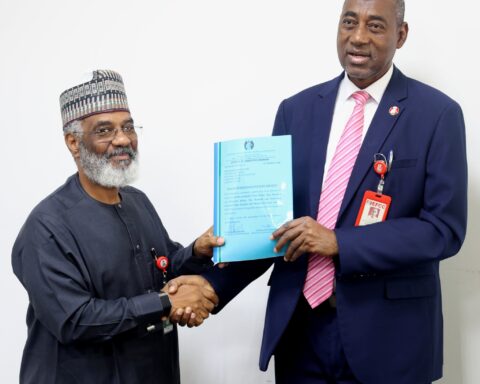
The corridors of University of Maiduguri Teaching Hospital were filled with a quiet mix of pain and hope on Tuesday as Kashim Shettima walked through wards where victims of the recent explosions in Maiduguri were receiving treatment.
The Vice President’s visit came less than 24 hours after multiple blasts rocked the city, leaving at least 23 people dead and scores injured in an attack that has once again shaken Nigeria’s North-East. For many of the victims lying on hospital beds, his presence was both symbolic and reassuring—a signal that the nation’s leadership had not turned away from their suffering.
Moving from one ward to another, Shettima paused to speak with survivors, some of whom bore visible signs of the violence, while others struggled silently with trauma. Accompanied by key officials including Borno State Deputy Governor Usman Kadafur, Director-General of the National Emergency Management Agency, Zubaida Umar, and the hospital’s Chief Medical Director, Ahmed Ahijo, the Vice President received briefings on the condition of the injured and the response efforts underway.
Addressing both victims and medical personnel, Shettima delivered a message of resolve from the Federal Government led by Bola Ahmed Tinubu. He assured that the latest attacks would not deter ongoing efforts to eliminate terrorism in the country.
“These acts of violence will not weaken our determination,” he said firmly. “We will decisively confront those behind these attacks and ensure that peace returns fully to our land.”
His words carried particular weight, not only because of his position but also due to his personal connection to Borno State—a region that has borne the brunt of insurgency for over a decade. For residents, Shettima’s return in a moment of crisis underscored both empathy and responsibility.
Earlier in the day, before departing Abuja, the Vice President had publicly expressed grief over the tragedy while speaking at the closing of the Annual Ramadan Tafsir at the State House Mosque. There, he mourned the lives lost and called for unity and prayers in the face of renewed security challenges.
Security analysts say the attacks represent a worrying development, raising concerns about the resurgence of violent activities in areas that had seen relative calm in recent years. The government, however, maintains that it is intensifying both military and intelligence operations to prevent further incidents.
At the hospital, doctors and nurses continued their work with urgency, tending to the wounded while grappling with limited resources and emotional strain. Officials of the emergency management agency assured that support would be scaled up to meet the needs of victims and their families.
For many in Maiduguri, the road to recovery—both physical and psychological—will be long. Yet, amid the grief, there are signs of resilience: families keeping vigil, medical teams working tirelessly, and a community determined not to be defined by violence.
As Shettima concluded his visit, the message he left behind was clear: the government’s fight against terrorism remains ongoing, and the people of Borno are not alone in that struggle.
In a region all too familiar with tragedy, the latest attack is a painful reminder of challenges yet to be overcome—but also of a resolve that refuses to fade.