Political activities within the African Democratic Congress in Ondo State have been abruptly put on hold following a directive from the Independent National Electoral Commission, signaling fresh developments in the party’s internal affairs and the broader regulatory oversight of Nigeria’s electoral system.
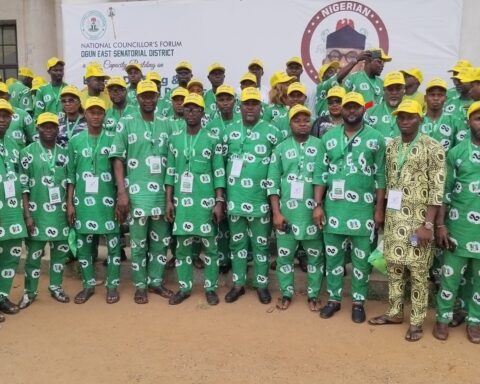
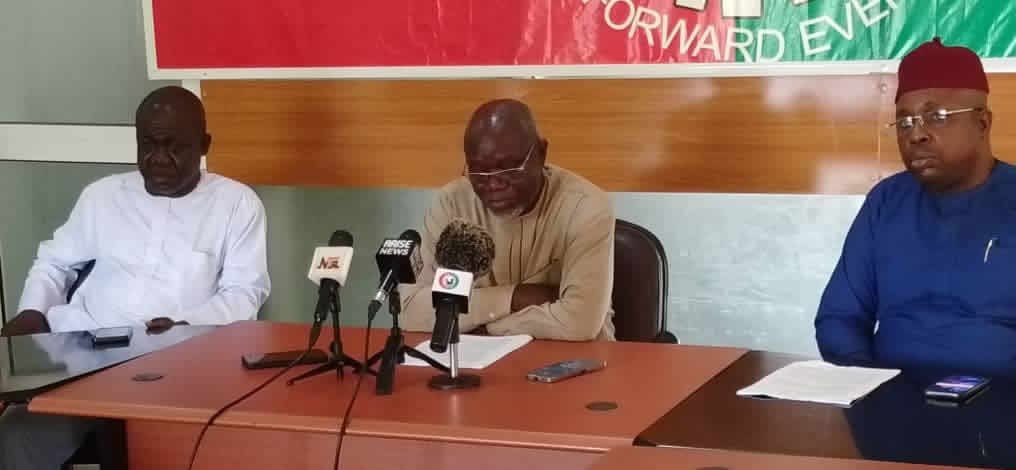
The state chapter of the ADC announced the immediate suspension of its planned ward, local government, and state congresses—events that are typically crucial for party restructuring, leadership selection, and grassroots mobilization. The decision was disclosed in a statement issued on Wednesday by the party’s state chairman, Wole Ademoyegun, who emphasized that the move was made in full compliance with INEC’s directive.
According to the statement, INEC had instructed all concerned parties to maintain the status quo ante bellum—a Latin phrase meaning “the state of affairs before the conflict”—pending the resolution of ongoing issues affecting the party. While specific details of these issues were not elaborated upon, the directive suggests the presence of disputes or irregularities that require careful examination before any further political processes can proceed.
“The ADC hereby announces the immediate suspension of all previously scheduled Ward, Local Government Area, and State Congresses,” the statement read. “This decision is taken in strict compliance with the directive of the Independent National Electoral Commission directing all concerned parties to maintain the status quo ante bellum.”
The development has generated a mix of reactions among party members and political observers. For many within the ADC, the suspension represents a necessary pause—an opportunity to address internal concerns and ensure that due process is followed. For others, however, it introduces uncertainty, particularly for aspirants and stakeholders who had been preparing for the congresses as part of their political strategies.
Congresses at various levels are critical in Nigeria’s party system. They determine leadership structures, influence candidate selection, and shape the direction of party policies at both state and national levels. As such, any delay or disruption can have far-reaching implications for party cohesion and electoral readiness.
INEC’s intervention highlights its constitutional role as a regulator tasked with ensuring fairness, transparency, and order in the activities of political parties. By enforcing a status quo, the commission aims to prevent actions that could complicate or prejudice the resolution of disputes. Such measures are not uncommon in Nigeria’s political landscape, where internal party disagreements often require arbitration or oversight.
Political analysts suggest that the ADC’s compliance with the directive reflects a willingness to adhere to institutional authority, a move that could help preserve its credibility. However, they also note that prolonged uncertainty could weaken momentum within the party, especially in a competitive political environment where timing and organization are critical.
Within Ondo State, the suspension adds another layer of complexity to an already dynamic political scene. Parties are actively positioning themselves ahead of future elections, and internal stability is often a key determinant of success. For the ADC, resolving the underlying issues swiftly will be essential to maintaining relevance and cohesion.
Observers also point out that this development underscores a broader challenge facing many political parties in Nigeria: balancing internal democracy with unity. Disputes over leadership, delegate selection, and procedural fairness frequently arise, making regulatory intervention necessary at times.
As party members await further directives, attention is likely to shift toward the processes being undertaken to resolve the issues in question. Whether through dialogue, mediation, or formal adjudication, the outcome will play a significant role in shaping the ADC’s trajectory in Ondo State.
For now, the party remains in a holding pattern—its planned congresses suspended, its next steps contingent on the resolution of internal matters and further guidance from INEC. In the intricate world of Nigerian politics, such pauses are rarely idle; they are moments of recalibration that can ultimately define the path forward.