Fresh cracks have emerged within Nigeria’s opposition landscape as the African Democratic Congress (ADC) publicly accused Peter Obi of showing little to no interest in the party’s ideological foundation during his brief association with it.
The allegation came from the party’s National Publicity Secretary, Bolaji Abdullahi, during a revealing interview on Arise News’ Prime Time programme on Monday, an appearance that has quickly become a focal point in ongoing discussions about the future of opposition politics ahead of the 2027 general elections.
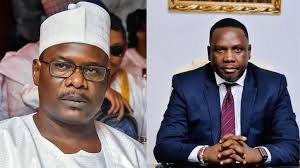
Abdullahi, who had earlier described Obi’s exit alongside Rabiu Kwankwaso as a setback but not a fatal blow, took his criticism a step further by questioning the depth of Obi’s commitment to party-building and policy engagement.
According to him, the ADC had spent several months painstakingly crafting a comprehensive manifesto, one that addressed some of Nigeria’s most pressing challenges, from fuel subsidy reforms to national security architecture. Yet, he claimed, Obi remained largely detached from the process.
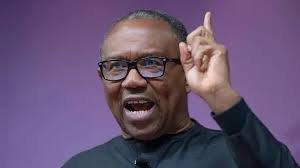
“You may invite His Excellency Peter Obi and ask him, what is the ADC position on fuel subsidy? What is the ADC’s framework on security? He doesn’t know,” Abdullahi said pointedly. “Because he’s never been interested. They are just waiting for the tickets to be handed to them.”
The remark has since stirred debate across political circles, with supporters and critics weighing in on whether the accusation reflects deeper ideological fractures within Nigeria’s opposition or merely the bitterness of a collapsed alliance.
Obi, who rose to national prominence as the Labour Party’s presidential candidate in the 2023 elections, has cultivated a reputation as a policy-driven leader with a strong emphasis on economic reform and governance accountability. His brief alignment with the ADC was widely seen as part of a broader effort to build a united opposition front capable of challenging the ruling establishment in 2027.
However, Abdullahi’s comments paint a different picture, one in which political ambition may have taken precedence over ideological alignment.
Insiders within the ADC suggest that tensions had been brewing behind closed doors long before Obi’s eventual departure. While public statements at the time emphasized unity and shared purpose, sources indicate that disagreements over strategy, leadership structure, and the direction of the coalition may have quietly undermined the partnership.
The situation became more complex when Obi, alongside Kwankwaso, eventually defected to the Nigeria Democratic Congress (NDC), a relatively new political platform positioning itself as an alternative force ahead of the next election cycle. Their move was accompanied by calls to end what they described as “litigation-driven politics,” signaling a desire for a shift in how political disputes are resolved in the country.
For the ADC, however, the narrative now appears to be shifting, from one of disappointment to one of justification.
By highlighting what he described as Obi’s lack of engagement with policy discussions, Abdullahi seems intent on reinforcing the party’s identity as one rooted in ideas rather than personalities. It is a message likely aimed at reassuring party loyalists and potential allies that the ADC remains committed to substance over symbolism.
Political analysts say the development underscores a recurring challenge in Nigeria’s political system: the tension between ideology and electability. While parties often emphasize policy frameworks and long-term visions, the gravitational pull of high-profile candidates can sometimes overshadow these elements.
“Parties want structure and ideology, but they also want candidates who can win elections,” one analyst noted. “When those priorities don’t align, conflicts like this are almost inevitable.”
Meanwhile, Obi has yet to publicly respond to Abdullahi’s claims, leaving room for speculation and counter-narratives. His supporters, however, have been quick to defend him in online forums, arguing that his track record contradicts the notion that he is uninterested in policy.
As the political chessboard continues to shift, the fallout from this exchange may have broader implications for coalition-building efforts ahead of 2027. Trust, once broken, can be difficult to rebuild, and public accusations such as these may further complicate attempts at unity within the opposition.
For now, the ADC appears determined to move forward, using the moment to redefine itself and clarify its stance.
Whether Abdullahi’s remarks will strengthen the party’s credibility or deepen divisions within the opposition remains an open question. But in the ever-evolving drama of Nigerian politics, one thing is certain: alliances may come and go, but the battle for narrative, and ultimately for power, never truly pauses.