By James Ezema
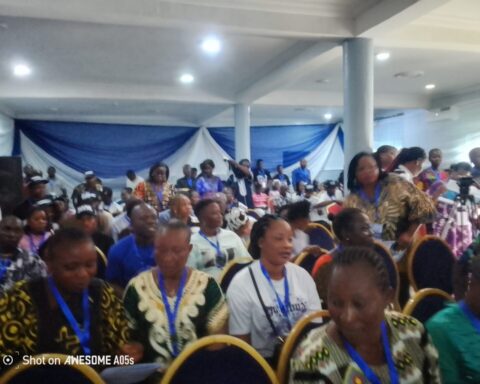
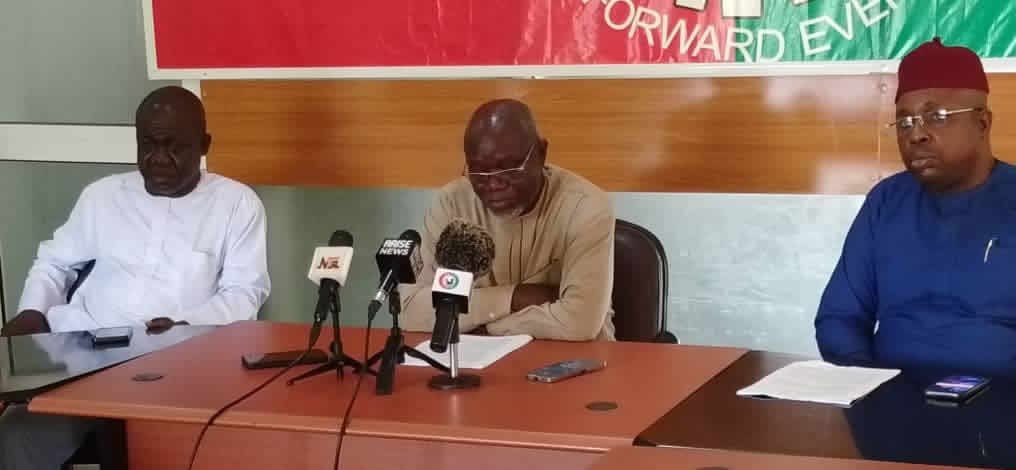
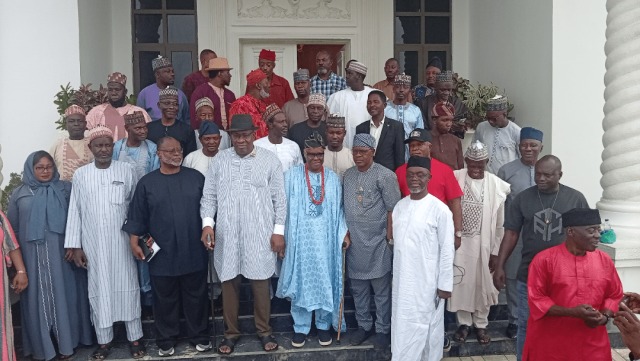
Surviving members and prominent figures of the Alliance for Democracy, AD, have reunited in Abuja to reflect on the party’s contributions to Nigeria’s democratic journey and discuss the future of the country’s democracy.
The reunion, hosted by former Bayelsa State Governor and National Leader of the Nigeria Democratic Congress, NDC, Senator Seriake Dickson, was held under the theme, “Reclaiming Our Moral Mandate: A National Democratic Conversation for a Reborn Polity.”
The meeting brought together former national officers and founding members of the AD, alongside politicians, and other democrats from different parts of Nigeria.
Speaking at the gathering, Professor Udenta O. Udenta, the founding National Secretary of the Alliance for Democracy, described the participants as the old guards of the party and said many of them were directly involved in its establishment.
Udenta said although the Alliance for Democracy is now a defunct political party, its surviving members remain active and committed to the democratic ideals that informed its creation.
He described the reunion as the beginning of a broader process of consultation on Nigeria’s democratic future.
Professor Udenta also paid tribute to deceased founding leaders of the party, including Dr. Arthur Nwankwo, O.B. Lulu-Briggs, Chukwuemeka Ezeife, Bassey Ekpo Bassey, Pa Abraham Adesanya and Chief Bola Ige.
He said their sacrifices contributed significantly to Nigeria’s democratic development and should not be forgotten.
Udenta stressed that the reunion was not primarily about forming an alliance between the Alliance for Democracy and the Nigeria Democratic Congress, noting that former AD members now belong to different political parties.
He said the immediate objective was to reconnect former members, revive old networks and continue conversations about the direction of Nigeria’s democracy.
Also speaking, Senator Seriake Dickson recalled the ideological foundations of the Alliance for Democracy, saying the party was built around principles such as true federalism and resource control.
According to him, members of the party worked at the grassroots despite limited financial resources and, in many instances, funded party activities from their personal resources.
Senator Dickson said the AD taught its members resilience and how to operate effectively as an opposition party.
He added that the political experience and mentorship he received within the Alliance for Democracy had continued to influence his political career.
The former governor said the reunion was organised within a short period but succeeded in bringing together several prominent members of the old political family.
He explained that some former colleagues were unable to attend because of the short notice, adding that further meetings would be organised to broaden the conversation.
The participants also observed a minute of silence in honour of deceased leaders, colleagues and allies who contributed to Nigeria’s democratic struggle.
Senator Dickson said the gesture was important because many people occupying public positions today might not fully appreciate the sacrifices made by earlier generations to establish and sustain democratic rule.
He said the meeting did not take any major political decision, describing it as an opportunity to reconnect, reflect on the past and consider the present and future of Nigeria.
Professor Udenta, however, maintained that the reunion could eventually lead to wider consultations and a stronger contribution by former AD members to national political discourse.
He said the democratic conversation in Nigeria could not be complete without the voices and experiences of those who participated in the struggles that preceded the Fourth Republic.
The participants are expected to continue their consultations in the coming weeks and months, with further meetings likely to focus on Nigeria’s democratic development, political accountability and the future direction of the country.