By Valentine Obienyem
How can one possibly compare Gen. Sani Abacha and President Bola Ahmed Tinubu? There is absolutely no basis for comparison. Abacha towered above him from any angle of assessment.
The major measure of a man is character. To know a man is to trace him back to his roots and study the influences that shaped him. This aids proper understanding. In the case of the Kanuri-born general, information about him and his family abounds, making him relatively easy to understand. By contrast, BAT appears to defy such clarity. Questions about his origins persist: Is he from Lagos or elsewhere? Which primary and secondary schools did he attend? What is his real name? These remain, for many, unresolved issues.
We know that Abacha entered the army; we know his coursemates and even his references, and that he was a soldier who rose through all the ranks. But what about BAT? Has anyone credibly come forward to claim to be his classmate?
We now have a president of Nigeria who, for the first time, was involved in drug-related activities as revealed by his ambassador, Reno Omokri, who is said to know him well. One may ask: how many lives could have been killed or harmed by such activities? Yet no comparable allegations are commonly associated with Abacha.
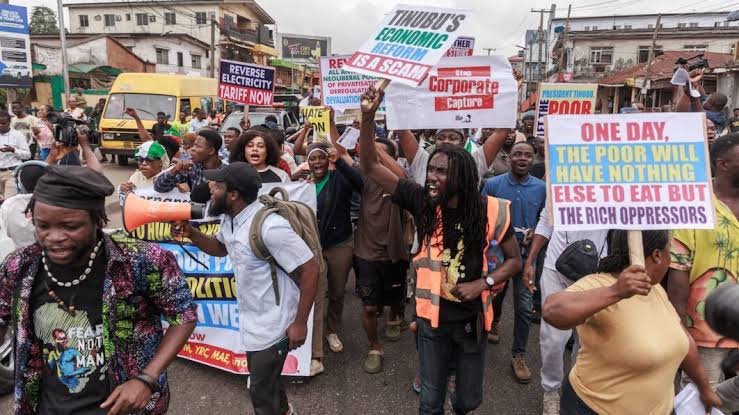
One of the dangers of flawed character is an inclination toward hypocrisy. I consider BAT a complete hypocrite. Over the years, he presented a version of himself that many believed, which appears different from the one Nigerians see today. Many of the protests against fuel increases and related acts under former governments were his brainwork; what about today? As a soldier, did Abacha display such hypocrisy?
As a military Head of State, Abacha acted as one: his word was law, and he brooked no opposition. However, he was a military ruler. Juxtapose this with BAT, who, as a civilian president, is seen by critics as even more autocratic. If he had operated under a military dictatorship, he would have surpassed even leaders like Idi Amin in authoritarianism.
BAT has been a governor and a senator – he has seen it all – yet concerns about his conduct persist. At over 80, one might expect greater restraint and reflection. Abacha, by contrast, did not reach that age; if Abacha had reached above 80, he would have been mellowed by age and maturity. Does BAT exhibit the temperance expected at this stage of life? If he had become president in his 60s, it would have been far worse.
Those who lived through Abacha’s era knew there was a degree of ethnic balance in his appointments. Today, over 99 key appointments under BAT favour one region or group, yet they see nothing wrong with it. Even figures like Uncle Joe Igbokwe, their perpetual loyalist, have yet to receive any appointment he badly craves. Whenever he is remembered, it will likely be only for marginal roles.
While Abacha may have been defined by blunt and systemic brutality, the emergence of BAT reveals a far more insidious phenomenon. From all that we have witnessed thus far, his entire existence is a sustained revolt against decency – a calculated defiance of the moral safeguards that sustain a civilization. He is, in the truest sense, a forbidden character, whose presence in the halls of power signals a departure from the traditional boundaries of human conduct.