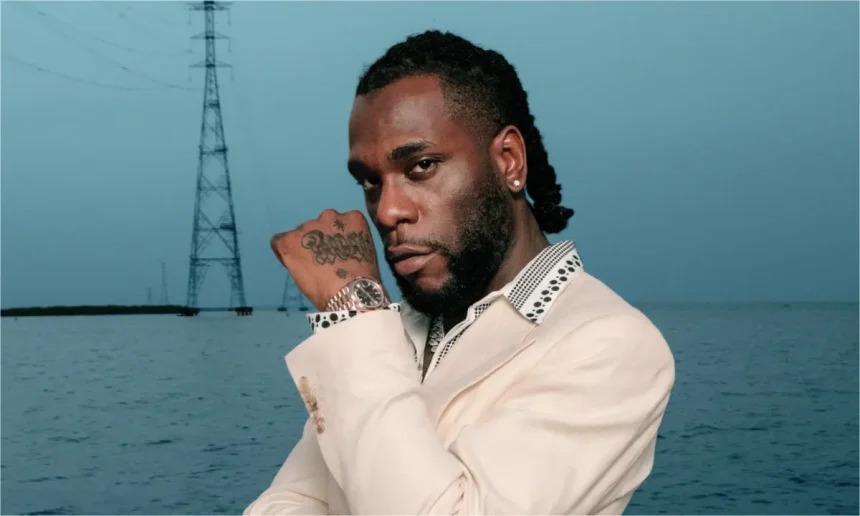
Piriye Isokrari, Chief Executive Officer of Aristokrat Records, popularly known as Peedi Picasso, has disclosed that he declined to renew Grammy-winning singer Burna Boy’s recording contract because the artiste demanded an 85-15 per cent revenue split in his favour.
Speaking during an appearance on the Afropolitan video podcast published on Wednesday, November 25, 2026, at 4:05 PM UTC, the music executive admitted that while the terms did not make financial sense for the label in 2014, he would readily accept the exact same offer today.
During the one-hour, 52-minute interview, Isokrari traced his business relationship with Damini Ogulu, professionally known as Burna Boy, back to 2010 in Port Harcourt, Rivers State.
According to the label boss, a 19-year-old Burna Boy attended Isokrari’s 26th birthday party in Port Harcourt, and within days of listening to his music, Isokrari offered to sign him on the spot. Burna Boy officially signed with Aristokrat Records in July 2011, and the initial contract ran until its expiration in May 2014.
Explaining the breakdown of renewal talks in 2014, Isokrari noted that Burna Boy and his camp, including his mother and manager, Bose Ogulu, pushed for a restructuring that would have handed the singer 85 per cent of generated revenue while leaving Aristokrat Records with 15 per cent.
In addition to the revenue split, Isokrari had previously noted in an October 29, 2026, interview on In The Garage with Dolapo Amusat that Burna Boy sought a substantial cash advance and a Porsche as non-recoverable gifts rather than recoupable advances.
At the time, those financial realities made an extension untenable for the growing company. Isokrari explained that Aristokrat Records had just secured an investment deal with 960 Music Group and intended to use that capital to scale its operations and develop multiple talents rather than operate as a single-artiste label.
Under their existing agreement, Burna Boy already received the larger share of live performance earnings because he was the artiste performing on stage, meaning that accepting an 85-15 split across broader revenue streams, coupled with heavy upfront demands, was deemed financially unsustainable.
Reflecting on Burna Boy’s subsequent rise to global superstardom, which includes winning a Grammy Award and headlining major international arenas such as Madison Square Garden, Isokrari acknowledged that hindsight has completely altered his perspective. “Today I will take the 85/15 per cent now, but back then it didn’t make any sense,” Picasso stated during the broadcast.
Following the expiration of the contract in May 2014, Burna Boy went on to establish his own imprint, Spaceship Music, to build an independent global career.
Despite parting ways formally, Isokrari noted during the Afropolitan session that the two maintained a productive working relationship, collaborating on subsequent projects including Outside and African Giant, the latter of which Isokrari argued should have won the Grammy over Twice as Tall, before he eventually facilitated the sale of Burna Boy’s early master recordings back to the singer.
Isokrari’s candid remarks offer a rare behind-the-scenes look at the commercial calculations, risk assessments, and contract negotiations that shaped one of Afrobeats’ most consequential label exits.