By Charles Obiajulu Ugwu
For years we have comforted ourselves with a strange compliment: Nigeria bends, but it does not snap. We say it at conferences, from pulpits, in the back seats of taxis. Every crisis that should have finished us became one more proof of our elasticity. We chose the wrong image. A rubber band snaps. A pot does not. A pot on a fire holds, and holds, and holds, showing nothing on its outer surface, until the moment the lid lifts and what was inside meets the flame. That is the paradox of this season: the resilience we celebrate is exactly what tempts us to leave the fire burning, and nothing that holds this well will warn us before it spills. The presidential election is fifty-three days away. This is not an essay to be admired. It is a fire alarm, and I am pulling it.
An octogenarian, watching the build-up in exasperation, reached for the language of the cockpit. The overcast, he said, is so thick and so low that no pilot would be cleared for take-off, not even with every instrument on the panel working. His image is more exact than it first appears. In aviation there is no medal for courage when the weather falls below minimums. The rule is not “fly carefully.” The rule is “do not depart.” And instruments rescue only a crew that trusts them; a pilot who no longer believes his altimeter is not flying on instruments but on prayer. Nigeria is lining up on the runway in exactly this weather, and the instruments we are told to rely on, the electoral commission, the security services and the courts, are the very ones the passengers stopped trusting long ago. We are not short of procedure. We are short of belief in procedure, and that shortage, more than any candidate, is the weather.
Let me be precise about what I am not saying. I am not calling for the flight to be cancelled, because a postponement would be its own storm. I am saying that no one should release the brakes until the weather changes. And in Nigeria, unlike in the sky, the weather is made by men. It can be unmade by them.
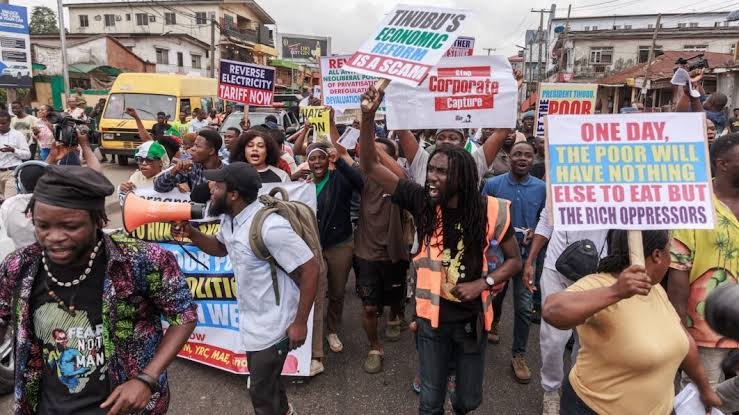
Strip away the slogans and look only at what is already on the record. The National Peace Committee has logged 109 breaches of the National Peace Accord across twenty-six states and the Federal Capital Territory since campaigns opened in August, thirty-three of them acts of thuggery and violence between August and late October alone. In Enugu, Ifeanyi Nwolie, a forty-three-year-old opposition supporter, was killed when his party’s governorship campaign was violently disrupted. In Asaba on 7 November, a campaign procession was attacked, leaving one person dead and five injured. That same week an opposition presidential convoy was attacked in Calabar; on 15 November a vice-presidential candidate’s convoy came under attack in Bichi, Kano; and in Oregun, Lagos, thugs broke up a town hall meeting. The ruling party has not been spared either. An APC convoy was vandalised on the road to Funtua, and its billboards have been torn down in Kano and other northern cities. On 13 November, a senior American diplomat told a congressional hearing in Washington that Nigeria’s January polls could trigger violence.
Read that record again and notice what it refuses to tell you: who the villain is. Every camp is both victim and suspect, and that is the single most important finding in this note. When violence flows in one direction, you have a bad actor, and bad actors can be isolated. When it flows in every direction at once, you have a system that has begun to reward it. No arrest list fixes a system. Only a change in the rewards does.
The mood of the country makes that system more dangerous by the day. Dissatisfaction is a complaint about performance; disgust is a verdict on legitimacy. A dissatisfied citizen votes a government out. A disgusted citizen begins to wonder whether the vote is worth anything at all. Listen to the markets, the motor parks, the WhatsApp groups of retired civil servants, and you will hear that the vocabulary has crossed from the first to the second. A population that has moved from hardship into hopelessness is the most combustible material any political class can play with, because a person who believes there is nothing left to lose has removed the last brake on his own conduct.
Place that mood inside the trap now closing around us. Those in power fear that defeat means not retirement but reckoning, so they will spare nothing to stay, even where the case for staying has worn thin. Those seeking power have read the brazenness of the system as proof that they can lose only by theft, so they have decided in advance that any loss will be a robbery. And the citizens, watching both, have concluded that neither the umpire nor the umpire’s umpire will tell them the truth. Each side’s fear is the other side’s justification. That is not a contest. It is a feedback loop, and feedback loops do not cool themselves.
In older democracies a stolen election becomes a scandal, then a lawsuit; the pipes exist to carry the anger away from the streets. Our tragedy is that the pipes are visible, and the people no longer believe they are connected to anything. Consider the one instrument that was meant to settle the argument. The Electoral Act 2026 finally wrote the electronic transmission of polling-unit results to the IReV portal into law, and that is real progress. Yet the same section keeps the paper result sheet as the primary record wherever transmission “fails,” which is precisely the gap through which the grievances of 2023 poured. Legal scholars have already warned that this proviso risks entrenching the very weakness the reform was meant to cure, and the courts have held that a failure to upload results does not by itself void an election. Each of these positions may be defensible in law. Together, seen through the eyes of a disgusted public, they look like a door left unlocked with a polite sign asking thieves not to enter.
When citizens stop believing that a courtroom can return a stolen mandate, they do not stop seeking redress. They change the venue. And the street has no rules of evidence, no right of appeal, and no judge who can call it to order. We know this because we have been here before. In 1965 the Western Region election was rigged so openly that people stopped disputing results and began dousing opponents and their property with petrol. They called it Operation Wetie. The collapse of order it produced became part of the backdrop to the coup of January 1966, and every Nigerian knows what followed that. In April 2011, after a presidential election, more than eight hundred people were killed in three days across the northern states. Neither tragedy began with anyone announcing that the country would burn. Both began in a season very much like this one, when every camp was certain the other would blink first.
So here is the arithmetic every camp is refusing to do. To those in office: a victory that half the country believes was stolen is not a second term but four years of governing hostages. You will spend the mandate defending it instead of using it, and every investor, lender and partner will price that doubt into every naira. To those seeking office: a victory won by making the country ungovernable is not a mandate either. It is a precedent, and you will still be in office when the next challenger cites it against you; the tools you sharpen this season will be in someone else’s hand in 2031. To the elite on every side: the schools abroad, the second passports and the flats in Dubai are not a lifeboat. A boiling Nigeria exports its consequences, to the currency, to the risk rating on every Nigerian passport, to every Nigerian business beyond our borders. There is no private exit from a public fire. And to the young man holding a cutlass and a five-thousand-naira note: the man who paid you will be at the swearing-in, while you will be in a cell or a mortuary. Ask him to send his own son. A mandate obtained through fire is a lease, not a title, and the fire always collects the rent.
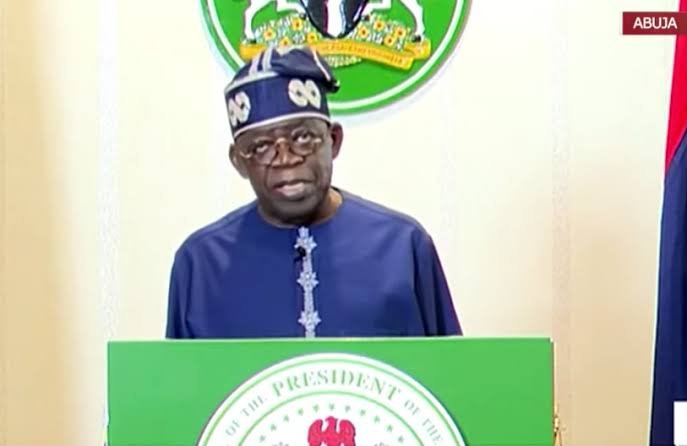
General appeals to “all stakeholders” have failed because they ask nothing of anyone in particular. What the next fifty-three days require is specific, visible and checkable. It begins with a concession pledge spoken aloud. Before Christmas, every presidential candidate, beginning with the incumbent, should say on national television, in his own voice, the sentence our politics has never heard in advance: “If I lose on the published polling-unit results, I will congratulate the winner within forty-eight hours.” Not another accord drafted by aides and signed for the cameras, but a recorded promise the nation can replay on 17 January. Every party should then disown its thugs by name, publishing within fourteen days the people responsible for its campaign security in each state and accepting that violence traced to them is the party’s own act. Thugs are not freelancers. They are on a payroll.
The Independent National Electoral Commission can, within the law, adopt as policy that no ward or local government result is announced until the polling-unit sheets behind it are visible on IReV, and that wherever transmission truly fails, the paper sheet is photographed before party agents and posted publicly before collation moves on. That would make the proviso the exception it was meant to be rather than the highway. The security chiefs owe the nation names, not statements: who commands election security in each state, and a commitment that any officer seen escorting thugs or carrying ballot materials away from a polling unit will be suspended within twenty-four hours. Accountability is the only deterrent a uniform respects. The judiciary cannot campaign, but it can speak; a public commitment to tight timelines, fully published reasoning and judgments that turn on the votes cast rather than on technicalities would do more for peace this December than any verdict next June.
The pulpit and the palace must bear witness rather than bless. Religious and traditional leaders have spent this season receiving candidates. They should spend the weeks that remain sending volunteers instead, trained and non-partisan, to observe the polling units of their parishes, mosques and domains, because a congregation that watches its own polling unit is harder to rob than any statute. And citizens must vote, watch and refuse. Vote. Where the law allows, wait peacefully to see your unit’s result counted and posted, and photograph the sheet. Refuse every envelope, every cutlass, and every call to “defend the vote” that is really a call to attack a neighbour. Defending the vote means documenting it, not dying for it.
I have heard a voice calling from the hilltops, and I suspect you have heard it too. It does not say “vote for this one” or “reject that one.” It says something older and more urgent: we need to do something before it boils over. It will boil over if nothing changes. That is not a prophecy. It is chemistry. Heat applied to a sealed vessel has only two exits: someone lowers the flame, or the lid goes.
The flight need not be cancelled. But no one should be cleared for take-off until the weather has changed, and in Nigeria the weather is not made in the sky. It is made in campaign offices, police commands, collation centres, courtrooms, pulpits and palaces. It is made tonight, in the hands of a young man deciding whether to take the money. The pot is on the fire. Nobody needs to add more wood. Somebody needs to turn down the flame, and the hand nearest the knob is yours, whoever you are and wherever you are reading this.
Fifty-three days. After that, we will not be writing calls. We could be writing something less desirable to us all.
Charles is a contrarian thinker writing from Lagos