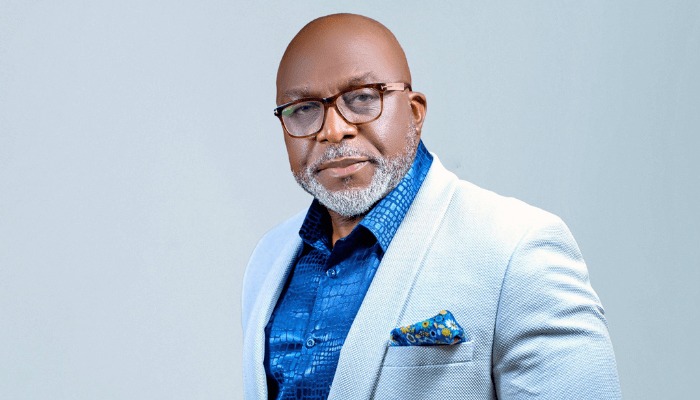
The Executive Chairman of United Nigeria Airlines (UNA), Professor Obiora Okonkwo, has warned that the rapid sophistication of artificial intelligence (AI) and its capacity to generate convincing fake images, videos, and voices pose fresh, severe threats to democracy, national security, and public trust, particularly during election cycles.
Professor Okonkwo issued the warning on Thursday, November 19, 2026, during a morning plenary session at the 2026 World Public Relations Forum (WPRF) held at the Transcorp Hilton Hotel in Abuja.
Addressing global communication leaders and delegates during the week-long summit, which runs from November 15 to November 22, 2026, with daily plenary sessions commencing at 9:00 a.m.
Okonkwo spoke on the theme, “Responsible Communication in Africa: The Importance of Self-Regulation and Information and Media Literacy.”
In his address, Professor Okonkwo stressed that communication is never a neutral exercise, warning that unchecked misinformation and hate speech can prove as destructive as physical weapons.
“The lesson is unmistakable. Communication is not always an innocent exercise. In the hands of irresponsible actors, the microphone can become as disruptive as a very dangerous weapon,” Okonkwo stated.
He noted that with AI tools now capable of fabricating realistic audio-visual content, the urgency of information verification has reached a critical threshold ahead of Nigeria’s 2027 general elections.
To underscore the life-and-death consequences of manipulated information, the UNA Chairman pointed to several historical and contemporary crises.
Looking closer to home, Okonkwo cited Nigeria’s 2023 general elections as a prime example of how social media facilitated the rapid spread of fabricated election results, unverified claims, and divisive ethnic narratives, a trend previously documented by the European Union Election Observation Mission.
Reaching further back into history, he recalled the 1994 Rwandan Genocide, noting how Radio Télévision Libre des Mille Collines (RTLM) weaponised broadcast media to spread ethnic hatred and dehumanise targeted communities, ultimately inciting mass violence among neighbours.
He also drew attention to global public health emergencies, referencing the COVID-19 “infodemic” identified by the World Health Organisation (WHO), as well as misinformation during Ebola outbreaks in the Democratic Republic of Congo, both of which eroded trust in health workers and crippled vital disease-control efforts.
While calling on governments, educational institutions, media organisations, and technology firms to integrate media and information literacy into school curricula and public enlightenment programmes, Professor Okonkwo cautioned against using the fight against fake news as a pretext for state censorship.
He insisted that ethical accountability and freedom of expression must advance together without allowing powerful interests to silence legitimate criticism.
Drawing from his experience in the Nigerian aviation sector, he noted that timely, factual, and transparent communication during operational disruptions sustains stakeholder confidence, whereas concealment turns manageable issues into institutional crises.
Professor Okonkwo’s remarks formed part of a high-level dialogue at the WPRF 2026, hosted for the first time in Nigeria by the Nigerian Institute of Public Relations (NIPR) in collaboration with the Global Alliance for Public Relations and Communication Management.
Throughout the forum’s sessions at the Transcorp Hilton, Okonkwo has been joined by prominent global voices championing institutional integrity, including Edith Jibunoh, Director of External Affairs at the World Bank Group;
Sharon Ezzeldin, Founder of Honor Public Relations in the United Kingdom; Dr. Adewale Adeniyi, Comptroller-General of the Nigeria Customs Service; Taiwo Oyedele, Nigeria’s Minister of Finance and Coordinating Minister of the Economy; and Ambassador Gautier Mignot, Head of the European Union Delegation to Nigeria.
Concluding his address, Okonkwo urged African communication professionals to uphold truth as their core professional asset, noting that Africa’s aspiration to become “the voice of the world” must be measured not by how loudly messages resonate, but by their credibility and positive impact on peace, democracy, and human development.