Former Vice President Atiku Abubakar has formally challenged the Independent National Electoral Commission (INEC) to subject its proposed Artificial Intelligence (AI) result-processing system to an independent technical audit ahead of the 2027 general elections.
In a formal letter addressed to INEC Chairman Prof. Joash Amupitan, SAN, and released to journalists in Abuja on Thursday afternoon, November 19, 2026, Atiku called for full algorithmic transparency before the electoral body conducts its nationwide mock accreditation scheduled for Saturday, November 28, 2026.
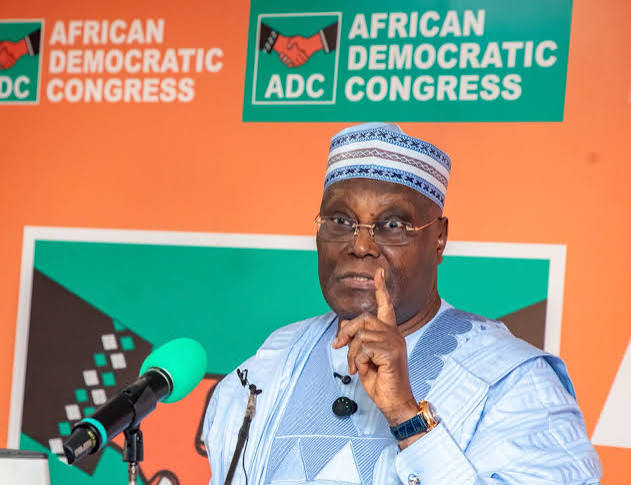
According to a press statement issued by Atiku’s Director of Strategic Communication, Phrank Shaibu, the former vice president wrote on behalf of the African Democratic Congress (ADC) and allied democratic stakeholders.
Atiku’s intervention follows INEC’s announced plans to deploy AI and intelligent document processing tools to bridge its Data Verification and Authentication System (DIVAS) and the INEC Result Viewing (IReV) portal.
While INEC officials have indicated that the AI system, previously piloted during off-cycle elections in Ekiti and Osun states, is designed to filter out non-standard uploads and ensure that only valid Form EC8A sheets reach the portal, Atiku warned in his letter that opaque automation risks disenfranchising voters.
Specifically, the former vice president expressed concern that legitimate result sheets photographed under poor lighting, written in unfamiliar handwriting, or printed on worn paper could be erroneously withheld or suppressed by automated filters without human review.
In the statement, Atiku urged the commission to resolve these transparency questions before public skepticism deepens into an electoral crisis, insisting that independent experts must test the system and that clear rules for correcting errors must be published to guarantee no valid vote disappears behind a screen marked “flagged.”
He maintained that Nigerians would not accept a process where ballots are counted openly at polling units, only for their fate to become unverifiable once transmitted into INEC’s digital infrastructure.
To address these concerns prior to the November 28 nationwide mock accreditation, Atiku outlined a series of preconditions for the electoral commission to fulfill.
He demanded full technical disclosure of the AI platform, including the publication of its operational framework, source code logic, training data sources, and the specific criteria used to flag discrepancies.
Alongside technical documentation, Atiku called for vendor transparency, insisting that INEC publicly identify the software developers and third-party contractors responsible for building and managing the system.
Furthermore, Atiku urged the commission to open the platform to independent cybersecurity and electoral technology experts for comprehensive stress-testing ahead of the November 28 exercise.
He added that INEC must establish strict protocols for human oversight and redress, ensuring that political party agents have real-time monitoring access and that transparent procedures exist for challenging or correcting flagged results before they are excluded from final tallies.
Concluding his appeal, Atiku called on domestic election observers and international development partners to closely scrutinize the digital handling of election results, while advising Nigerian citizens to lawfully document and safeguard results announced at their respective polling units.