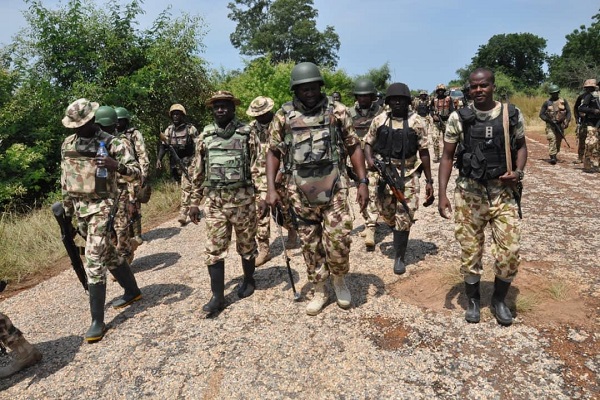
Nigeria has entered into a reciprocal five-kilometre (three-mile) cross-border “right of pursuit” agreement with neighbouring Cameroon, Chad, and Niger, authorizing military forces to chase fleeing terrorists, armed bandits, and other criminal syndicates across shared international boundaries.
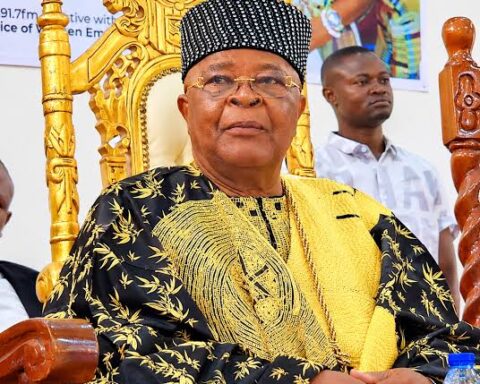
The strategic security pact was officially disclosed in Abuja, Nigeria, on Monday, November 16, 2026, by Nigeria’s Minister of Defence, General Christopher Musa (rtd.), during a media briefing and interview with journalists.
Although an exact hour for the Monday briefing was not officially logged in press dispatches, the disclosure was released via wire reports on the afternoon of November 16, with follow-up national broadcasts airing through Tuesday, November 17, and Wednesday, November 18, 2026.
Addressing reporters in the Nigerian capital, General Musa, acting as the principal spokesperson for Nigeria’s defence establishment on the pact, explained that the arrangement is designed to eliminate the tactical advantage criminal networks have long exploited by slipping across borders into neighbouring territories to evade military offensives.
Under the new protocol, troops actively engaging insurgents or armed gangs can maintain hot pursuit up to five kilometres inside adjacent national territories without waiting for protracted diplomatic clearances. “We don’t want them to develop that capacity.
We’re blocking the logistics and taking them out from within Nigeria,” Musa stated, emphasizing that the four nations are synchronising operations to sever cross-border transit, supply chains, and recruitment pipelines across the Lake Chad Basin and the broader Sahel.
During the Abuja briefing, the Defence Minister warned that the Islamic State Sahel faction is actively attempting to co-opt and recruit largely profit-driven criminal bandit gangs operating in northwestern Nigeria.
Security analysts and military authorities fear that without immediate disruption, these localised kidnapping and extortion syndicates could evolve into ideologically driven insurgents mirroring the Islamic State West Africa Province (ISWAP) in the northeast.
Musa noted that militants have heavily relied on dense forest corridors and porous frontiers, particularly along the borders with Niger and Benin, to regroup after attacks.
While Benin was not listed among the three countries in the new five-kilometre bilateral pursuit arrangement, Musa confirmed that enhanced aerial surveillance and regional intelligence sharing are steadily shrinking militants’ freedom of movement.
The cross-border pact coincides with a major operational push to secure the country ahead of Nigeria’s January 2027 general elections.
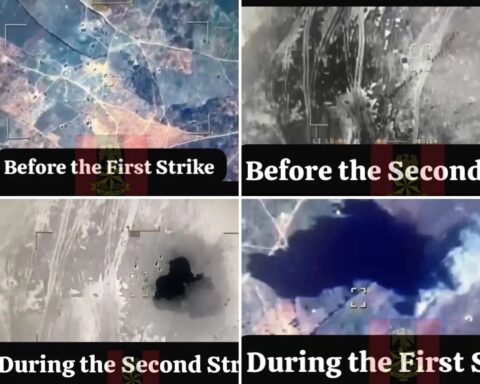
General Musa revealed that the Nigerian military is receiving real-time intelligence, high-resolution satellite imagery, and specialised training from the United States, which have already guided precision overnight operations that neutralized several high-profile terrorist and bandit commanders in the North-East and North-West.
Alongside these joint strikes, Nigerian security agencies are working closely with U.S. authorities to track militants’ use of Starlink satellite internet terminals, commercial drones, and cryptocurrency networks in a bid to choke off terror financing.
To further sustain momentum on the battlefield, Nigeria is expecting imminent deliveries of additional military helicopters from both the United States and Italy to bolster its rapid-response air assets.
Diplomatically, the inclusion of Niger in the five-kilometre pursuit deal marks a significant pragmatic thaw in border security coordination following strained bilateral relations after the 2023 coup in Niamey, reinforcing joint counter-insurgency efforts alongside the regional Multinational Joint Task Force (MNJTF).
While General Christopher Musa served as the official spokesperson announcing the agreement in Abuja on November 16, defence spokespersons in Yaoundé, N’Djamena, and Niamey had yet to issue separate public statements regarding the operational rollout as of Wednesday, November 18, 2026.